- How many days in Jordan and Petra
- 6 days to see the essentials of Jordan and Petra; the day-by-day route is below.
- Budget
- Shoestring: €50-70 (40-55 JOD) per day.
- From the airport
- Queen Alia International Airport is 35 km south of Amman.
- What to eat
- Mansaf is the national dish: lamb cooked in fermented dried yogurt (jameed) and served over rice.
Jordan is a small country that is surprisingly hard to rush. Petra deserves its reputation. It is bigger, steeper and more tiring than the photos suggest. Around it you have a capital (Amman) that is better than people expect, a red desert at Wadi Rum, the Dead Sea at the lowest point on Earth, and Roman ruins at Jerash that would be the headline act in most other countries. Jordan is safe, easy to travel and friendly, and the hospitality is real. It is also pricier than its neighbours, especially for entry tickets.
The country suits people who like walking, history and landscapes more than nightlife or beach resorts. We recommend 6 days: two in Petra, one in Wadi Rum, one for Amman and Jerash, and one split between the Dead Sea and Madaba. With four days you can still see Petra and Wadi Rum, but you will spend most of the trip in buses. With eight you can add Dana or diving in Aqaba without feeling rushed.
What to see in Jordan and Petra: the places worth your time
The Siq and the Treasury (Al-Khazneh), Petra
The walk into Petra is a 1.2 km gorge called the Siq. It ends with the Treasury appearing through a gap in the rock. That reveal is the moment people cross continents for, and it does not disappoint. A one-day ticket costs 50 JOD (about €65), two days 55 JOD and three days 60 JOD, and all of them are included in the Jordan Pass. Our tip: be at the gate when it opens. By 9am the Treasury is crowded with tour groups and camels.
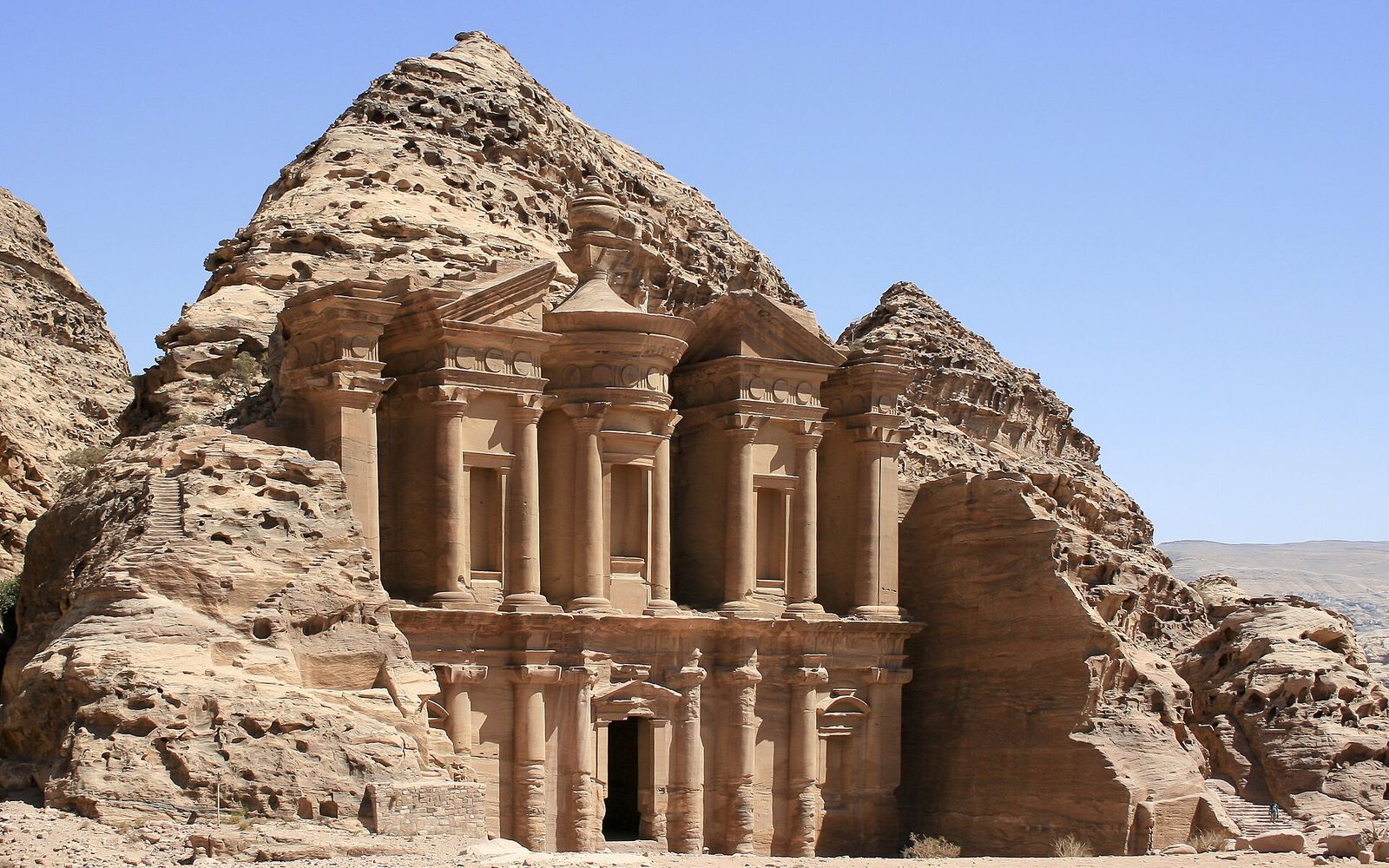
The Monastery (Ad-Deir), Petra
It is bigger than the Treasury and, for many people, more impressive. It sits at the top of roughly 800 rock-cut steps from the Basin restaurant area. Allow 45-60 minutes up at a steady pace and about 3 hours for the round trip from the city centre. Go in the afternoon, when the façade catches the sun and the climb is in partial shade. Skip the donkey: the steps are rough on the animals and not much fun for you either.
High Place of Sacrifice and the Treasury viewpoint
A steep path near the Theatre takes you up to an ancient altar with views over the whole site. From there you can drop down through Wadi Farasa, past the Garden Tomb and the Roman Soldier Tomb, which gives you a loop that very few day-trippers do. The separate Al-Khubtha trail leads to the classic view looking down on the Treasury. Allow 2-3 hours for each. Bedouin tea stalls charge about 1-2 JOD a glass, and nobody minds you drinking it slowly.
Royal Tombs and the Colonnaded Street, Petra
The Royal Tombs are carved into the cliff opposite the Theatre. Inside, the rock is streaked red, purple and orange. The Urn Tomb has the best terrace. This part is easy to fit between bigger walks and takes about an hour. The Colonnaded Street and the Great Temple take another 30-45 minutes.
Little Petra (Siq al-Barid)
Little Petra is a small Nabataean site about 15 minutes' drive north of Wadi Musa. Entry is free, it takes an hour to see, and it is a nice teaser if you arrive late in the afternoon. A taxi from Wadi Musa costs around 15-20 JOD return with waiting time. Some hikers take the back trail from here to the Monastery, but only do it with a local guide.
Wadi Rum
Wadi Rum is a protected desert of red sand and sandstone mountains, made famous by Lawrence of Arabia and later by half of Hollywood's Mars films. Entry is 5 JOD (free with the Jordan Pass). Jeep tours start around 35-50 JOD per person for a half day. Stay at least one night, because sunset and the stars are the whole point. Avoid camps that sit right next to the village. The deeper camps are quieter.
Amman Citadel (Jabal al-Qal'a)
The Citadel sits on Amman's highest hill and holds the Temple of Hercules, an Umayyad palace and the best view in the city. Tickets are about 3 JOD (€4) or free with the pass, and an hour is enough. Go in the late afternoon, when you hear the call to prayer roll across the hills of the city.
Roman Theatre and downtown Amman (Al-Balad)
The 6,000-seat theatre is built into a hillside right in downtown. It costs about 2 JOD and takes around 40 minutes. Afterwards, walk Al-Balad's souks and King Faisal Street. Downtown is noisy and chaotic, and it is the part of Amman with the most character.
Jerash
Jerash is one of the best-preserved Roman cities outside Italy. It has Hadrian's Arch, an oval forum, a colonnaded street (the Cardo) and two theatres. Entry is about 10 JOD (€13) or free with the pass. Allow 3 hours. It is 50 minutes north of Amman, and the site has very little shade, so start early.
The Dead Sea
Floating in water this salty is a strange experience, and it is worth doing once. Public access is limited. Amman Beach costs about 25-30 JOD. A resort day pass runs 40-70 JOD and includes showers, pools and lunch. Twenty minutes in the water is plenty. Do not shave beforehand, and do not get the water in your eyes.
Madaba and Mount Nebo
St George's Church in Madaba houses a 6th-century mosaic map of the Holy Land, and entry costs about 2 JOD. Mount Nebo, 10 km away, is where Moses is said to have seen the Promised Land. The entry fee is around 3 JOD, and on a clear day you can see the Dead Sea and Jerusalem. Madaba is a relaxed alternative base to Amman, close to the airport.
Wadi Mujib
Wadi Mujib is a canyon near the Dead Sea where you wade and climb up a river to a waterfall. The Siq Trail costs about 21 JOD and takes 2-3 hours. It usually opens only in the warmer months (roughly April to October) and closes after rain because of flash floods. Bring shoes that can get soaked. It is great fun and much more of an adventure than the Dead Sea beaches.
Things to do in Jordan and Petra
Some of the best moments in Jordan are not tied to a ticket booth.
- Sleep in a Wadi Rum camp. A bubble tent with a glass roof costs 100+ JOD. A simple Bedouin tent with dinner costs 30-50 JOD per person, and the stars are the same.
- Eat zarb. This is the Bedouin barbecue that camps cook underground in a sand pit. Ask your camp whether they make it.
- Go to Petra by Night. The Siq is lit by 1,500 candles and costs about 17 JOD, usually on Monday, Wednesday and Thursday. It is atmospheric but crowded (see the overrated section).
- Hike to Dana. The trail from Dana Biosphere Reserve down to Feynan Ecolodge is a classic full-day walk.
- Snorkel or dive in Aqaba. The Red Sea reefs are a short taxi ride south of town. Snorkel hire costs about 5-10 JOD.
- Take a cooking class in Wadi Musa. Petra Kitchen runs evening classes for about 40-45 JOD with dinner included.
- Climb Amman's stairs. Jabal al-Weibdeh and Rainbow Street are linked by old staircases lined with cafés and street art.
- Drive the King's Highway. The old road south passes Kerak Castle and dramatic canyons, and it is much more interesting than the Desert Highway.
Jordan and Petra for free (or almost)
Jordan's paid sights add up fast, so these cheap options matter:
- Buy the Jordan Pass (70-80 JOD) before you fly. If you stay three nights or more it waives the 40 JOD visa fee and covers Petra, Wadi Rum, Jerash, the Citadel and around 40 other sites. For almost everyone visiting Petra, it pays for itself.
- Little Petra is free.
- Walk Rainbow Street, Jabal al-Weibdeh and the downtown souks for free.
- Watch sunset from the Citadel area, or from the Wild Jordan Center terrace for the price of a coffee.
- Falafel sandwiches cost 0.5-1 JOD.
- Bedouin tea in Petra and Wadi Rum is often offered free. If you buy something, it is a gesture of goodwill.
- Free walking tours run in Amman. Tip what you think it was worth.
Jordan and Petra itinerary: 6 days
| Day | Morning | Afternoon | Evening |
|---|---|---|---|
| Day 1 Amman | Arrive and drop your bags in downtown or Jabal Amman. Start with breakfast at Hashem (falafel, hummus, ful). | See the Roman Theatre, then walk or take a short taxi up to the Citadel for the late light. | Walk Rainbow Street, eat kunafa at Habibah, then have dinner in Jabal al-Weibdeh. |
| Day 2 Jerash, then down to the Dead Sea | Leave early for Jerash and spend three hours there. | Drive or take a taxi past Amman down to the Dead Sea (about 1 hour 15 minutes) for a float before sunset. | Stay at a Dead Sea hotel, or head back to Madaba for a cheaper night. |
| Day 3 Madaba, Mount Nebo, King's Highway to Petra | See the mosaic map in Madaba, then go up Mount Nebo. | Drive the King's Highway south via Kerak Castle and the Wadi Mujib viewpoint, arriving in Wadi Musa by sunset. | Petra by Night if it falls on the right day. Otherwise, take a cooking class or go to bed early. |
| Day 4 Petra, the classic route | Be at the gate at opening. Walk the Siq to the Treasury, then climb to the Al-Khubtha viewpoint. | Visit the Royal Tombs and the Colonnaded Street, then climb to the Monastery for afternoon light. | Eat something filling in Wadi Musa and rest your legs. |
| Day 5 Petra, the quieter side | Hike the High Place of Sacrifice loop through Wadi Farasa. | Drive to Little Petra, then on to Wadi Rum (about 1 hour 45 minutes). Most camps pick you up at the visitor centre. | Sunset on the dunes, zarb dinner, stars. |
| Day 6 Wadi Rum and out | Take a jeep tour at sunrise, before the heat: Lawrence's Spring, the Khazali Canyon inscriptions and the rock bridges. | Transfer to Aqaba, about 1 hour away, which has an airport and the Red Sea. Alternatively, drive back to Amman in about 4 hours. | Have a seafood dinner in Aqaba or catch your flight home. |
What is overrated (and what to do instead)
- Petra by Night. The candles look lovely, but hundreds of people with phone torches spoil the silence. If you are short on money or energy, use that budget on a second day inside Petra instead.
- Dead Sea resort day passes. 60+ JOD for twenty minutes in the water and a lunch buffet is poor value. Amman Beach, or a cheaper hotel with sea access, works just as well.
- The horse ride "included in the ticket". It only covers the first 800 metres before the Siq, and the handlers expect a big tip. Walk it. It is flat.
- Petra as a day trip from Eilat or Amman. You arrive mid-morning in the worst heat and crowds and see only the Treasury. Sleep in Wadi Musa.
When to visit Jordan and Petra
The best times are March to May and late September to November. Days in Petra reach 20-28°C, the desert is pleasant, and the light is beautiful. Spring brings wildflowers but also the biggest crowds, especially around Easter.
Summer is hot: Petra and Wadi Rum go above 35°C and Aqaba can pass 40°C. Prices drop, but you will have to hike only at dawn. Winter (December-February) brings cheaper flights and hotels and an almost empty Petra. However, nights are near freezing in Wadi Rum and Wadi Musa, it occasionally snows, and heavy rain can close the Siq. The Dead Sea and Aqaba stay warm in winter. During Ramadan many restaurants close in daytime, but tourist areas keep working.
Where to stay in Jordan and Petra: best areas
- Downtown Amman (Al-Balad): Best for backpackers. Hostels cost 15-30 JOD and basic hotels 30-50 JOD. It is loud but central.
- Jabal Amman and Jabal al-Weibdeh: Better for couples and first-timers. Boutique hotels and guesthouses cost 50-120 JOD, with cafés nearby and walking distance to downtown.
- Wadi Musa (Petra): This is where you need to sleep at least two nights. Budget options cost 25-50 JOD, and mid-range hotels near the gate cost 70-150 JOD. The Mövenpick sits right at the entrance if you want to splurge.
- Wadi Rum camps: Simple tents with dinner and breakfast cost 30-60 JOD per person. Bubble tents cost 100-200 JOD per night.
- Madaba: A quieter, cheaper alternative to Amman, 20 minutes from the airport. Guesthouses cost 30-70 JOD.
What to eat in Jordan and Petra
Mansaf is the national dish: lamb cooked in fermented dried yogurt (jameed) and served over rice. It is rich and filling. Order it once at a proper restaurant like Sufra on Rainbow Street, and skip the tourist buffets. Maqluba is rice, chicken and vegetables cooked in a pot and turned upside down at the table, and families make a show of it.
For breakfast, go for hummus, ful (stewed fava beans), falafel and manakish with za'atar. Hashem in downtown Amman is the most famous spot. It is basic, fast and cheap. For dessert, eat kunafa at Habibah, the warm cheese pastry soaked in syrup, eaten standing up on the street. In Wadi Rum, ask for zarb. Restaurants inside Petra are overpriced at 15+ JOD for an average buffet, so bring a packed lunch from Wadi Musa.
- Falafel or shawarma sandwich: 0.5-2 JOD (€1-2.5)
- Casual lunch: 5-8 JOD (€6-10)
- Mid-range dinner: 15-25 JOD (€20-32)
- Beer: 5-7 JOD, expensive because alcohol is heavily taxed
Airport to city centre and getting around
Queen Alia International Airport is 35 km south of Amman. The Airport Express bus costs about 3-4 JOD and runs to the North Bus Station (Tabarbour), taking about 45-60 minutes. From there you will need a taxi into town. A taxi from the airport costs 20-25 JOD and takes about 40 minutes. In the city, use Careem or Uber, as rides are cheap at 2-5 JOD. King Hussein Airport in Aqaba serves some low-cost flights and is handy if you start or end in the south.
Between cities, the JETT bus runs Amman to Petra for about 10-11 JOD in roughly 4 hours, and Amman to Aqaba as well. There is no rail and no travel pass. Minibuses link Wadi Musa, Wadi Rum and Aqaba, but they leave when full. Honestly, a rental car (25-40 JOD a day) is the easiest way to do this itinerary. Roads are fine, though driving in Amman itself is chaotic. A private driver for the whole loop costs about 60-100 JOD per day.
How much a trip to Jordan and Petra costs
- Shoestring: €50-70 (40-55 JOD) per day. This covers a hostel bed, falafel and street food, JETT buses and a shared Wadi Rum camp.
- Mid-range: €110-170 (85-130 JOD) per day. This covers a double room in decent hotels, restaurant dinners, a shared rental car and one Dead Sea day pass.
- One-off: the Jordan Pass at €90-105 (70-80 JOD) covers the visa and most entry tickets.
Day trips from Jordan and Petra
- Bethany Beyond the Jordan (Baptism Site): 50 minutes from Amman, often combined with the Dead Sea. Entry is about 12 JOD.
- Desert castles (Qasr Amra, Qasr Kharana): A half day east of Amman by car or taxi. Qasr Amra is famous for its Umayyad frescoes.
- Dana Biosphere Reserve: 2.5 hours from Amman or 1 hour north of Petra. It has dramatic valley views and good hikes.
- Kerak Castle: A Crusader fortress on the King's Highway, 2 hours from Amman. Fits nicely into the drive south.
- Aqaba: 1 hour from Wadi Rum by taxi (around 25-35 JOD) for a day of snorkelling.
Common mistakes and scams
- Arriving without the Jordan Pass, then paying the 40 JOD visa plus every ticket separately.
- Leaving the country after fewer than three nights with a Jordan Pass, which means the visa fee gets charged after all.
- Taxis without meters in Amman. Use Careem or Uber, or agree the price before getting in.
- "Air-conditioned taxi" donkeys in Petra. The pitch is funny, but the animals are often worked hard. If you ride one, pick an animal that looks healthy and agree the price first.
- "The site is closed, come to my shop". Ignore anyone redirecting you.
- Booking a camp near Wadi Rum village and being surprised by generators and lights.
- Underestimating Petra. You can easily walk 20 km in a day there. Bring 2-3 litres of water, sun protection and proper shoes.
Jordan and Petra FAQ
How many days do you need in Jordan and Petra?
Six days is the right amount for Amman, Jerash, the Dead Sea, two days in Petra and a night in Wadi Rum. With four days, focus on Petra and Wadi Rum only.
Is the Jordan Pass worth it?
Yes, if you visit Petra and stay at least three nights. It covers the 40 JOD visa plus Petra's entry, so it saves money almost immediately.
Is one day enough for Petra?
One day covers the Treasury and the Monastery if you start at opening, but you will be exhausted. Two days lets you add the High Place of Sacrifice and walk at a sane pace.
Is Jordan safe for tourists?
Yes. Jordan is one of the safest countries in the region, and tourist areas are well policed. Check your government's travel advice before booking, especially given regional tensions.
What should I wear in Jordan?
Cover shoulders and knees in cities and villages. Swimwear is fine at the Dead Sea and in Aqaba hotels, and comfortable hiking shoes are essential in Petra.
Can you get from Amman to Petra by public transport?
Yes. The JETT bus runs daily from Amman to Wadi Musa for about 10-11 JOD and takes around 4 hours. Book a day ahead in high season.
What is the best month to visit Petra?
April, October and November are best, with mild days and good light. March and late September are also good and slightly cheaper.
What to see in Jordan and Petra in two days?
With two days, follow days 1 and 2 of this itinerary. Day 1: Amman. Morning: Arrive and drop your bags in downtown or Jabal Amman. Day 2: Jerash, then down to the Dead Sea. Morning: Leave early for Jerash and spend three hours there.
What to do in Jordan and Petra in 6 days?
With six days in Jordan and Petra, this is the guide's route: Day 1, Amman; Day 2, Jerash, then down to the Dead Sea; Day 3, Madaba, Mount Nebo, King's Highway to Petra; Day 4, Petra, the classic route; Day 5, Petra, the quieter side; Day 6, Wadi Rum and out. The table above has the full plan for each day.
Where to stay in Jordan and Petra?
The 3 hotels with the best real guest scores, according to top3hotels.com, are budget: Zaman Ya Zaman Boutique Hotel (The Top-rated Area in Amman, score 8.6, from €30 a night); best value: New MerryLand Hotel (King Hussein Street, score 9.3, from €47 a night); luxury: Hilton Amman (07 lliya Abu Madi Street , Shmeisani , score 9.6, from €145 a night). The nightly price is indicative and changes with the dates.
How do you get from the airport to central Jordan and Petra?
Queen Alia International Airport is 35 km south of Amman.
What are the must-see places in Jordan and Petra?
According to this guide: The Siq and the Treasury (Al-Khazneh), Petra; The Monastery (Ad-Deir), Petra; High Place of Sacrifice and the Treasury viewpoint; Royal Tombs and the Colonnaded Street, Petra; Little Petra (Siq al-Barid); Wadi Rum; Amman Citadel (Jabal al-Qal'a); Roman Theatre and downtown Amman (Al-Balad). Each one is explained in the "What to see" section.
Photo: Diego Delso · · Wikimedia Commons · Guide updated 21 Nov 2026