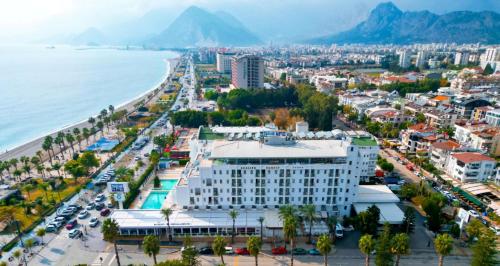
Antalya is two cities stuck together. One is a real Turkish city of over a million people, with traffic, tram lines, fruit markets and families eating sunflower seeds in the park. The other is the resort machine that most visitors only see from a transfer bus: all-inclusive hotels stretching east along Lara and west towards Kemer. The good news is that the first one is far more interesting, and it sits right on a cliff above a turquoise sea with the Taurus Mountains behind it.
It suits people who want beach and culture in the same trip, on a budget that still goes a long way in Turkey. The Roman sites around the city are among the best in the Mediterranean and usually much quieter than Ephesus. Four days is the right amount: two for the city itself and two for day trips to Perge, Aspendos, Termessos or Side. With only two days, stick to Kaleiçi, the cliffs and one ancient site.
What to see in Antalya: the places worth your time
Kaleiçi (the old town)
Kaleiçi is the walled old town and the reason most people base themselves here: Ottoman houses with wooden bay windows, bougainvillea, Roman wall fragments and a lot of carpet shops. Give it half a day of wandering, which is free. Our tip: walk it first thing in the morning before the boat-trip touts and shopkeepers are fully awake, and head for the quieter southern lanes around Hesapçı Sokak rather than the main drag down to the harbour.
Hadrian's Gate (Üçkapılar)
This triple-arched marble gate was built for Emperor Hadrian's visit in 130 AD and still forms an entrance to Kaleiçi from Atatürk Caddesi. It takes ten minutes and costs nothing. Look down at the stone road under the arches: the ruts were worn by Roman cart wheels. It looks best in late afternoon light, when there are fewer tour groups posing in front of it.
The Old Harbour (Yat Limanı)
The Roman-era harbour at the bottom of Kaleiçi is now full of wooden pirate-style tour boats and yachts. It's pretty, it's touristy and it's worth an hour. The cafés right on the water charge double. Have your tea on the terraces up the cliff instead and look down at the harbour.
Yivli Minare (the Fluted Minaret)
Antalya's symbol is a 13th-century Seljuk minaret with eight fluted brick sides and traces of turquoise tiles. It sits by Kalekapısı, the main square at the top of Kaleiçi, next to the clock tower. Seeing it is free and takes fifteen minutes. The view of it from the terrace below, looking up from the old town, beats the view from the square.
Hıdırlık Tower and Karaalioğlu Park
Hıdırlık is a stocky Roman tower at the southern corner of Kaleiçi, and the park beside it runs along the cliff edge. This is where locals come for sunset, and it's free. Allow an hour. Bring a simit from a street cart and sit on the cliffside benches facing the Beydağları mountains as the sun drops behind them.
Antalya Museum
This is one of the best archaeological museums in Turkey. Its Hall of the Gods and the Perge statues are outstanding, and the Weary Herakles was reunited here after its top half came back from Boston. Plan on two hours. Entry is about €15-20 (pay in lira or by card; the price is set in euros and changes often). Our tip: see it before you visit Perge, because most of the best statues from the site are here and the ruins will make far more sense.
Suna and İnan Kıraç Kaleiçi Museum
A small museum in a restored Ottoman mansion plus an old Greek Orthodox church in Kaleiçi. It shows Ottoman domestic life and has a good ceramics collection. It's cheap (a few euros) and takes 45 minutes, which makes it ideal for the hottest part of the day.
Lower Düden Waterfall
Here the Düden River drops roughly 40 metres off a cliff straight into the sea at the eastern end of the city, near Lara. The park is free and takes an hour. The best view is actually from the sea, so if you're doing a harbour boat trip, choose one that goes to the falls.
Upper Düden Waterfall
Further inland, the upper falls sit in a shady park where you can walk behind the water through a small cave. Entry costs a couple of euros and the visit takes about an hour. Weekends are packed with local families, so go on a weekday morning. City buses run here, but check the number on the Antalyakart app because routes change.
Konyaaltı Beach
This is the city beach: a long stretch of grey pebbles and very clear water running west from the cliffs, with the mountains rising behind. Sunbed sets cost around €5-10, or you can lay a towel down for free. It's the best urban beach in Turkey in our view, and far nicer than you'd expect a city beach to be. Wear water shoes, because the pebbles hurt.
Tünektepe cable car
At the far western end of Konyaaltı, a cable car climbs to a hilltop with a revolving restaurant and the best panorama of the whole bay. The return ride costs about €5-8 and you'll need 1-2 hours including getting there. Go for sunset, but skip the restaurant food: the view is what you're paying for.
Perge
Perge is a huge Roman city 18 km east of the centre, with a colonnaded street, a water channel running down the middle, a stadium and Hellenistic towers. Allow 2-3 hours; entry is about €15-20. It's reachable by the AntRay tram to Aksu followed by a short walk or taxi. There's almost no shade, so go at opening time with lots of water.
Things to do in Antalya
Once you've seen the main sights, these are the experiences that make the trip:
- Take a harbour boat trip. Two hours along the cliffs to Lower Düden costs about €10-20. Agree what's included before boarding, and avoid the "lunch included" six-hour versions unless you like foam parties.
- Get a hammam scrub. Sefa Hamamı in Kaleiçi is a historic Seljuk-era bathhouse. Expect €30-50 for a scrub and foam massage.
- See a show at Aspendos. If you're here when the Aspendos opera and ballet festival is on (usually late summer), watching a performance in a 2nd-century Roman theatre beats anything else in the region.
- Raft the Köprülü Canyon. Half-day rafting trips with hotel pickup cost about €30-45. The water is cold, the rapids are mild and it's a lot of fun.
- Swim off the cliffs. Below Karaalioğlu Park, small beach clubs and ladders let you swim in deep, clear water right under the old town. Some charge a small entry, others want a drink order.
- Shop at a local market. The Kaleiçi bazaar is aimed at tourists. For real life, find a neighbourhood weekly market (pazar), where locals buy olives, cheese and fruit.
- Ride the nostalgic tram. The old-style T2 line runs along the coast road from the museum towards the centre, and it's a cheap, scenic way to move around.
Antalya for free (or almost)
A lot of the best of Antalya costs nothing. Walking Kaleiçi, Hadrian's Gate, the Fluted Minaret, the Old Harbour and Hıdırlık Tower is all free. Karaalioğlu Park at sunset is free and is the city's best evening out.
Konyaaltı Beach is free if you bring a towel, and the seafront promenade has showers and long cycle paths. Lower Düden Waterfall is free too. For lunch, a simit from a cart costs well under €1, and a gözleme from a market stall is a couple of euros.
Antalya itinerary: 4 days
Day 1: Kaleiçi and the cliffs
Morning: Start at Hadrian's Gate, walk down through Kaleiçi to the Fluted Minaret and the Kaleiçi Museum, then end at the Old Harbour. Afternoon: Take a boat trip to Lower Düden or swim at one of the cliff platforms below the old town. Evening: Watch sunset at Hıdırlık Tower, then have dinner in the quieter lanes of southern Kaleiçi.
Day 2: Museum and Konyaaltı
Morning: Take the nostalgic tram west to the Antalya Museum. Afternoon: The beach is right below the museum, so walk down to Konyaaltı and spend the afternoon there. Evening: Taxi or bus to the Tünektepe cable car for sunset, then have dinner back along the Konyaaltı strip.
Day 3: Perge and Aspendos
Morning: Be at Perge at opening time. Afternoon: Continue to Aspendos, about 45 km from the city, to see the best-preserved Roman theatre anywhere. Hiring a car or a taxi for the day makes this easy. Evening: Stop at Upper Düden on the way back if you have the energy, or go straight to a hammam.
Day 4: Termessos or Side
Morning: Choose Termessos, a mountain-top ruined city in a national park, for a hike, or Side for ruins by the sea and a beach. Afternoon: Finish the trip at the site you chose. Evening: Have a last meal in Kaleiçi and a drink with a cliff view.
What is overrated (and what to do instead)
- Lara Beach as a destination. It's a long strip of sand lined with giant theme hotels, and public access is awkward. Konyaaltı is better and closer.
- The "pirate boat" all-day cruises. They mean loud music, crowds and mediocre lunch. A two-hour trip to the falls shows you the best of the coast.
- The Land of Legends theme park. It's expensive and you could be anywhere in the world. Rafting in Köprülü Canyon gives you a far better day.
- Harbour-front restaurants. Fish is priced by weight and it adds up fast. Eat a block or two up into Kaleiçi, or at a lokanta in the newer city.
When to visit Antalya
The best time to visit Antalya is May-June or late September to October. The sea is warm, the days run around 25-30°C and the ruins are bearable to walk around. July and August often pass 35-40°C with high humidity, which makes Perge at noon dangerous. Summer is also when hotel prices peak and the old town is at its busiest.
Winter is mild, around 15°C during the day, and it's the cheapest season, with hotels at half price or less. Swimming is only for the brave, but it's an excellent time for ruins and hiking at Termessos. Some beach businesses close, while the city itself keeps running. April and November are sweet spots for both price and comfort.
Where to stay in Antalya: best areas
- Kaleiçi: Best for first-timers and couples. You'll stay in boutique hotels in restored Ottoman houses, many with small pools. Expect €50-120 a night. It's noisy near the bars, and cars can't reach most streets.
- Around Kalekapısı and Muratpaşa: Best for budget travellers who want transport links. These are ordinary city hotels just outside the walls, at €35-70.
- Konyaaltı: Best for beach lovers and families. It has modern hotels and apartments near the sea at €60-150, and the T2 tram runs to the centre.
- Lara: Best if you want an all-inclusive resort and plan to stay put. Prices run €100-300 or more, and it's far from the old town.
What to eat in Antalya
Antalya has its own specialities, and you should eat them rather than the "international menu" outside your hotel. Order piyaz, which here is made with white beans in a tahini dressing, unlike anywhere else in Turkey, and comes as a side with şiş köfte (grilled meatballs on skewers). Try hibeş, a spicy tahini and cumin spread, plus tandır (slow-roasted lamb) and gözleme with spinach and cheese.
For dessert, have kabak tatlısı (candied pumpkin with tahini and walnuts) and some fresh local citrus. Breakfast is a proper Turkish spread with olives, cheese, tomatoes and bread. Avoid any restaurant with photos of pizza and five languages on the menu.
A lunch of köfte, piyaz and ayran at a local place costs about €6-10 (roughly 300-500 TL). Dinner with meze and a drink in Kaleiçi costs €20-35 per person. Alcohol is heavily taxed, so a beer can cost €4-6.
Airport to city centre and getting around
The cheapest way from Antalya Airport to the centre is the AntRay tram, which runs from the airport into the city in about 40-50 minutes for about €1. Pay with an Antalyakart or a bank card where accepted, and check at the airport machines. Havaş-style airport buses go to central points for a few euros. A taxi to Kaleiçi takes 20-30 minutes and costs about €20-30. Agree on the meter or a fixed price first.
In the city, the T1 tram line crosses the centre and the old nostalgic tram (T2) runs along the coast towards Konyaaltı. Buses cover everything else. Buy an Antalyakart (a rechargeable card, shareable by several people) at kiosks. Single rides cost under €1. Kaleiçi itself is walking only. For the ruins, renting a car (from about €30-40 a day) gives you the most freedom.
How much a trip to Antalya costs
- Shoestring: €45-60 a day. That covers a hostel or basic hotel (€25-35), lokanta meals and street food (€12-18), public transport (€2-3) and one paid site.
- Mid-range: €100-150 a day. That covers a Kaleiçi boutique hotel (€60-100), restaurant dinners with drinks (€30-40), museums and a boat trip or hammam.
- Extras: Car hire runs €30-40 a day plus fuel, rafting €30-45, and the Aspendos festival from €20-60.
Turkish prices change quickly with inflation, so treat lira figures as rough and euro equivalents as the more stable guide.
Day trips from Antalya
- Aspendos: About 45 minutes east by car or tour, and you'll want 1-2 hours there. The theatre is astonishingly complete. Pair it with Perge.
- Termessos: About 45 minutes north-west by car or taxi (no easy public transport). Allow 3-4 hours on uneven paths uphill. Wear good shoes.
- Side: About 1.5 hours by bus from the otogar (main bus station) to Manavgat, then a dolmuş. You'll find a Temple of Apollo on the sea and a Roman theatre. Make it a full day.
- Olympos and Çıralı: About 1.5 hours south-west by bus or car. There are ruins in a forest gorge, a wild beach and the Chimaera flames at night. It's better as an overnight stay.
- Kaş: About 3.5 hours by bus. It's a lovely small town and too far for a day trip, but excellent for two extra nights.
Common mistakes and scams
The classic scam is the friendly stranger in Kaleiçi who chats, then walks you to his "cousin's" carpet shop. Be polite, say no and walk away. Taxis without a running meter will overcharge, so insist on the meter or use the BiTaksi app.
Fish restaurants that price by weight rarely show you the weight. Ask for the price before they cook. Boat trips sometimes add "extra" charges for drinks or the falls detour, so get everything confirmed in writing. Paying in euros usually means a bad exchange rate. Pay in lira, and when card terminals ask, choose to be charged in lira. Finally, don't underestimate the summer heat at the ruins: people do get heatstroke at Perge.
Antalya FAQ
How many days do you need in Antalya?
Four days is ideal: two for the city and two for Perge, Aspendos, Termessos or Side. Two days covers Kaleiçi, the museum and one ancient site.
Is Antalya worth visiting outside the resorts?
Yes. The city centre, Kaleiçi and the Roman sites nearby are the best part of the region, and much more interesting than the all-inclusive strip.
Which is the best beach in Antalya?
Konyaaltı, for clear water, mountain views and easy access from the centre. Lara has sand but is dominated by resorts.
How do I get from Antalya Airport to Kaleiçi?
The AntRay tram is the cheapest option at about €1 and takes roughly 45 minutes. A taxi costs about €20-30 and takes 20-30 minutes.
Is Antalya expensive in 2026?
It's cheaper than most of the Mediterranean, but prices in tourist areas have risen sharply. Budget €45-60 a day on a shoestring and €100-150 for mid-range.
Can you swim in Antalya in winter?
The sea is around 17-19°C in winter, which is swimmable only for the hardy. Ruins, hiking and city walks are pleasant from November to March.
Is Antalya safe for tourists?
Yes, it's generally very safe. The main risks are overcharging, carpet-shop hustlers and summer heat.
Photo: Wikipedia · · Wikimedia Commons · Guide updated 21 Nov 2026