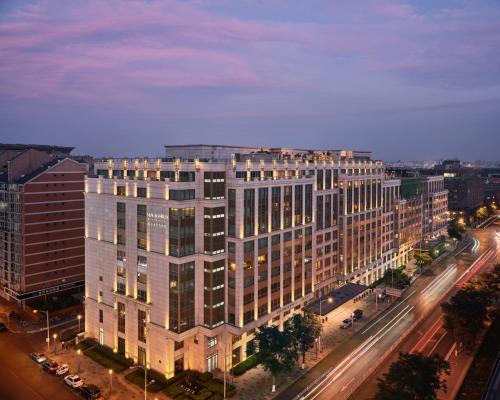
Beijing is huge, flat, and spread out. It's a city of six-lane ring roads and grey compounds that suddenly opens onto imperial palaces, quiet temple courtyards and alleys where old men still play cards on upturned crates. It isn't pretty in the way Paris or Kyoto are. It wins you over with scale and history, and with the food: roast duck, hand-pulled noodles and the best breakfast street snacks in northern China.
It suits first-timers to China, history fans and anyone who wants the Great Wall without a two-day expedition. You need 4 days: three for the city and one for the Wall. With fewer, you spend most of your time on the metro. Book the big sights in advance, set up mobile payments before you land, and expect to walk 20,000 steps a day.
What to see in Beijing: the places worth your time
The Forbidden City (Palace Museum)
The world's largest palace complex, home to 24 emperors, is the one sight you cannot skip. Allow 3-4 hours and enter from the south through the Meridian Gate. Tickets cost about €8 (60 CNY) from April to October and €5 (40 CNY) in winter. Sales are online only, with your passport number, and open about a week ahead. Our tip: book the moment slots open, because summer and holiday dates sell out in hours. It is closed on Mondays. Skip the central axis crowd and drift east to the Treasure Gallery and the Clock Gallery, which cost a little extra and are much quieter.
Jingshan Park
This artificial hill directly north of the Forbidden City gives you the classic view over its golden roofs. Entry costs a couple of yuan (under €0.50) and the climb takes ten minutes. Go straight after the palace, or at sunset when the roofs glow orange. Allow 45 minutes.
The Great Wall at Mutianyu
Mutianyu is the section we recommend for most people. It's restored but not plasticky, with watchtowers every few hundred metres, and far less crowded than Badaling. Entry is about €6 (45 CNY), and the cable car or chairlift up plus the toboggan down costs around €18-20 (140-160 CNY). It takes about 1.5-2 hours by car from the centre, so it's a full day. Our tip: arrive at opening and walk west towards tower 20 for steeper, emptier stretches.
Temple of Heaven
The round, blue-roofed Hall of Prayer for Good Harvests is one of Beijing's most perfect buildings. The park around it is as good as the temple. Get the through ticket (about €4.50, 34 CNY) rather than park entry only. Go before 9am, when locals dance, practise tai chi, sing opera and play hacky-sack with feathered shuttlecocks. Allow 2-3 hours.
Summer Palace
The Qing emperors' lakeside retreat: Kunming Lake, the painted Long Corridor and Longevity Hill. It's in the northwest, about 40 minutes by metro (Line 4 to Beigongmen). The through ticket costs around €8 (60 CNY). Plan half a day, and take a boat across the lake to save your legs.
Tiananmen Square
Entry to the world's most famous public square is free, but it needs a reservation and passport security checks, which can take a while. Walk across it on your way to the Forbidden City rather than making it a separate trip. If you want to see Mao's Mausoleum, also free with a reservation, bags are not allowed and the queue moves fast.
National Museum of China
The National Museum sits on the east side of Tiananmen. It's free with an online reservation and enormous. Focus on the "Ancient China" galleries, with bronzes, jade and Tang ceramics, and give it 2-3 hours. It's ideal on a smoggy or rainy afternoon.
Lama Temple (Yonghegong)
This Tibetan Buddhist temple is still very active, with incense smoke and a 26-metre Buddha carved from a single sandalwood trunk. Entry is about €3.50 (25 CNY), you need around 1.5 hours, and it's right by Yonghegong metro (Lines 2 and 5). Combine it with the Confucius Temple and Wudaoying Hutong next door.
Beihai Park and Houhai
Beihai is a former imperial garden built around a lake, with the White Dagoba on an island in the middle. Entry is about €1.50 (10 CNY). Exit north and you reach the Shichahai lakes (Qianhai and Houhai), lined with willows by day and loud bars by night. Allow 2-3 hours, ideally in late afternoon.
Hutongs around Gulou and Dashilar
The old alley neighbourhoods are where Beijing actually lives. They're free, and you can give them as much time as you like. The streets around the Drum and Bell Towers are the best to wander: Mao'er Hutong, Fangjia Hutong and Wudaoying all have cafés and courtyard homes. South of Qianmen, Yangmeizhu Xiejie is a quieter, more local alternative to the touristy Dashilar shopping street.
798 Art District
798 is a former Bauhaus-style factory complex turned galleries, studios and cafés. Most spaces are free; UCCA, the main contemporary art centre, charges for big shows. It's out by the airport road, so allow half a day, and go on a weekday because weekends are packed with photo shoots.
Olympic Park
The Bird's Nest and Water Cube are worth an hour at dusk, when they light up. The area is free to walk, and paying to go inside the stadium is not worth it. Take Line 8 to Olympic Sports Center or Olympic Green.
Things to do in Beijing
Some of the best things to do in Beijing have nothing to do with ticket queues.
- Eat a proper Peking duck dinner. It's a ritual: the chef carves at the table and you wrap slices in pancakes with scallions, cucumber and sweet bean sauce.
- Join the morning parks. At Temple of Heaven or Ritan Park at 7am, nobody minds if you try the group dancing.
- Cycle the hutongs. Use a shared bike (Meituan or Hello, through Alipay) for a few yuan, or take a guided bike tour around Shichahai.
- Watch an acrobatics show. The Chaoyang Theatre runs nightly shows aimed at tourists. They're cheesy and impressive, at around €25-40 (200-300 CNY).
- See Peking opera. Try the Liyuan Theatre or the Zhengyici Theatre. Short tourist versions with subtitles are easier to sit through than a full performance.
- Drink craft beer or cocktails in a courtyard. Great Leap Brewing in the hutongs started the local craft scene.
- Browse Panjiayuan Antique Market on a weekend morning. Almost nothing is a real antique, but the people-watching is excellent. Haggle hard.
Beijing for free (or almost)
The National Museum, Tiananmen Square, Mao's Mausoleum, 798 and the hutongs cost nothing. Parks charge pocket money: Jingshan, Beihai and Ritan each cost under €1.50. The Qianmen pedestrian street and the Olympic Green are free to walk.
The metro is the other big saving, at €0.40-1.30 (3-10 CNY) per ride. Street breakfast, a jianbing crêpe and soy milk, costs about €1. A frugal day of free sights plus noodle lunches can come in under €20.
Beijing itinerary: 4 days
Day 1: Imperial axis
Morning: Cross Tiananmen Square (reserved) and enter the Forbidden City at opening. Afternoon: Exit north, climb Jingshan Park, then walk into Beihai Park. Evening: Walk up to Houhai for a lakeside drink, then have dinner in the Gulou hutongs.
Day 2: Temples and hutongs
Morning: Be at Temple of Heaven by 8am for the park life. Afternoon: Take the metro to the Lama Temple, then the Confucius Temple, then wander Wudaoying and the hutongs towards the Drum and Bell Towers. Evening: Peking duck dinner, booked ahead.
Day 3: The Great Wall
Morning: Leave around 7am for Mutianyu by private driver or tour bus. Afternoon: Walk the Wall, take the toboggan down, and have a late lunch at the village restaurants by the car park. Evening: Back by 5pm. Rest, then catch an acrobatics show.
Day 4: Northwest and modern Beijing
Morning: Summer Palace, entering at the north gate and walking down to the lake. Afternoon: National Museum, or 798 if you prefer contemporary art. Evening: Olympic Park lit up, or Sanlitun for dinner and bars.
What is overrated (and what to do instead)
- Badaling Great Wall. It's shoulder-to-shoulder crowds on a heavily rebuilt section. Go to Mutianyu instead, or Jinshanling if you're fit.
- Nanluoguxiang. This "historic" hutong is now a crush of bubble tea and souvenir stalls. The parallel alleys on either side are far nicer.
- Wangfujing Snack Street. Its scorpions on sticks are for Instagram, not dinner, and overpriced. Eat at a local noodle shop instead.
- Quanjude for duck. It's famous, but feels like a tour-group factory. Siji Minfu does better duck for similar money, though queues are long, so book or go early.
When to visit Beijing
Go in September to October: dry, sunny days around 20°C, clear skies and autumn colour on the Wall. Spring (April to May) is also good, apart from occasional dust storms and windy days.
Summer is hot (often 35°C), humid and stormy, and full of domestic school-holiday crowds. Winter is bitterly cold (often -10°C) but sunny and empty, and flights and hotels are cheapest then. Snow on the Forbidden City roofs is spectacular if you get lucky.
Avoid Golden Week (1-7 October) and the Labour Day holiday in early May, when sights sell out and prices jump. Chinese New Year is quiet in the city but some restaurants close.
Where to stay in Beijing: best areas
- Dongcheng / Gulou hutongs: courtyard hotels and hostels close to the Lama Temple, Houhai and the Forbidden City. Best for atmosphere. Hostels cost €15-25 (120-200 CNY) and courtyard boutiques €60-120.
- Wangfujing / Dongdan: central, walkable to the Forbidden City, with big chain hotels. Good for first-timers. Expect €70-150.
- Qianmen / Dashilar: south of Tiananmen, with good-value hotels and old-town streets. It's cheaper but quieter at night, at €40-90.
- Sanlitun / Chaoyang: modern, with nightlife, restaurants and international hotels. It's farther from the old sights. Expect €80-200.
Our pick is a courtyard hotel in Dongcheng near a Line 2 or Line 5 station. Check that the hotel accepts foreign guests; most do now, but some small places still don't.
What to eat in Beijing
Peking duck comes first. Order a whole duck for 2-3 people, about €25-35 (200-280 CNY) at good mid-range places like Siji Minfu, or €50+ at Da Dong. Keep the skin dipped in sugar for last.
- Zhajiangmian: thick noodles with fermented soybean pork sauce and shredded vegetables. It's the city's comfort food, at about €3-4.
- Jianbing: a breakfast crêpe with egg, crispy cracker and chilli sauce, under €1.
- Baozi: steamed buns. Qingfeng Baozi is a cheap local chain.
- Lamb hotpot (shuan yangrou): copper-pot hotpot with thin-sliced lamb and sesame sauce. Donglaishun is the classic.
- Jiaozi: dumplings, ordered by weight.
- Brave eaters only: douzhi (fermented mung bean drink) and luzhu huoshao (offal stew).
A noodle or dumpling lunch costs €3-6 (25-50 CNY). A mid-range dinner with duck and beer runs €15-25 per person. Supermarket beer is under €1.
Airport to city centre and getting around
Beijing has two airports. From Capital (PEK), the Airport Express runs to Dongzhimen in about 25 minutes for about €3.50 (25 CNY). From Daxing (PKX), the Daxing Airport Express reaches Caoqiao in about 20 minutes for around €4.50 (35 CNY) in standard class, then you change to the metro. A taxi takes 40-60 minutes and costs €15-20 from Capital, or €20-25 from Daxing. Use the official taxi rank only.
The metro is cheap, clean and signed in English. Every station has bag security checks. Pay with the QR code in Alipay or WeChat (search "Beijing transport" within the app) or buy single tickets at machines; there's no worthwhile tourist pass. Didi, China's Uber, works in English inside Alipay and is cheap. Rides across town cost €5-10.
How much a trip to Beijing costs
- Shoestring: €40-55 a day (310-430 CNY). Hostel dorm, street food and noodle shops, metro, Great Wall by public bus.
- Mid-range: €100-160 a day (780-1,250 CNY). Courtyard or chain hotel, a duck dinner, Didi rides, Mutianyu with a driver.
- Typical tickets: Forbidden City €8, Summer Palace €8, Temple of Heaven €4.50, Mutianyu with cable car and toboggan €25.
- Private driver to the Great Wall: €70-100 for the car, which makes sense to split between 3-4 people.
Day trips from Beijing
- Mutianyu Great Wall: 1.5-2 hours by car, or by public bus from Dongzhimen via Huairou with a change. It's a full day.
- Jinshanling Great Wall: about 2.5 hours by car. It's partly unrestored, with wild views and few people. Best for hikers.
- Gubei Water Town and Simatai: 2 hours away. Book in advance for the night tours of the Wall above a rebuilt canal town.
- Tianjin: 30 minutes by high-speed train from Beijing South, at about €7 (55 CNY). It has European concession architecture and a riverfront, and makes an easy half day.
- Ming Tombs: about 1 hour north, often combined with Badaling or Mutianyu. The Sacred Way of stone animals is the best part.
Common mistakes and scams
- The tea ceremony scam. Friendly "students" who want to practise English invite you to a tea house, and you get a €200 bill. It happens around Tiananmen and Wangfujing. Decline politely.
- The art student scam. It's the same trick, but with an overpriced "exhibition" of mass-produced paintings.
- Black taxis and pedicabs. Touts at airports and Houhai quote one price and demand ten times more. Use Didi or the official taxi rank.
- Not booking ahead. The Forbidden City, the National Museum and Tiananmen all need advance reservations with your passport.
- Arriving without payments set up. Cash and foreign cards are often refused. Link your card to Alipay and WeChat Pay before you fly.
- Expecting Google and WhatsApp to work. Install a VPN or get an eSIM with roaming before arrival, and download offline maps. Apple Maps and Amap work better than Google Maps here.
- Visiting on a Monday. The Forbidden City and many museums close.
Beijing FAQ
How many days do you need in Beijing?
Four days is right: three for the city's main sights and one for the Great Wall. With three days you can manage, but you'll rush the temples and hutongs.
Do I need a visa for Beijing?
Many European nationalities currently get visa-free entry for short stays, and a 240-hour visa-free transit scheme covers many others. Rules change often, so check the latest policy for your passport before booking.
Which part of the Great Wall is best from Beijing?
Mutianyu is the best balance of easy access, good restoration and manageable crowds. Jinshanling is better for hikers, and Badaling is the busiest, so avoid it if you can.
How do I book Forbidden City tickets?
Book online through the official Palace Museum ticketing (website or WeChat mini program) using your passport number, about a week ahead. Tickets are not sold at the gate.
Is Beijing expensive?
Not compared with Western capitals. You can travel comfortably on €100-160 a day, and food and transport are cheap. Hotels are the main expense.
Can I use credit cards in Beijing?
Rarely directly. Almost everything runs on Alipay and WeChat Pay, which now accept linked foreign Visa and Mastercard cards. Carry a little cash as backup.
Is Beijing safe for tourists?
Yes, it's very safe, including at night. The main risks are scams aimed at tourists and chaotic traffic, especially e-scooters on pavements.
Photo: Wikipedia · · Wikimedia Commons · Guide updated 21 Nov 2026