- How many days in Chicago
- 4 days to see the essentials of Chicago; the day-by-day route is below.
- From the airport
- It takes about 45 minutes and costs $5 (about €4.50) from the airport.
- Where to stay
- West Loop: the best food area, trendy, near the Loop and well connected.
- What to eat
- Deep dish is the famous one, but Chicago's food is much more than pizza.
Chicago is the American big city that people keep underestimating. It has world-class architecture (the skyscraper was more or less invented here), one of the best art museums on the planet, 30-odd kilometres of free lakefront, and a food scene that goes far beyond deep dish pizza. It is also friendlier and cheaper than New York, easier to get around than Los Angeles, and much less of a theme park than Las Vegas.
It suits first-timers in the US, architecture and museum people, eaters, and anyone who likes a city with neighbourhoods that feel lived in. You need 4 days: two for downtown and the lakefront, one for museums, one for neighbourhoods like Wicker Park, Pilsen and Lincoln Park. Come between May and October if you can. Chicago winters are not a joke.
What to see in Chicago: the places worth your time
Chicago Architecture Center River Cruise
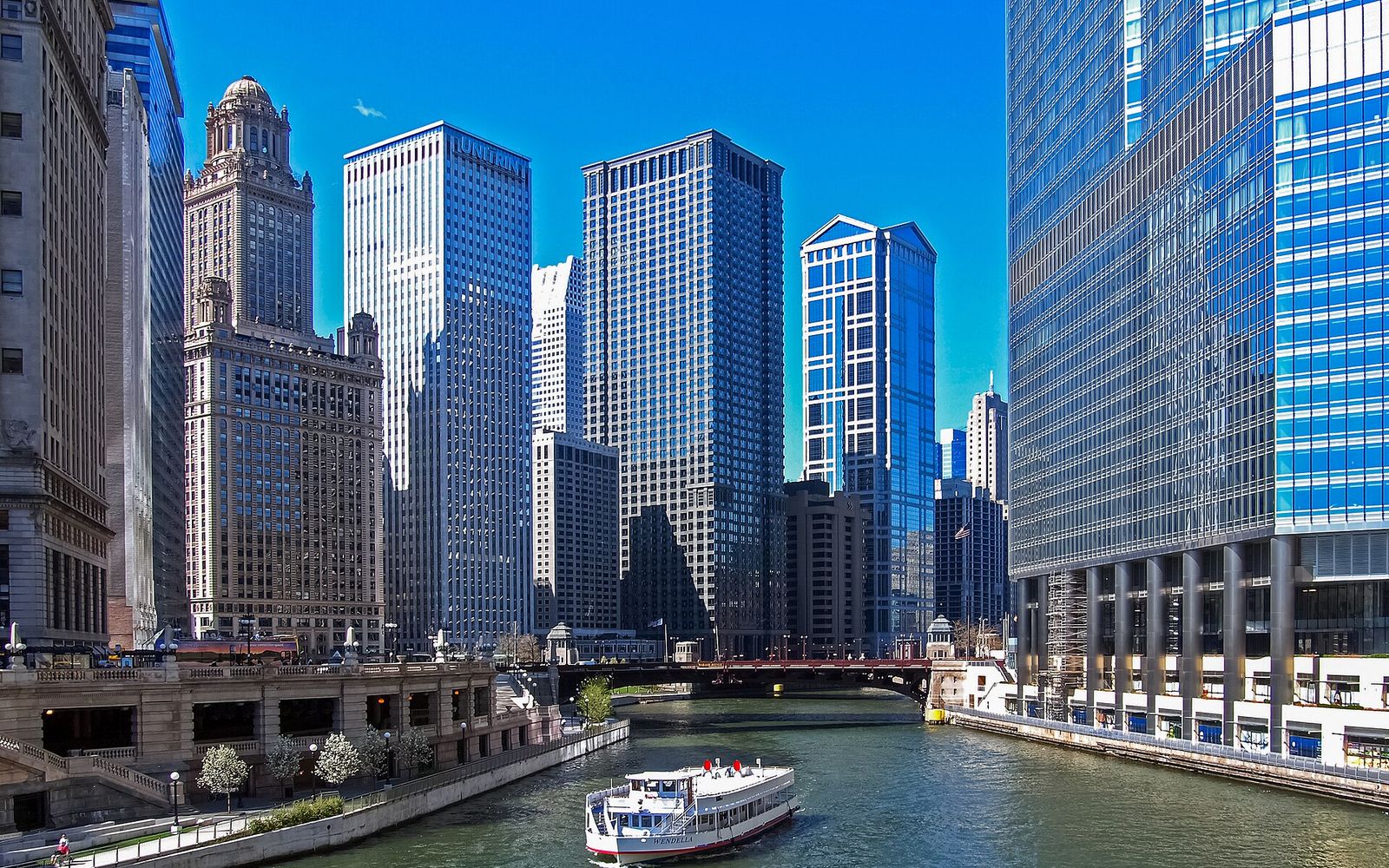
If you only pay for one thing in Chicago, make it the architecture boat tour along the Chicago River. In 75-90 minutes a guide walks you through a century of skyscrapers, from the Wrigley Building to Marina City's corn-cob towers and Willis Tower. Expect about €50-55 ($55-60). Our tip: book the official Chicago Architecture Center tour (with First Lady Cruises) rather than the cheaper "speedboat" options, and take a late afternoon departure for the best light.
Art Institute of Chicago
This is one of the great art museums anywhere, and it does not get the international hype it deserves. Seurat's A Sunday on La Grande Jatte, Hopper's Nighthawks, Grant Wood's American Gothic and a huge Impressionist collection are all here. Allow 3-4 hours, and budget about €30-35 ($32-35) for out-of-state adults. Tip: enter via the Modern Wing on Monroe Street if the Michigan Avenue entrance has a queue, and go straight to the Impressionists before the crowds arrive.
Millennium Park and Cloud Gate (The Bean)
Millennium Park is free and fun, and yes, you will take a photo of your reflection in the Bean. Next to it are the Crown Fountain (the faces that spit water in summer) and the Frank Gehry-designed Jay Pritzker Pavilion, which hosts free concerts in summer. An hour is enough unless there is a show. Tip: go first thing in the morning for a Bean photo without 200 strangers in it.
Lurie Garden and Maggie Daley Park
Right next to Millennium Park, the Lurie Garden is a beautifully planted prairie-style garden that most tourists walk past. Cross the snaking BP Pedestrian Bridge to Maggie Daley Park, which has a climbing wall and a winter skating ribbon. Both are free and take 30-60 minutes.
Willis Tower Skydeck vs 360 Chicago
You will want a view, but pick only one. The Skydeck at Willis Tower has the glass "Ledge" boxes and higher numbers, plus longer queues, at about €30-40 ($32-40). 360 Chicago at the old John Hancock Center on North Michigan Avenue has a better view of the lakefront, at a similar price. What we would do: skip both and have a drink at the Signature Lounge on the 96th floor of the Hancock building. You pay for a cocktail instead of a ticket.
Chicago Riverwalk
The Riverwalk runs along the south bank of the main river branch, lined with bars, kayak rental and benches facing the bridges. It is free, takes an hour to stroll, and is at its best on a warm evening. City Winery and Northman beer hall have outdoor seating.
Lincoln Park Zoo and Lincoln Park
Lincoln Park Zoo is one of the last free major zoos in the US, and it is genuinely good. Combine it with the Lincoln Park Conservatory (also free) and the Nature Boardwalk with its skyline view over the South Pond. Allow half a day. Tip: the classic photo of the skyline reflected in the pond is from the boardwalk's north end.
Field Museum
The Field Museum is a natural history giant: Sue, the most complete T. rex ever found, plus excellent Egypt and Pacific halls. Plan 3 hours and about €30 ($30-40 depending on the pass). It sits on the Museum Campus with the Shedd Aquarium and Adler Planetarium.
Shedd Aquarium and the Museum Campus
The Shedd is popular with families, and its queues show it. Tickets run about €40-45 ($40-50). If you are short on time, skip the inside and walk out along the path toward the Adler Planetarium for one of the best skyline views in the city. That view is free.
Navy Pier
It is touristy (more on that below), but the Ferris wheel and the view back at the skyline from the end of the pier have their place. Walking it is free, and the Centennial Wheel costs about €20 ($20-25). Go at sunset, take your photo, and leave before you buy a souvenir.
Frank Lloyd Wright Home and Studio, Oak Park
For architecture people this is the pilgrimage: Wright's home and studio plus a street full of his Prairie-style houses. It is a 30-minute Green Line ride from the Loop. Guided tours cost about €20-25 ($20-25), and the walk past the exteriors is free. Book the tour in advance in summer.
Garfield Park Conservatory
This is a huge glasshouse from 1908 on the West Side, full of ferns, palms and a desert room. It is free (a donation is suggested) and great on a cold or rainy day. Take the Green Line to Conservatory-Central Park Drive and give it an hour.
Wrigley Field
Seeing the Cubs in the ivy-covered 1914 ballpark in Wrigleyville is classic Chicago, even if you do not care about baseball. Bleacher seats start around €20-30 ($20-35) for weekday games. Get there an hour early and drink at a Clark Street bar first.
Things to do in Chicago
The best moments in Chicago often happen away from the big sights. Here is how we would fill the gaps.
- Rent a Divvy bike along the Lakefront Trail. The 29 km path runs from Hollywood Beach to the South Side, past beaches and skyline views. A day pass costs about €15-18 ($17-20).
- Swim at North Avenue Beach or Oak Street Beach. In July and August Lake Michigan is swimmable and the city skyline sits right behind you.
- Catch live blues. Kingston Mines and B.L.U.E.S. on North Halsted are the classics. Buddy Guy's Legends in the South Loop is the most famous.
- See improv at The Second City. Tina Fey, Bill Murray and Stephen Colbert came through here, in Old Town. Shows cost about €35-50 ($40-55).
- Explore Pilsen. This Mexican-American neighbourhood is full of murals, taquerias and the free National Museum of Mexican Art.
- Drink at a jazz bar. The Green Mill in Uptown was Al Capone's hangout, and it still has live jazz nightly for a modest cover.
- Go shopping in Wicker Park. Milwaukee Avenue has vintage shops, Myopic Books and good bars, without the chain stores of the Magnificent Mile.
Chicago for free (or almost)
Chicago is generous with free stuff, more than most US cities. These cost nothing:
- Millennium Park, the Bean, Crown Fountain and summer concerts at Pritzker Pavilion
- Lincoln Park Zoo and the Lincoln Park Conservatory
- Garfield Park Conservatory (donation suggested)
- The National Museum of Mexican Art in Pilsen
- The Chicago Cultural Center, with its Tiffany glass dome, the largest in the world
- The Lakefront Trail, beaches and the Riverwalk
- The skyline view from the Adler Planetarium path
- Free museum days for Illinois residents (sadly these usually do not apply to tourists, so check)
Our tip: if you plan more than three paid attractions, look at the CityPASS or Go City Chicago pass. Do the maths first, though. These passes only pay off if you are actually going to use them.
Chicago itinerary: 4 days
| Day | Morning | Afternoon | Evening |
|---|---|---|---|
| Day 1 The Loop and the river | Start at Millennium Park early, see the Bean and the Lurie Garden, then pop into the Chicago Cultural Center for the Tiffany dome. | Spend 3 hours at the Art Institute, then take the architecture river cruise at around 4-5 pm. | Have a drink on the Riverwalk, then eat dinner in the West Loop on Randolph Street. |
| Day 2 Museums and the lakefront | Head to the Field Museum (or the Shedd if you have kids) on the Museum Campus. | Walk the path toward the Adler Planetarium for the skyline view, then rent a Divvy bike and ride north along the lakefront. | End at Navy Pier at sunset, then catch blues in Lincoln Park. |
| Day 3 North Side neighbourhoods | Visit Lincoln Park Zoo, the Conservatory and the Nature Boardwalk. | Walk or ride to Wrigleyville for a Cubs game, or head to Old Town and Wicker Park. | See a Second City show, then have a drink at the Signature Lounge for the night view. |
| Day 4 West Side and Pilsen | Take the Green Line to Oak Park for Frank Lloyd Wright, stopping at Garfield Park Conservatory on the way back. | Go to Pilsen for murals, tacos and the National Museum of Mexican Art. | Finish with dinner in Wicker Park or Logan Square, or catch late jazz at the Green Mill. |
What is overrated (and what to do instead)
- Navy Pier: it is basically a mall with chain restaurants. See the view at sunset and go. Instead, spend the evening on the Riverwalk.
- The Magnificent Mile: it is mostly the same chain stores you can find at home. For shopping, Wicker Park and Andersonville are more interesting.
- Willis Tower Skydeck at peak time: the queue can eat 1-2 hours. Either book an early slot, or skip it for the Signature Lounge.
- Tourist deep dish places on Michigan Avenue: they are often overpriced, with long waits. Try a neighbourhood branch, or order tavern-style thin crust, which is what locals actually eat most.
When to visit Chicago
The best time to visit Chicago is May to early October. Late spring and September are ideal: warm but not humid, with festivals running and hotels cheaper than in July.
Summer (June to August) is lively, with outdoor concerts, Lollapalooza in August and beaches, but also heat waves and peak hotel prices. Winter (December to March) is brutal, often -10°C or colder with wind chill off the lake, but you get the cheapest flights and hotels, the Christkindlmarket in December and empty museums. Spring can be wet and cold well into May.
Where to stay in Chicago: best areas
- The Loop: best for first-timers. You are walkable to Millennium Park, the Art Institute and the river, and it is well connected by the L. It gets quiet at night. Expect about €150-250 ($160-270) per night.
- River North: lots of restaurants, bars and nightlife, close to everything. Expect about €170-300 ($180-320).
- West Loop: the best food area, trendy, near the Loop and well connected. Expect about €180-300 ($190-320).
- Lincoln Park: green, pretty and more residential, good for couples and families. Expect about €140-250 ($150-270).
- Wicker Park: hip, with good value boutique hotels and a nightlife scene, on the Blue Line from O'Hare. Expect about €120-220 ($130-240).
On a shoestring, hostel dorm beds (Freehand, HI Chicago) go for about €35-60 ($40-65) per night.
What to eat in Chicago
Deep dish is the famous one, but Chicago's food is much more than pizza. These are the dishes to know:
- Deep dish pizza: try Lou Malnati's (order the "Malnati Chicago Classic" with butter crust) or Pequod's for the caramelised crust. Expect a 45-minute bake.
- Tavern-style thin crust: cracker-thin and cut into squares. This is what locals really eat. Vito & Nick's is the classic.
- Chicago-style hot dog: a poppy-seed bun with mustard, neon relish, onion, tomato, pickle, sport peppers and celery salt. Never ketchup. Try Superdawg or Portillo's.
- Italian beef: thin-sliced beef dipped in jus, ordered "dipped" with hot giardiniera. Al's #1 Italian Beef is the place.
- Mexican food in Pilsen and Little Village: carnitas and tacos are excellent and cheap here.
- Garrett Popcorn: the "Chicago Mix" of cheese and caramel corn. Every tourist does it, and that is fine.
Lunch at a hot dog or beef stand costs about €10-15 ($10-16). A mid-range dinner with a drink is about €35-55 ($40-60) per person before tip. Remember to add 18-20% tip and roughly 10-11% tax on top of menu prices.
Airport to city centre and getting around
The cheapest way from O'Hare (ORD) is the CTA Blue Line to the Loop. It takes about 45 minutes and costs $5 (about €4.50) from the airport. From Midway (MDW), the Orange Line takes about 25-30 minutes for $2.50. A taxi or Uber from O'Hare runs about €45-65 ($50-70) and takes 30-60 minutes depending on traffic.
Getting around, the "L" trains and CTA buses cover most of what you need. Tap a contactless card or phone, or use the Ventra app. A regular ride costs about $2.25-2.50, and unlimited passes are good value: 1 day about $5, 3 days $15 and 7 days $20. Divvy bikes and walking cover the lakefront and downtown easily.
How much a trip to Chicago costs
| Level | Per person per day | What it covers |
|---|---|---|
| Shoestring | about €90-130 ($100-140) per day | This covers a hostel dorm, hot dogs and tacos, a transit pass and mostly free sights. |
| Mid-range | about €230-350 ($250-380) per day | This covers a 3-star hotel, sit-down dinners, the architecture cruise or a museum, and a show or a ballgame. |
Day trips from Chicago
- Oak Park: Frank Lloyd Wright houses, 30 minutes on the Green Line.
- Indiana Dunes National Park: sand dunes and beaches on Lake Michigan, about 1.5 hours on the South Shore Line train from Millennium Station.
- Milwaukee: breweries, the Calatrava-designed art museum and Harley-Davidson Museum, about 1.5 hours on Amtrak's Hiawatha.
- Evanston: lakefront, Northwestern University campus and a beach, 30-40 minutes on the Purple Line or Metra.
- Starved Rock State Park: canyons and waterfalls, about 1.5-2 hours by car.
Common mistakes and scams
- Forgetting tax and tip. A $20 menu price becomes $26-27 at the table.
- Booking a downtown hotel without checking the nightly parking or "destination fee", which can add $20-60.
- Buying souvenirs or "pre-sale tickets" from people on the street near Michigan Avenue or Navy Pier.
- Paying for ride shares from O'Hare at rush hour when the Blue Line is faster and cheaper.
- Coming in winter without a proper coat, hat and gloves. The wind off the lake is serious.
- Assuming the whole city is unsafe, or the opposite. Downtown, the North Side and the main neighbourhoods are fine, but use normal big-city sense at night, especially on quiet L platforms.
Chicago FAQ
How many days do you need in Chicago?
Four days lets you see the Loop, the museums, the lakefront and a couple of neighbourhoods without rushing. With three days, drop Oak Park and one museum.
What is the number one thing to do in Chicago?
The Chicago Architecture Center river cruise. It explains the city in 90 minutes and makes every walk afterwards more interesting.
Is Chicago expensive to visit?
It is cheaper than New York or San Francisco but still pricey by European standards, mainly because of hotels, tips and taxes. Free parks, the zoo and cheap street food help a lot.
Is Chicago safe for tourists?
The areas most tourists visit, like the Loop, River North, Lincoln Park and Wicker Park, are generally safe. Stay aware at night, keep your phone out of reach on trains and ask locally before wandering unfamiliar areas.
What is the best month to visit Chicago?
June and September are the sweet spot for weather and atmosphere. September is a bit cheaper and less crowded.
Is the CityPASS worth it in Chicago?
Only if you plan to visit three or more of the included attractions, such as the Shedd, Skydeck and Field Museum. Otherwise, buying individual tickets is cheaper.
Can you swim in Lake Michigan in Chicago?
Yes, from late June to early September at lifeguarded beaches like North Avenue and Oak Street. The water stays cold, even in July.
What to see in Chicago in one day?
If you only have one day, follow day 1 of this itinerary: The Loop and the river. Morning: Start at Millennium Park early, see the Bean and the Lurie Garden, then pop into the Chicago Cultural Center for the Tiffany dome.
What to see in Chicago in two days?
With two days, follow days 1 and 2 of this itinerary. Day 1: The Loop and the river. Morning: Start at Millennium Park early, see the Bean and the Lurie Garden, then pop into the Chicago Cultural Center for the Tiffany dome. Day 2: Museums and the lakefront. Morning: Head to the Field Museum (or the Shedd if you have kids) on the Museum Campus.
What to do in Chicago in 4 days?
With four days in Chicago, this is the guide's route: Day 1, The Loop and the river; Day 2, Museums and the lakefront; Day 3, North Side neighbourhoods; Day 4, West Side and Pilsen. The table above has the full plan for each day.
Where to stay in Chicago?
West Loop: the best food area, trendy, near the Loop and well connected. The 3 hotels with the best real guest scores, according to top3hotels.com, are budget: Club Quarters Hotel Central Loop, Chicago (Chicago Loop, score 8.2, from €103 a night); best value: Riu Plaza Chicago (Magnificent Mile, score 9.1, from €199 a night); luxury: Trump International Hotel & Tower Chicago (Near North Side, score 9.4, from €541 a night). The nightly price is indicative and changes with the dates.
What to eat in Chicago?
Deep dish is the famous one, but Chicago's food is much more than pizza.
How do you get from the airport to central Chicago?
It takes about 45 minutes and costs $5 (about €4.50) from the airport.
How do you get around Chicago?
Tap a contactless card or phone, or use the Ventra app.
What are the must-see places in Chicago?
According to this guide: Chicago Architecture Center River Cruise; Art Institute of Chicago; Millennium Park and Cloud Gate (The Bean); Lurie Garden and Maggie Daley Park; Willis Tower Skydeck vs 360 Chicago; Chicago Riverwalk; Lincoln Park Zoo and Lincoln Park; Field Museum. Each one is explained in the "What to see" section.
Photo: Wikipedia · · Wikimedia Commons · Guide updated 21 Nov 2026