- How many days in Montreal
- 3 days to see the essentials of Montreal; the day-by-day route is below.
- Budget
- Shoestring: CAD 100-130 (€65-85) a day.
- From the airport
- Montréal-Trudeau Airport (YUL) is about 20 km from downtown.
- Where to stay
- Downtown (Centre-Ville): chain hotels near McGill and Peel metros, good transport links and underground access in winter.
- What to eat
- You'll find them in traditional spots and at sugar shacks.
Montreal is the closest North America gets to a European city without being one. Expect French on the street signs, spiral staircases on the front of red-brick houses, and a food scene that punches far above the city's size. Locals take café terraces seriously in summer and their underground tunnels seriously in winter. It is less polished than Toronto and less pretty than Quebec City, but it is more fun than both: cheaper bars, better bagels and a neighbourhood culture you can feel within an hour of walking.
It suits food lovers, people who like walking cities, festival-goers and anyone who wants a taste of French culture without the transatlantic flight. Three days is the right amount: one for Old Montreal and downtown, one for Mount Royal and the Plateau, one for markets and a big museum or the Olympic Park area. Add a fourth if you want a day trip to Quebec City. Rough exchange rate for this guide: €1 is about CAD 1.55.
What to see in Montreal: the places worth your time
Old Montreal (Vieux-Montréal)
The cobbled 17th to 19th-century core between Rue McGill, Rue Berri and the river is the first stop on most lists, and it earns it. Walk Rue Saint-Paul, Place Jacques-Cartier and Rue Saint-Jacques with its old bank buildings. Give it half a day; walking around is free. Our tip: come early morning or after 7pm, when the tour groups have gone and the stone buildings light up.
Notre-Dame Basilica
From the outside it is a fairly plain Gothic Revival church. Inside it is deep blue, gold and carved wood, and it stops most people mid-sentence. Entry is about CAD 16 (€10) and you need 45 minutes. The evening AURA light show costs more (around CAD 35, €23) and splits opinion: we think the daytime visit is enough unless you love projection shows.
Mount Royal and the Kondiaronk Belvedere
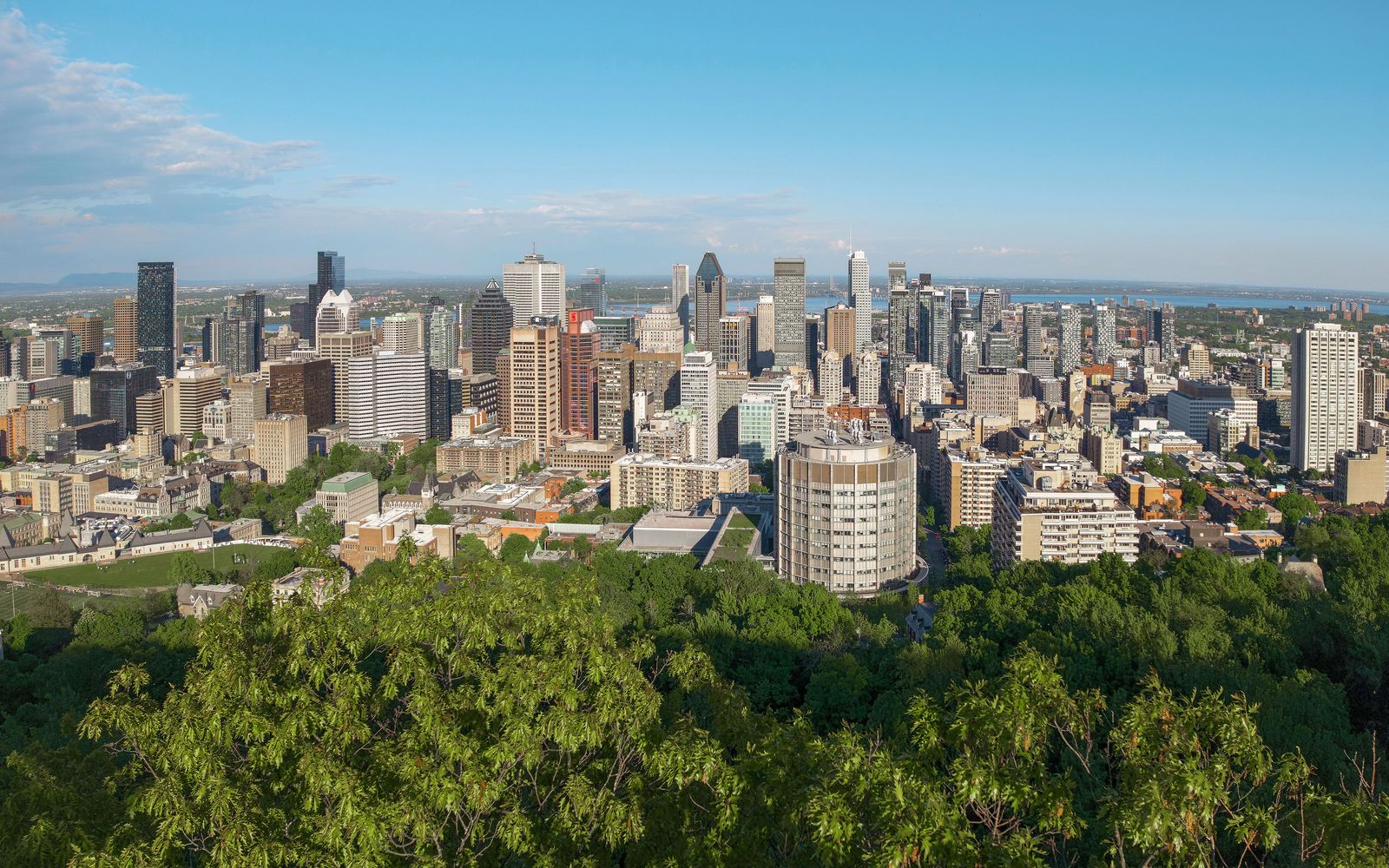
The hill that gave the city its name is a large park designed by Frederick Law Olmsted, the man behind Central Park. Walk up from the Peel Street stairs or from the Cartier monument on Avenue du Parc, and in 30 to 45 minutes you reach the Kondiaronk Belvedere, the classic skyline viewpoint. It's free. Go for sunset, then walk down the other side to the Plateau for dinner.
The Plateau Mont-Royal
This is the Montreal of postcards: colourful triplexes with outdoor staircases on Rue Saint-Denis, Avenue du Mont-Royal and the side streets around Parc La Fontaine. It is a neighbourhood to wander rather than tick off. Allow half a day, free. Boulevard Saint-Laurent ("the Main") is where you'll find most of the big murals, many of them from the MURAL festival held each June.
Mile End
Just north of the Plateau, Mile End is home to the city's two bagel rivals, St-Viateur and Fairmount, both open around the clock. Expect independent shops on Rue Bernard and Avenue Laurier, plus the best people-watching cafés in town. Two hours is enough, and a bagel costs about CAD 1.50-2 (€1). Buy them warm and eat them on the pavement, which is what everyone does.
Jean-Talon Market
Montreal's best market sits in Little Italy, near Jean-Talon or De Castelnau metro stations. Quebec maple products, cheeses, berries in summer and stalls cooking things you can eat on the spot. Free to walk around; budget CAD 15-25 (€10-16) for grazing. Go on a weekday morning, because Saturday is a crowd sport.
Saint Joseph's Oratory
This is Canada's largest church, a huge copper dome on the north slope of Mount Royal, a short walk from Côte-des-Neiges metro. Entry is free (small charges for the museum and dome area), and you'll want 1-1.5 hours. The terrace in front gives a view west over the city that few visitors bother to look at.
Montreal Museum of Fine Arts
The city's big art museum on Rue Sherbrooke spreads across several pavilions, with strong Canadian and Quebec collections plus decent international galleries. Tickets run about CAD 24-31 (€15-20) depending on the exhibitions. Give it 2-3 hours. If you are under 31, check the reduced price; it is a real discount.
Pointe-à-Callière
This archaeology and history museum in Old Montreal is built over the actual spot where the city was founded, so you walk through excavated foundations and an old sewer collector. It is the best way to understand the city's history in two hours. Entry is about CAD 25 (€16).
Olympic Park, Biodôme and Botanical Garden
In the east end (Pie-IX or Viau metro) sits the 1976 Olympic Stadium with its leaning tower, plus the Biodôme with its indoor ecosystems and the huge Botanical Garden across the street. Each costs about CAD 22-25 (€14-16), so pick one or two rather than all. The Botanical Garden is the winner from late spring to autumn; the Biodôme works better in winter or with kids.
Lachine Canal and Atwater Market
The old industrial canal runs west from the Old Port, with a flat bike and walking path along it. Atwater Market (Lionel-Groulx metro) sits right on it, in an Art Deco building with butchers, bakeries and a good maple shop. Rent a BIXI bike, ride the canal for an hour and stop at the market. It's free apart from what you eat.
Old Port and Habitat 67
The waterfront strip is fine for a stroll, though the attractions there (Ferris wheel, zipline) are pricey for what they are. The better plan is to walk or cycle across to the Cité-du-Havre to see Habitat 67, the stacked-concrete housing complex from Expo 67. You can only view it from outside, which costs nothing and takes about an hour.
Things to do in Montreal
- Sunday tam-tams on Mount Royal: on summer Sundays, drummers, dancers and slackliners gather around the George-Étienne Cartier monument on Avenue du Parc. It's free, slightly chaotic and very Montreal.
- Catch a festival: the Jazz Festival (late June to early July) has dozens of free outdoor stages around Place des Arts. Just for Laughs is in July and Igloofest runs in January.
- Watch a hockey game: Canadiens tickets at the Bell Centre are expensive (CAD 100+, €65+), but the atmosphere is the real Montreal religion. A bar showing the game is the cheap version.
- Do a bagel and smoked-meat crawl: St-Viateur, Fairmount, then Schwartz's on Boulevard Saint-Laurent.
- Cycle with BIXI: the bike share runs roughly April to November. Do the Lachine Canal path or the Rachel Street bike lane to Parc La Fontaine.
- Go to a sugar shack: in March and April, cabanes à sucre outside the city serve heavy maple-themed feasts. You'll need a car or a tour.
- Swim or skate at Parc Jean-Drapeau: the island park has a beach in summer. In winter, skating at the Old Port rink or Lac aux Castors on Mount Royal is a local ritual.
- Sit on a terrasse: drinking on a terrace on Rue Saint-Denis or Avenue Duluth (bring-your-own-wine restaurants) is half of what summer is for here.
Montreal for free (or almost)
A lot of the best of Montreal costs nothing. The city is built for walking and its parks are big.
- Mount Royal and the Kondiaronk Belvedere, plus the Saint Joseph's Oratory terrace.
- Walking Old Montreal, the Plateau's staircase streets and the murals on Boulevard Saint-Laurent.
- Browsing Jean-Talon and Atwater markets (samples are common).
- Free stages at the Jazz Festival and Francofolies in summer.
- The Montreal Museum of Fine Arts lets you into part of the collection for free. Check what is included when you go.
- Christ Church Cathedral and the grand Mary Queen of the World Cathedral downtown are free to enter.
- A CAD 2 bagel, still one of the best-value meals in Canada.
Montreal itinerary: 3 days
| Day | Morning | Afternoon | Evening |
|---|---|---|---|
| Day 1 Old Montreal and the Old Port | Start at Place d'Armes (metro), visit Notre-Dame Basilica early, then walk Rue Saint-Paul and Place Jacques-Cartier. | Pointe-à-Callière, then the Old Port waterfront and a walk to look at Habitat 67. | Dinner in Old Montreal or Griffintown. Old Montreal is pricier, so Griffintown and Little Burgundy (Rue Notre-Dame Ouest) are better value. |
| Day 2 Mile End, the Plateau and Mount Royal | Bagels in Mile End, coffee on Rue Bernard, then walk south down Boulevard Saint-Laurent for the murals. | Lunch at Schwartz's (expect a queue), wander Rue Saint-Denis and the staircase streets around Parc La Fontaine. | Climb Mount Royal from the Cartier monument for sunset at the Kondiaronk Belvedere, then return to the Plateau for poutine or a BYOB dinner on Avenue Duluth. |
| Day 3 Markets, art and the east or west end | Jean-Talon Market and a coffee in Little Italy. | Pick one. Either the Botanical Garden and Olympic Park (green line to Pie-IX), or the Museum of Fine Arts downtown followed by Saint Joseph's Oratory. | Drinks on Rue Notre-Dame Ouest, or a hockey game if the Canadiens are home. With a fourth day, take the train to Quebec City. |
What is overrated (and what to do instead)
- Restaurants on Place Jacques-Cartier: big menus, mediocre food and tourist prices. Walk ten minutes to Rue Notre-Dame Ouest or the Plateau instead.
- The Underground City as an attraction: RÉSO is useful in a snowstorm, but it is mostly corridors and food courts. Use it to get around and don't go looking for it as a sight.
- The Old Port's paid attractions: the Ferris wheel views are worse than the free one from Mount Royal.
- The AURA show for everyone: it's nice, but the daytime basilica visit at half the price gives you most of the wow.
When to visit Montreal
The best time is late May to September, when the terraces are open, festivals run back to back and the parks are full. July is hot and humid (often 25-30°C) and it's also the priciest month. June's Grand Prix weekend sends hotel prices through the roof, so check the dates before you book.
September and early October are our pick: mild weather, autumn colours on Mount Royal and fewer people. Winter (December to March) is brutal, often -10 to -20°C with wind, but hotels and flights are at their cheapest. Igloofest and Montréal en Lumière give you a reason to go. April and November are grey, slushy and the least appealing months, though they are cheap too.
Where to stay in Montreal: best areas
- Old Montreal: romantic, walkable to the sights, quiet at night. Boutique hotels run CAD 250-450 (€160-290) a night. Best for couples and first-timers with a bigger budget.
- Downtown (Centre-Ville): chain hotels near McGill and Peel metros, good transport links and underground access in winter. Expect CAD 180-300 (€115-195). Best for practical stays and winter trips.
- Plateau Mont-Royal: mostly apartments and small guesthouses, with the best restaurants and bars on your doorstep. Around CAD 150-250 (€95-160). This is where we would stay.
- Quartier Latin and the Village: hostels and budget hotels near Berri-UQAM, the main metro hub. Dorms cost CAD 40-60 (€26-40) and doubles CAD 120-180 (€75-115). Livelier and scruffier, and good for shoestring budgets.
Quebec adds about 15% sales tax and a 3.5% lodging tax on top of the room rate, so check the final price, not the headline one.
What to eat in Montreal
Montreal's food is cheap, filling and unpretentious. Here is what to order.
- Montreal-style bagels: smaller, denser and sweeter than New York's, boiled in honey water and baked in a wood oven. Order sesame from St-Viateur or Fairmount.
- Smoked meat: a brined, spiced beef brisket sandwich. At Schwartz's, ask for "medium fat" with a pickle and a cherry soda.
- Poutine: fries, cheese curds and gravy. La Banquise on Rue Rachel is open 24 hours with dozens of versions, but start with the classic.
- Wilensky's Special: a pressed salami and bologna sandwich from a tiny old-school counter in Mile End. It comes with mustard, and you don't get to say no.
- Maple everything: maple taffy on snow in winter, and maple butter from the markets.
- Tourtière and pouding chômeur: a Quebec meat pie and a syrup-soaked cake. You'll find them in traditional spots and at sugar shacks.
A casual lunch costs about CAD 18-25 (€12-16). A sit-down dinner with a drink costs CAD 50-80 (€32-52) a head. Bring-your-own-wine restaurants on the Plateau cut the bill a lot. Prices are shown before tax, and you are expected to tip 15-18%.
Airport to city centre and getting around
Montréal-Trudeau Airport (YUL) is about 20 km from downtown. Your options:
- 747 bus: runs 24 hours to downtown and Berri-UQAM. It takes 45-70 minutes depending on traffic and costs about CAD 11 (€7). The ticket covers unlimited buses and metro for 24 hours, which makes it the obvious choice.
- Taxi: a flat fare to downtown of roughly CAD 50-55 (€32-35) plus tip, taking 25-45 minutes.
- Uber: similar to or slightly above a taxi at busy times.
The metro (STM) has four lines and covers most of what you'll see. Single rides cost about CAD 3.75 (€2.40). Better value comes from the 24-hour pass (about CAD 11, €7), the 3-day pass (about CAD 22, €14) or the weekly pass if you arrive early in the week. BIXI bikes cost a few dollars per ride in season. Old Montreal, the Plateau and Mile End are easy to walk.
How much a trip to Montreal costs
- Shoestring: CAD 100-130 (€65-85) a day. That covers a hostel dorm, bagels and market lunches, one cheap dinner, a transit pass and free sights.
- Mid-range: CAD 250-350 (€160-225) a day per person sharing a double. That covers a Plateau or downtown hotel, restaurant meals, a couple of museums and a few drinks.
- Extras to budget for: about 15% tax and 15-18% tips on top of most prices, plus CAD 10-12 (€7-8) for a beer in a bar.
Day trips from Montreal
- Quebec City: a walled old town, the Château Frontenac and the Petit-Champlain area. VIA Rail or the Orléans Express bus take about 3-3.5 hours each way. That's long for a day trip, so an overnight stay is better.
- Ottawa: Canada's capital, with Parliament Hill, the National Gallery and the ByWater market. VIA Rail or the bus take about 2 hours.
- Mont-Tremblant: a ski resort village and national park in the Laurentians, about 1.5-2 hours by car or shuttle. It's best in winter or during the autumn colours.
- Eastern Townships: rolling farmland, vineyards and lakes around Magog and North Hatley, about 1.5 hours by car. You need wheels.
- Oka National Park: a beach and forest trails on Lac des Deux Montagnes, under an hour by car.
Common mistakes and scams
- Forgetting tax and tip: a CAD 20 menu price becomes about CAD 27 by the time you pay. Card machines suggest 18-25%, and 15% is perfectly normal.
- Booking during the Grand Prix or big festivals without checking: hotel prices can double or triple.
- Underpacking for winter: a city jacket won't cut it at -20°C with wind chill. Bring proper boots, a hat and gloves.
- Unlicensed airport drivers: ignore anyone offering a ride inside the terminal. Use the official taxi rank or the 747 bus.
- Short-term rentals: many apartment rentals in Quebec are illegal without a registration number. Check that the listing displays one, or you risk last-minute cancellations.
- Arriving around 1 July: it's Canada Day and also "moving day", when much of the city changes apartments. Streets fill with trucks and furniture.
Montreal FAQ
How many days do you need in Montreal?
Three days covers Old Montreal, Mount Royal, the Plateau, the markets and a major museum. Add a fourth day for a trip to Quebec City or Ottawa.
Do you need to speak French in Montreal?
No. Most people in central Montreal switch to English easily, especially downtown and in tourist areas. Starting with "Bonjour" is polite and appreciated.
Is Montreal expensive to visit?
It is cheaper than Toronto or Vancouver, especially for food and drink. Taxes and tipping add around 30% to listed prices, so budget for that.
What is the best month to visit Montreal?
September is our pick for pleasant weather and fewer crowds. June and July are best for festivals but cost more.
Is Montreal worth visiting in winter?
Yes, if you dress properly and like cold-weather events such as Igloofest and Montréal en Lumière. Hotels are at their cheapest from January to March.
Which is better, Montreal or Quebec City?
Montreal is bigger, cheaper to eat in and has better nightlife. Quebec City is prettier and more compact. If you can, do both: Montreal for three days and Quebec City for one or two.
Is Montreal safe for tourists?
Yes, it is one of the safer big cities in North America. Watch for pickpockets at festivals, and take normal care around Berri-UQAM late at night.
What food is Montreal famous for?
Bagels, smoked meat and poutine are the big three. Maple products and Quebec cheeses come close behind.
What to see in Montreal in one day?
If you only have one day, follow day 1 of this itinerary: Old Montreal and the Old Port. Morning: start at Place d'Armes (metro), visit Notre-Dame Basilica early, then walk Rue Saint-Paul and Place Jacques-Cartier.
What to see in Montreal in two days?
With two days, follow days 1 and 2 of this itinerary. Day 1: Old Montreal and the Old Port. Morning: start at Place d'Armes (metro), visit Notre-Dame Basilica early, then walk Rue Saint-Paul and Place Jacques-Cartier. Day 2: Mile End, the Plateau and Mount Royal. Morning: bagels in Mile End, coffee on Rue Bernard, then walk south down Boulevard Saint-Laurent for the murals.
What to do in Montreal in 3 days?
With three days in Montreal, this is the guide's route: Day 1, Old Montreal and the Old Port; Day 2, Mile End, the Plateau and Mount Royal; Day 3, Markets, art and the east or west end. The table above has the full plan for each day.
Where to stay in Montreal?
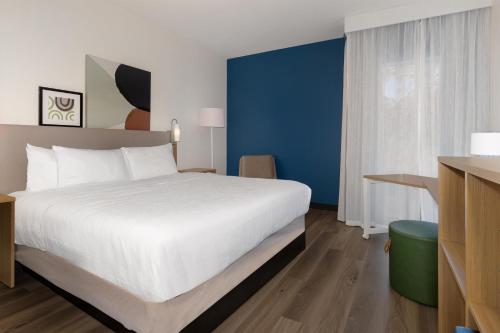
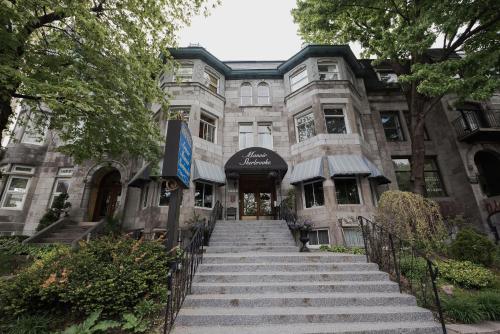
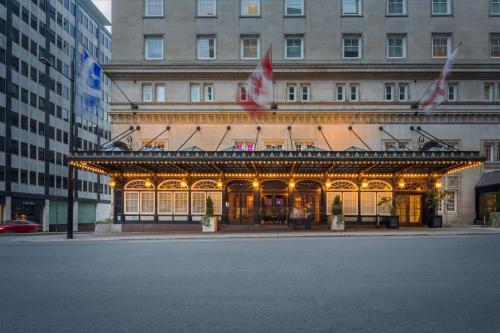
Downtown (Centre-Ville): chain hotels near McGill and Peel metros, good transport links and underground access in winter. The 3 hotels with the best real guest scores, according to top3hotels.com, are budget: Spark By Hilton Montreal Midtown (5440 Decarie Blvd, score 8.1, from €73 a night); best value: Manoir Sherbrooke (Plateau Mont Royal, score 9, from €139 a night); luxury: The Ritz-Carlton, Montreal (Golden Square Mile, score 9.6, from €583 a night). The nightly price is indicative and changes with the dates.
How do you get from the airport to central Montreal?
Montréal-Trudeau Airport (YUL) is about 20 km from downtown.
How do you get around Montreal?
The ticket covers unlimited buses and metro for 24 hours, which makes it the obvious choice.
What are the must-see places in Montreal?
According to this guide: Old Montreal (Vieux-Montréal); Notre-Dame Basilica; Mount Royal and the Kondiaronk Belvedere; The Plateau Mont-Royal; Mile End; Jean-Talon Market; Saint Joseph's Oratory; Montreal Museum of Fine Arts. Each one is explained in the "What to see" section.
Photo: Wikipedia · · Wikimedia Commons · Guide updated 21 Nov 2026