- How many days in San Juan
- 4 days to see the essentials of San Juan; the day-by-day route is below.
- Budget
- Daily budgets per person, excluding flights: Shoestring: about $90-130 (€85-120).
- From the airport
- Luis Muñoz Marín Airport (SJU) sits in Isla Verde, about 15-25 minutes from Condado and 20-30 minutes from Old San Juan, traffic permitting.
- Where to stay
- Condado: the easiest all-rounder, with a beach, the lagoon, good restaurants and a 10-minute ride to the old town.
- What to eat
- It is the national dish for a reason.
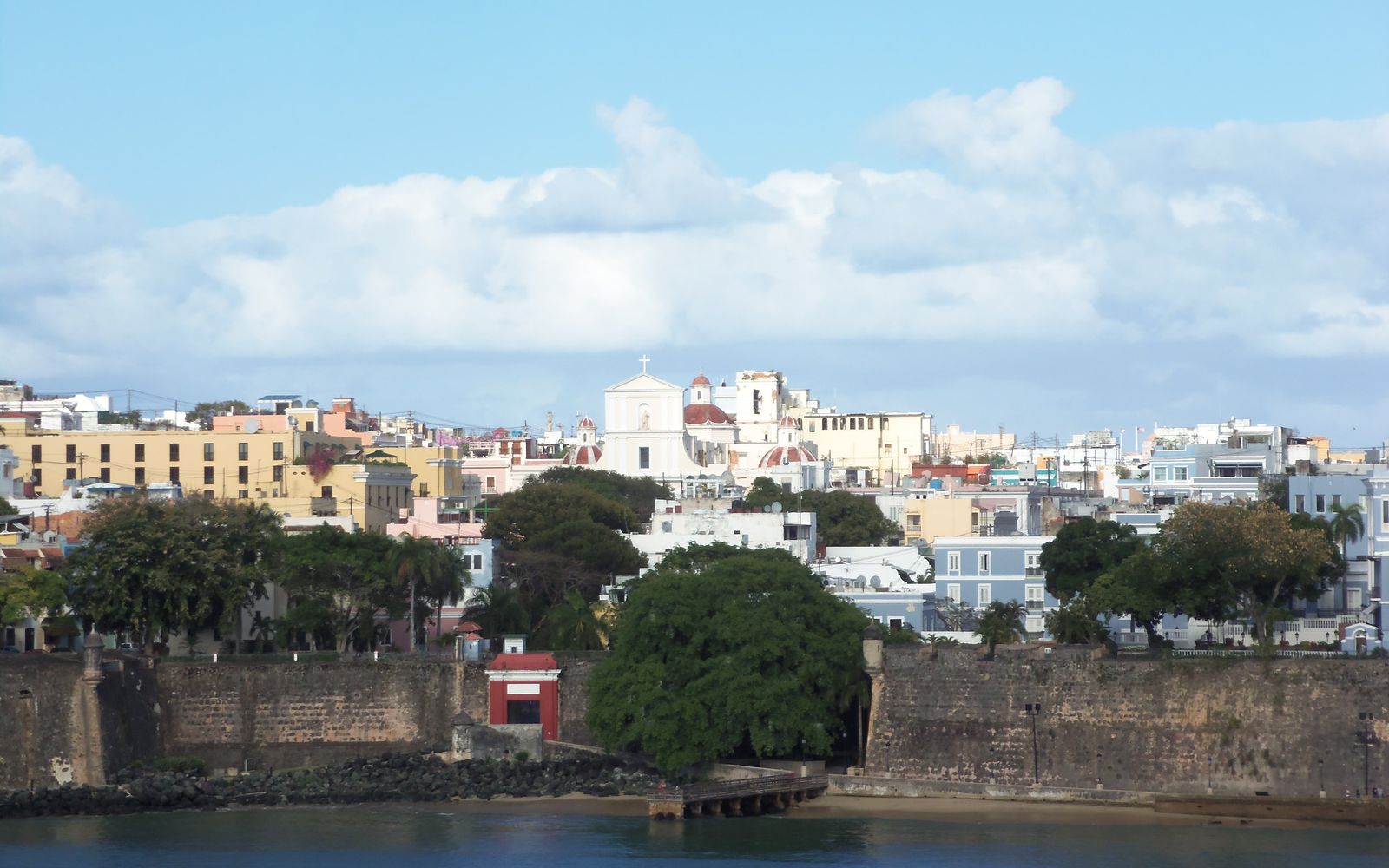
San Juan is two cities in one. Old San Juan is a walled Spanish colonial town of pastel houses and blue cobblestones on a small island. The rest is a sprawling, car-heavy Caribbean metro with hotel strips, a strong food scene and some very decent urban beaches. It suits travellers who want history and beach in the same trip, foodies, and anyone who wants the Caribbean without changing money: Puerto Rico uses the US dollar.
We recommend 4 days. Two days cover Old San Juan, Santurce and the beaches. The other two go on El Yunque rainforest and a bioluminescent bay, which are the reasons most people come back raving. With only a long weekend, cut one day trip, not Old San Juan. Prices below are in US dollars with a rough euro figure.
What to see in San Juan: the places worth your time
Castillo San Felipe del Morro
El Morro is the 16th-century fortress at the tip of Old San Juan, and it is the best sight in the city. Six levels of ramparts, tunnels and sentry boxes (garitas) look straight out over the Atlantic. Give it 1.5-2 hours. The National Park Service entry is about $10 (€9) and also covers San Cristóbal. Our tip: go first thing, before cruise passengers arrive and the sun hits the exposed walls.
Castillo San Cristóbal
This is the bigger fort on the eastern side of the old town, built to stop land attacks. It gets far fewer visitors than El Morro, and the tunnels and the garita known as the "Devil's Sentry Box" are worth the walk. Allow an hour. Your El Morro ticket covers it, so do both on the same day.
The lawn and Paseo del Morro
The huge green esplanade in front of El Morro is where local families fly kites at weekends. It is free and makes one of the classic San Juan pictures. From it, the Paseo del Morro trail runs along the base of the city walls by the sea. Walk it in late afternoon, when the light is warm.
Old San Juan streets: Fortaleza, del Cristo and San Sebastián
The real pleasure of the old town is wandering its seven-by-seven grid. Calle Fortaleza has the restaurants and, often, umbrella installations overhead. Calle del Cristo is the prettiest. Calle San Sebastián is where people drink at night. Half a day is enough. Wear proper shoes, because the cobbles (adoquines) are slippery after rain.
Paseo de la Princesa and Puerta de San Juan
This is a tree-lined promenade below the walls, with the Raíces fountain at the end. It leads to the Puerta de San Juan, the old red gate where ships once landed. Both are free and take 30-45 minutes. Weekend evenings bring street food stalls and artisans.
Catedral de San Juan Bautista
One of the oldest cathedrals in the Americas, and it holds the tomb of Juan Ponce de León. It is modest inside, but cool and calm. Allow 20 minutes. Entry is free, with donations welcome. Dress respectfully, and avoid going during Mass.
La Fortaleza and Calle Fortaleza's end
The governor's residence has been in use since the 1500s, and it is the reason the street has its name. You will mostly see it from outside. Guided visits run at times, so check ahead if you care. The blue-and-white facade at the end of the street is a five-minute photo stop.
Capilla del Cristo and Parque de las Palomas
A tiny chapel sits at the bottom of Calle del Cristo, next to a small park full of pigeons with a sea view over the bay. It is free and takes 15 minutes. Come at sunset if El Morro's lawn is crowded.
La Perla
This is the colourful seaside neighbourhood squeezed between the walls and the ocean, made famous by the "Despacito" video. Look at it from the Old San Juan cemetery viewpoint or from the wall above. Wandering in uninvited with a camera is not a great idea: it is a real community with a reputation, and residents are tired of being a backdrop.
Santurce street art and Calle Cerra
Santurce is the city's creative district, and its walls are covered in murals, many from the Santurce es Ley festival. Calle Cerra has the densest stretch. A self-guided walk takes 1-2 hours and is free. Go in the morning and keep to busy streets.
Museo de Arte de Puerto Rico
The best place to understand Puerto Rican art, from colonial painting to contemporary work, in a restored hospital building in Santurce with a sculpture garden. Allow 1.5-2 hours. Entry is roughly $10-15 (€9-14). It makes a smart rainy-afternoon plan.
Condado and Ocean Park beaches
Condado is the polished hotel strip. Ocean Park, just east, is quieter and residential, with a long sandy beach that kitesurfers love. Both are free. For calmer water inside Condado, go to Playa del Escambrón near the Puerta de Tierra end, where a reef protects the swimming area.
Things to do in San Juan
Sightseeing covers half the trip. These fill the rest.
- Paddleboard or kayak Condado Lagoon. The water is calm and you will often see manatees. Rentals cost about $25-35 (€23-32) an hour.
- Kayak a bioluminescent bay at night. Laguna Grande in Fajardo is the easy one from the city. Tours run about $50-70 (€45-65) with transport extra.
- Go out at La Placita de Santurce. By day it is a market square. On Thursday to Saturday nights it fills with bars, salsa and people spilling onto the street. Free to enter, and drinks are cheap.
- Eat your way along Piñones. Just east of the airport, a coastal road is lined with wooden kiosks frying alcapurrias and bacalaítos. Rent a bike and ride the boardwalk.
- Take a salsa class in Old San Juan or Santurce before a night out. Expect roughly $20-30 (€18-28).
- Tour the Bacardí distillery in Cataño. It is touristy but fun, and you get there on the cheap ferry across the bay.
- Snorkel at Escambrón or join a boat trip from Fajardo to the islets off the coast.
- Visit Lote 23, an open-air food park in Santurce, for a relaxed evening of local food trucks.
San Juan for free (or almost)
A surprising amount of San Juan costs nothing. The free trolleys loop around Old San Juan, which helps on the steep streets in midday heat. All the beaches are public by law, including the ones in front of fancy hotels.
- Walk the old town streets, Paseo de la Princesa and Paseo del Morro.
- Picnic on El Morro's lawn and watch the kites.
- Do the Santurce mural walk.
- Visit the cathedral and Capilla del Cristo.
- Take the Cataño ferry for bay views, at well under a dollar each way.
- Watch sunset from the city walls.
San Juan itinerary: 4 days
| Day | Morning | Afternoon | Evening |
|---|---|---|---|
| Day 1 Old San Juan | El Morro at opening, then the lawn and the cemetery viewpoint over La Perla. | Lunch on Calle Fortaleza or Calle San Sebastián, then the cathedral and Calle del Cristo, ending at Castillo San Cristóbal. | Paseo de la Princesa at golden hour, dinner in the old town and a drink on San Sebastián. |
| Day 2 Santurce, Condado and the lagoon | Mural walk around Calle Cerra, then the Museo de Arte de Puerto Rico. | Paddleboard on Condado Lagoon, then the beach at Ocean Park. | Dinner around Santurce, then La Placita for salsa and cheap drinks. |
| Day 3 El Yunque and Luquillo | Leave early for El Yunque, about 45-60 minutes by car, and hike a short trail to a waterfall before the rain clouds roll in. | Swim at Luquillo Beach and eat at the Luquillo kiosks (a long row of numbered food stands). | Stay east for a Laguna Grande bio bay kayak in Fajardo, then drive back. |
| Day 4 Piñones and a slow finish | Cycle the Piñones boardwalk and stop at the fritter kiosks. | Take the ferry to Cataño for Bacardí, or go back to whichever fort you rushed. | Sunset on the walls and a final mofongo. |
What is overrated (and what to do instead)
- Old San Juan on a cruise-ship midday. When several ships dock, Calle Fortaleza becomes a queue. Explore early morning or after 5pm instead.
- The "birthplace of the piña colada" drink. Barrachina and the Caribe Hilton both claim the invention. You pay for the story. Have one anywhere with good fresh pineapple and move on.
- Isla Verde as a base. It is handy for the airport, but it is a strip of high-rises with mediocre food. Condado or Ocean Park give you a better beach life plus restaurants.
- Bio bay tours on a full moon. The glow barely shows. Check the moon calendar and book a dark night instead.
When to visit San Juan
The best time is December to April. It is dry, around 28°C (82°F), and breezy. It is also the most expensive and busiest time, especially around Christmas and spring break, when hotel prices jump.
For value, go in May or early June, or November. The weather is still good, crowds thin out, and flights and rooms drop noticeably. Hurricane season runs June to November, peaking August to October. Those months are the cheapest, but they are hot and humid, with a real risk of disruption, so get flexible bookings and travel insurance. Showers happen year-round and usually pass in minutes.
Where to stay in San Juan: best areas
- Old San Juan: best for first-timers who want atmosphere and walkability. It is mostly guesthouses and boutique hotels, with no real beach. Expect about $150-300 (€140-280) a night. It is noisy on weekend nights.
- Condado: the easiest all-rounder, with a beach, the lagoon, good restaurants and a 10-minute ride to the old town. Rooms run about $180-350 (€165-320).
- Ocean Park: quieter, local and good for couples and anyone who wants a proper beach without the high-rise feel. Guesthouses and apartments cost about $130-250 (€120-230).
- Santurce: the cheapest central option, close to nightlife and food. It suits younger travellers on a budget, with apartments from about $90-160 (€85-150). Some blocks feel rough at night.
- Isla Verde: big resorts and convenience for short stays or early flights, at about $170-350 (€155-320).
What to eat in San Juan
Puerto Rican food is hearty, fried and full of garlic. Order these:
- Mofongo: mashed fried green plantain with garlic and pork crackling, often topped with shrimp or churrasco. It is the national dish for a reason.
- Lechón: spit-roasted pork with crackling skin. The famous version is on the "Ruta del Lechón" in Guavate, an hour south.
- Arroz con gandules: rice with pigeon peas, the default side.
- Alcapurrias and bacalaítos: fritters of plantain and meat, and salt cod. Piñones and Luquillo kiosks do the best ones.
- Tostones and amarillos: savoury fried green plantain and sweet ripe plantain.
- Mallorca: a sweet bread with powdered sugar, often served with ham and cheese at breakfast.
- To drink, try Medalla, the local light beer, and Puerto Rican rum. The coffee is excellent too.
A kiosk lunch costs about $10-15 (€9-14). A sit-down mofongo with a drink in Old San Juan runs about $25-35 (€23-32). Dinner at a good Santurce or Condado restaurant is around $50-80 (€45-75) per person with drinks. Avoid restaurants on Calle Fortaleza with staff waving menus on the street. Lote 23 in Santurce is a reliable casual option.
Airport to city centre and getting around
Luis Muñoz Marín Airport (SJU) sits in Isla Verde, about 15-25 minutes from Condado and 20-30 minutes from Old San Juan, traffic permitting. From the airport, you have three options:
- Tourist taxis charge set zone fares. Expect roughly $15-20 to Isla Verde, $20-25 to Condado and $25-30 to Old San Juan (€14-28), plus small luggage fees.
- Uber works across the metro area and is often a little cheaper. Airport pickups have their own designated area, so follow the signs.
- Public bus (AMA): some routes connect the airport area with Condado and Old San Juan for under $1. They are cheap but slow and infrequent, with luggage a pain.
Once you are in the city, walk Old San Juan and use its free trolley. Between neighbourhoods, Uber is the practical choice. The Tren Urbano metro costs about $1.50, but it mostly serves residential areas and does not reach Old San Juan or the airport. There is no useful tourist pass. For El Yunque, Fajardo and the east coast, renting a car for a day or two is the easiest option, at about $50-80 (€45-75) a day. Do not keep a car in Old San Juan, because parking is a nightmare.
How much a trip to San Juan costs
San Juan is not cheap by Caribbean standards, because prices are closer to the US mainland. Daily budgets per person, excluding flights:
- Shoestring: about $90-130 (€85-120). This covers a hostel or shared apartment, kiosk food, buses and free sights.
- Mid-range: about $220-320 (€200-295). This covers a double room in Condado or Ocean Park, sit-down meals, Ubers and one paid tour.
- Extras: forts $10, a bio bay tour $50-70, a car rental day $50-80, and a cocktail at about $10-14 (€9-13).
Day trips from San Juan
- El Yunque National Forest: the only tropical rainforest in the US forest system, about 45-60 minutes by car. Popular access may need a timed reservation on recreation.gov, so check before you go. Plan for a full day with Luquillo.
- Fajardo bio bay (Laguna Grande): about an hour by car or on a tour with pickup. It is an evening trip, about 5 hours door to door.
- Culebra and Flamenco Beach: one of the Caribbean's top beaches. Take a ferry from Ceiba (about 1.5 hours from San Juan, then roughly 45-90 minutes on the water) or a short flight. Book ferries early. It is a long day, so it is better as an overnight.
- Guavate (Ruta del Lechón): about an hour south by car. Go on a weekend afternoon for roast pork and live music.
- Vieques: its Mosquito Bay is the brightest bio bay. It needs a night there, so plan it as a two-day add-on.
Common mistakes and scams
- Swimming at any beach. Rip currents are serious on parts of Condado and Isla Verde. Swim where locals swim, and respect red flags.
- Underestimating the sun. El Morro has almost no shade. Bring water, a hat and reef-safe sunscreen.
- Taxis without agreed fares. Tourist taxis should use zone fares or the meter. Confirm the price before you get in.
- Leaving valuables on the sand or in rental cars. Car break-ins happen at beach car parks and El Yunque lots.
- Booking the "bio bay" on a full moon or in heavy rain. Reputable operators will reschedule.
- Timeshare-style pitches and "free" tour offers in hotel lobbies. Walk on.
- Wandering into La Perla to film. It is disrespectful, and it is not a safe call at night.
San Juan FAQ
How many days do you need in San Juan?
Four days is ideal: two for Old San Juan, Santurce and the beaches, and two for El Yunque and a bioluminescent bay. Three days works if you skip one day trip.
Do I need a passport to visit San Juan, Puerto Rico?
US citizens do not, because Puerto Rico is a US territory. Everyone else needs the same documents as for the mainland US, usually a passport plus an ESTA or visa.
Is San Juan safe for tourists?
The tourist areas of Old San Juan, Condado, Ocean Park and Isla Verde are generally safe with normal big-city sense. Avoid empty streets late at night, especially in parts of Santurce, and do not leave belongings unattended on the beach.
What currency is used in San Juan?
The US dollar. Cards are widely accepted, but carry some cash for kiosks, small bars and tips.
Do you need a car in San Juan?
Not inside the city, where walking and Uber are easier. A car is worth renting for one or two days to visit El Yunque, Luquillo and Fajardo.
Which San Juan beach is best?
Ocean Park is our pick for a relaxed, local feel. Escambrón is best for calm swimming and snorkelling, and Isla Verde if you want resorts and beach bars.
Do people speak English in San Juan?
Spanish is the everyday language, but English is widely spoken in hotels, restaurants and tourist areas. A few words of Spanish go down well.
What is the cheapest time to visit San Juan?
Late August to early November is the cheapest, though it falls in hurricane season. May and early June are a safer compromise between price and weather.
Is San Juan worth visiting?
For the traveller who wrote this guide, yes: San Juan is two cities in one. Old San Juan is a walled Spanish colonial town of pastel houses and blue cobblestones on a small island. 4 days are enough for the essentials. Budget: Daily budgets per person, excluding flights: Shoestring: about $90-130 (€85-120).
What to see in San Juan in one day?
If you only have one day, follow day 1 of this itinerary: Old San Juan. Morning: El Morro at opening, then the lawn and the cemetery viewpoint over La Perla.
What to see in San Juan in two days?
With two days, follow days 1 and 2 of this itinerary. Day 1: Old San Juan. Morning: El Morro at opening, then the lawn and the cemetery viewpoint over La Perla. Day 2: Santurce, Condado and the lagoon. Morning: mural walk around Calle Cerra, then the Museo de Arte de Puerto Rico.
What to do in San Juan in 4 days?
With four days in San Juan, this is the guide's route: Day 1, Old San Juan; Day 2, Santurce, Condado and the lagoon; Day 3, El Yunque and Luquillo; Day 4, Piñones and a slow finish. The table above has the full plan for each day.
Where to stay in San Juan?
Condado: the easiest all-rounder, with a beach, the lagoon, good restaurants and a 10-minute ride to the old town.
What to eat in San Juan?
To drink, try Medalla, the local light beer, and Puerto Rican rum.
How do you get from the airport to central San Juan?
Luis Muñoz Marín Airport (SJU) sits in Isla Verde, about 15-25 minutes from Condado and 20-30 minutes from Old San Juan, traffic permitting.
How do you get around San Juan?
Uber works across the metro area and is often a little cheaper.
What are the must-see places in San Juan?
According to this guide: Castillo San Felipe del Morro; Castillo San Cristóbal; The lawn and Paseo del Morro; Paseo de la Princesa and Puerta de San Juan; Catedral de San Juan Bautista; La Fortaleza and Calle Fortaleza's end; Capilla del Cristo and Parque de las Palomas; La Perla. Each one is explained in the "What to see" section.
Photo: Wikipedia · · Wikimedia Commons · Guide updated 21 Nov 2026