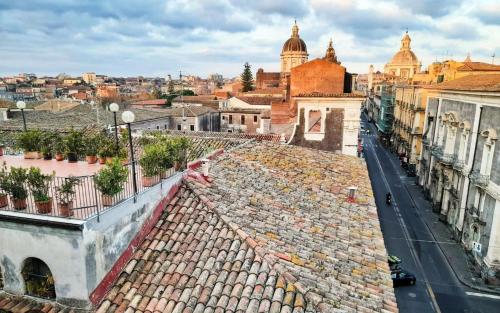
Catania is not the polished Sicily of postcards. It is loud, a bit scruffy, built from black lava stone and rebuilt after Etna and an earthquake flattened it in the late 1600s. The result is a city of grand baroque churches sitting next to graffiti and scooters parked on pavements. If Taormina is the cocktail, Catania is the espresso: cheaper, stronger and more honest.
It suits travellers who care about food, markets and street life more than manicured sights, and anyone who wants a cheap base for Etna, Taormina and Syracuse. Flights here are often among the cheapest into southern Italy. Three days is the right amount: one and a half for the city, one for Etna, and some time for the coast or a quick day trip. Two feels rushed, and beyond four you will want to move on and use Catania as a base.
What to see in Catania: the places worth your time
Piazza del Duomo and the Elephant Fountain
This is the city's main square and the place you will cross ten times a day. In the middle stands the Fontana dell'Elefante, a lava stone elephant locals call "u Liotru", carrying an Egyptian obelisk on its back. Give it 20 minutes and it costs nothing. Our tip: come back after dark, when the square is lit and the lava stone looks almost silver against the white limestone trim.
Cathedral of Sant'Agata
The cathedral is dedicated to Catania's patron saint, Agatha, and the city takes her very seriously. Inside you will find the composer Vincenzo Bellini's tomb and the chapel holding the saint's relics. Entry to the church is free and 30 minutes is plenty. Cover your shoulders and knees, or you will be turned away at the door.
La Pescheria fish market
If you only do one thing in Catania, do this. The fish market sits just behind the Duomo, reached through a stone stairway by the Amenano fountain. It is noisy, wet and theatrical, with swordfish heads on display and vendors shouting prices. Go first thing in the morning (it winds down around lunchtime and is closed on Sundays). Wear shoes you do not mind getting splashed, and keep your phone in a front pocket.
Via Etnea
Catania's main street runs dead straight from the Duomo north towards Etna, which you can see at the far end on a clear day. It is lined with shops, churches and cafés, and it is where the whole city strolls in the early evening. Walk the stretch up to Villa Bellini, about 30-40 minutes with stops. The cafés right on the street charge more for the same granita you will find a block away.
Monastero dei Benedettini
This enormous Benedictine monastery is now part of the university, and it is UNESCO listed along with the rest of the Val di Noto baroque. The guided tour takes you through cloisters, kitchens and Roman ruins found under the floors, and it is genuinely interesting. Expect about 1.5 hours and roughly €10-12. Book the tour ahead in summer; English tours run less often than Italian ones.
San Nicolò l'Arena
Right next to the monastery stands one of the largest churches in Sicily, with a facade that was never finished, which gives it a strange, brutal look. The interior is huge and nearly empty. Check whether the climb to the dome or roof is open when you visit, because the views over the city and Etna are some of the best in town.
Via dei Crociferi
This short, gently sloping street is packed with baroque churches and convents, and it is the prettiest street in the city. Ten minutes from the Duomo, 30 minutes to walk slowly. It is quiet by day and atmospheric at night. Stop at the arch of San Benedetto, where nuns once crossed between convent buildings without being seen.
Badia di Sant'Agata (rooftop)
The church facing the cathedral lets you climb onto its dome terrace for a 360-degree view of the Duomo, the sea and Etna. It costs about €5-8 and takes 30-45 minutes. This is the best viewpoint in the historic centre. Go late afternoon for softer light on the volcano.
Teatro Romano and Odeon
A Roman theatre half swallowed by later houses on Via Vittorio Emanuele II. Its charm is the way the ancient seating curves under apartment balconies and laundry lines. Allow 45 minutes and about €6. It is a better visit than the ruins suggest from the outside, and rarely crowded.
Castello Ursino
This square 13th-century castle was built on the coast, then a lava flow in 1669 pushed the shoreline away and left it stranded inland. That fact alone makes it worth the visit. Inside is the civic museum with archaeology and paintings. Expect about an hour and €6-8. The area around it, near Piazza Federico di Svevia, is good for cheap horse meat grills in the evening.
Villa Bellini
The city's main park sits on a hill off Via Etnea, with palm trees, a bandstand, a floral clock and a view back towards the Duomo. It is free and a nice 30-minute break from traffic. Local families take over on weekend evenings, which is half the point.
Mercato di Piazza Carlo Alberto (Fera 'o Luni)
The general market spreads across Piazza Carlo Alberto most mornings except Sunday. It sells fruit, cheese, cheap clothes and phone cases. It is less dramatic than the Pescheria but more everyday Catania. Buy blood oranges in winter or prickly pears in late summer for pocket change.
Things to do in Catania
The best parts of Catania are not tickets but habits. Here is what we would actually do between the sights:
- Eat granita for breakfast. Almond, pistachio or mulberry (gelso) with a warm brioche. Locals tear the brioche and dip it.
- Drink at a chiosco. The old kiosks around Piazza Umberto and Via Etnea serve "seltz limone e sale", soda water with lemon and salt. It sounds odd and works brilliantly in heat.
- Do a street food crawl. Arancini, cartocciate, cipolline and fried horse meat. Easily €10-15 for a full evening.
- Go out on a weekend night. The zone around Piazza Teatro Massimo, Via Montesano and Piazza Bellini fills with students and drinks spill onto the steps until late.
- Swim off the lava rocks. Head north to the Lungomare and Aci Castello for black rock platforms and clear water, or south to La Playa for a long sandy beach.
- See an opera at Teatro Massimo Bellini. Gallery seats can be surprisingly affordable. Check the season programme.
- Catch the Feast of Sant'Agata if you are here 3-5 February. It is one of the biggest religious festivals in the world, with candle processions through the night.
Catania for free (or almost)
Catania is one of the cheapest cities in Italy to explore, and most of its best moments cost nothing. The Duomo, Via Crociferi, Via Etnea, Villa Bellini and both markets are free. Walking the Lungomare from Piazza Europa north at sunset costs zero and gives you the sea, with Etna behind you.
- Free: Cathedral, Pescheria, Via Crociferi, Villa Bellini, Lungomare walk
- Under €3: granita, arancino, seltz at a kiosk
- Under €10: Badia di Sant'Agata rooftop, Teatro Romano, Castello Ursino
Some state-run sites offer free entry on the first Sunday of the month. Check before you go, and expect more people.
Catania itinerary: 3 days
Day 1: historic centre and the market
Morning: Granita and brioche, then straight to the Pescheria before 10am. Walk up to the Duomo and the Elephant Fountain, then visit the cathedral.
Afternoon: Lunch at a trattoria near the market (pasta alla Norma or fish). Walk along Via Vittorio Emanuele II to the Teatro Romano, then up Via dei Crociferi. Finish with the Badia di Sant'Agata rooftop late in the day.
Evening: Stroll up Via Etnea to Villa Bellini, then drinks around Piazza Teatro Massimo.
Day 2: Etna
Morning: Take the early AST bus from the station to Rifugio Sapienza, or join a tour. Explore the Silvestri craters, which are free.
Afternoon: Take the cable car up and hike, or book a guided summit tour if conditions allow. Bring layers, because it is cold up there even in July.
Evening: Back in town, have horse meat grilled to order on Via Plebiscito. Not for everyone, but very Catanese.
Day 3: monastery, castle and the coast
Morning: Book the Monastero dei Benedettini tour and visit San Nicolò l'Arena next door.
Afternoon: Walk down to Castello Ursino. Then take a bus north to Aci Castello and Aci Trezza for a swim off the rocks and the sea stacks.
Evening: Eat seafood in Aci Trezza or back in the centre, with a final arancino on the way home.
What is overrated (and what to do instead)
- Cafés on Piazza del Duomo. You pay for the view, not the granita. Walk two minutes away for half the price and better quality.
- Bus-only Etna tours that just stop at Rifugio Sapienza. Sometimes you get a souvenir shop and 90 minutes of craters you could reach alone by public bus. If you are paying for a tour, pick one with a guided lava tube walk or a higher hike.
- Taormina in August. Gorgeous town, brutal crowds and prices. Go in shoulder season, or swap it for Ortigia in Syracuse.
- Via Etnea shopping. Mostly chain stores. Treat it as a passeggiata, not a destination.
When to visit Catania
The best time is April to June and September to October: warm enough to swim from late May, comfortable for Etna hikes and cheaper flights outside the Easter peak. July and August are hot, often above 35°C, and Sicilian families pack the beaches. Accommodation prices jump.
Winter is mild (around 15°C by day) and the cheapest time to come. Etna is often snow-capped and you can even ski there. Early February brings the Sant'Agata festival, so book ahead for those dates. November is the quietest month but also the rainiest.
Where to stay in Catania: best areas
For a short trip, stay in or right next to the historic centre. Catania is walkable and you will save on transport.
- Around the Duomo and Via Etnea (lower end): best for first-timers. Everything is on foot and the AST/Alibus stops are close. €70-130 a night for a double.
- Via dei Crociferi and San Benedetto area: quieter and prettier, with good B&Bs in old palazzi. €70-120.
- Piazza Teatro Massimo / Piazza Bellini: for nightlife lovers. Lively but noisy on weekends. €60-110.
- Upper Via Etnea near Villa Bellini: more residential, calmer and slightly cheaper. €55-100.
- Aci Castello or Aci Trezza: a seaside alternative if you have a car or do not mind the bus. €70-150 in summer.
Hostels in the centre run about €25-40 for a dorm bed. Avoid the streets immediately around the train station and San Berillo late at night if you are not comfortable with rough-around-the-edges areas.
What to eat in Catania
Catania is one of Italy's great food cities, and street food is the backbone. Here is what to order:
- Arancino: here it is cone-shaped (a nod to Etna). Try al ragù or al pistacchio. About €2.50-3.50.
- Pasta alla Norma: tomato, fried aubergine and salted ricotta, named after Bellini's opera. The city's signature dish.
- Granita con brioche: breakfast, lunch, any time. About €3-5.
- Cipollina and cartocciata: puff pastry with onion and ham, or bread stuffed with ham and mozzarella.
- Horse meat: grilled on the street along Via Plebiscito in the evening. Polarising, but a local tradition.
- Raw seafood and fried anchovies: around the Pescheria, often with wine for very little.
- Minne di Sant'Agata: small domed ricotta cakes shaped (deliberately) like breasts, linked to the saint's martyrdom.
- Pistachio from Bronte: in everything from cream to pesto. Bronte is just up the side of Etna.
A street food lunch costs €6-10. A sit-down trattoria lunch with pasta, wine and water is about €15-22. Dinner in a good restaurant runs €25-40 per person. Pasticceria Savia on Via Etnea is the classic stop for arancini and pastries. Skip any restaurant with picture menus and a man waving you in on Piazza del Duomo.
Airport to city centre and getting around
Catania Fontanarossa airport is only about 5 km from the centre, which is a gift.
- Alibus (AMTS): runs every 20-30 minutes to the central station, Via Etnea and Piazza Stesicoro. Takes 20-30 minutes, costs about €4-5.
- Taxi: about €25-35 to the centre in 15-20 minutes. Agree the price or check the meter is on.
- Intercity buses: Interbus and SAIS leave directly from the airport for Taormina, Syracuse and Palermo.
Within the city, the centre is walkable. The single metro line runs from the port area through Stesicoro and is useful mainly for the upper districts. Buses are cheap (about €1-1.50 a ride) but unpredictable. Day tickets exist and are worthwhile only if you plan several rides. A car is useless in the centre but helpful for the Etna villages and Val di Noto.
How much a trip to Catania costs
- Shoestring: €50-70 a day. Hostel bed (€25-40), street food and market meals (€15-20), one paid sight, walking and buses.
- Mid-range: €110-170 a day per person sharing a double. B&B or small hotel, a trattoria lunch, a restaurant dinner, a museum or two and taxis now and then.
- Etna day extra: €7-10 by public bus; €50 and up for the cable car; €60-120 for a guided tour.
Day trips from Catania
- Mount Etna: one AST bus a day from the central station to Rifugio Sapienza, about 2 hours each way. Or join a tour with hotel pickup. Full day.
- Taormina: Interbus from the station or airport, about 1h15. The train to Taormina-Giardini is about 45-60 minutes but leaves you below the town. Half to full day.
- Syracuse and Ortigia: train or Interbus, about 1h-1h20. Ortigia is the reason to go: baroque piazzas and the sea all around. Full day.
- Aci Castello and Aci Trezza: AMTS bus north along the coast, 20-40 minutes. Norman castle on a lava rock and the Cyclops sea stacks. Half day.
- Noto: Interbus, roughly 1.5-2 hours. The honey-coloured baroque capital of the southeast. Best combined with Syracuse if you have a car.
Common mistakes and scams
- Arriving at the Pescheria at noon. It is already packing up. Go early, and never on a Sunday.
- Visiting Etna in shorts. Summit areas can be near freezing with strong wind. Bring a jacket and proper shoes.
- Trusting a single Etna bus. The AST bus leaves once in the morning and returns once in the afternoon. Miss it and you are paying for a taxi.
- Unlicensed taxis at the airport and station. Use the official rank, and check fares before getting in.
- Pickpockets in the markets and on crowded buses. Use a front pocket and zip your bag.
- "Coperto" surprises. A cover charge of €2-3 is normal; a vague "service" on top for a simple meal is worth questioning.
- Driving into the centre. Limited traffic zones and fines arrive months later. Park outside the centre.
Catania FAQ
How many days do you need in Catania?
Three days is ideal: one and a half for the city and one for Etna, with a little time for the coast. If you want Taormina or Syracuse too, add a day for each.
Is Catania worth visiting?
Yes, especially for food, markets and Etna. It is grittier than Palermo's showpiece areas or Taormina, but cheaper and more authentic.
Is Catania safe for tourists?
Generally yes. Watch for pickpockets in markets and around the station, and avoid the area behind the station and San Berillo late at night.
Can you visit Etna from Catania without a tour?
Yes. The AST bus goes from the central station to Rifugio Sapienza every morning, and you can explore the lower craters alone. Going above about 2,900 m requires a licensed guide.
How do I get from Catania airport to the city centre?
Take the Alibus, which costs about €4-5 and takes 20-30 minutes, or a taxi for about €25-35.
What food is Catania famous for?
Arancini, pasta alla Norma, granita with brioche and pistachio from Bronte. Raw seafood from the Pescheria and grilled horse meat are local specialities too.
Is Catania or Palermo better?
Palermo has more big-name monuments, while Catania is a better base for Etna, Taormina and Syracuse. If you are flying into the east coast, start in Catania.
Can you swim in Catania?
Yes. North of the centre you swim off black lava rocks at the Lungomare and Aci Castello, while La Playa to the south is a long sandy beach with lidos.
Photo: Wikipedia · · Wikimedia Commons · Guide updated 21 Nov 2026