Geneva is a small, polished, expensive city on the tip of Lake Geneva, more diplomatic than romantic, and much better than its "boring banker town" reputation suggests. Its best moments are simple: a swim off a wooden pier with Mont Blanc on the horizon, a slow climb through the Old Town, a fondue in a steamy bistro in Carouge. The UN, the Red Cross and CERN give it a global, slightly earnest edge you won't find anywhere else in Switzerland.
It suits city-breakers, couples, anyone flying in cheaply to explore the Alps and the lake, and travellers who like museums with substance. Two days is the right amount. You can see the essentials in one long day, but the second day is where Geneva gets good: Carouge, the lake, the flea market. If you have a third, use it for a day trip to Annecy or Lausanne rather than more of the city.
What to see in Geneva: the places worth your time
Jet d'Eau
The giant fountain shooting about 140 metres above the lake is Geneva's logo, and it is worth seeing up close at least once. Walk out along the stone jetty from the Eaux-Vives side and you'll get sprayed if the wind turns. It's free and takes 20 minutes. Our tip: it is switched off in bad weather, strong wind and for maintenance (mostly winter), so check before making a special trip. The best photo is from the Pâquis side or from the Pont du Mont-Blanc at sunset.
Old Town (Vieille Ville)
The hilltop old town is compact, quiet and mostly residential, with antique shops, fountains and steep lanes like Rue du Perron and the Grand-Rue, where Jean-Jacques Rousseau was born. Give it 1.5 to 2 hours. Place du Bourg-de-Four, the oldest square in the city, is where to stop for a coffee, though prices are high. Go on a weekday morning before the walking tours arrive.
St. Pierre Cathedral and its towers
Calvin preached here, and the inside is famously austere after the Reformation stripped it bare. The real reason to go is the tower climb (about CHF 7, roughly €7.50): around 150 steps to one of the best views over the rooftops, the lake and the Jet d'Eau. Allow an hour. Skip the archaeological site underneath unless you love foundations; it's interesting but long.
Maison Tavel
The oldest house in Geneva is now a free museum about everyday life in the city across the centuries. The highlight is the Magnin relief, a huge scale model of Geneva in the 1850s with its city walls still standing. You need 45 minutes. It's a good rainy-day stop right by the cathedral.
Parc des Bastions and the Reformation Wall
Below the old town walls, this leafy park holds the Reformation Wall: a 100-metre monument with Calvin, Farel, Beza and Knox carved in stone, looking stern. It's free and takes 20 minutes. Locals play on the giant chessboards near the entrance on Place Neuve, which is more fun to watch than the monument itself.
Palais des Nations (UN Office at Geneva)
The European home of the United Nations offers guided tours of the Assembly Hall and the Human Rights Room with its dripping, colourful ceiling by Miquel Barceló. Tours cost around CHF 22 (about €23), last about an hour, and you need to book online and bring your passport. Tours get cancelled during big conferences, so book early and check again the day before. Tram 15 from Cornavin takes ten minutes.
Broken Chair
Directly opposite the UN on Place des Nations, this 12-metre wooden chair with a shattered leg is a protest against landmines and cluster bombs. It's free and takes ten minutes, so pair it with the UN or the Red Cross Museum.
International Red Cross and Red Crescent Museum
If you only do one museum in Geneva, make it this one. It's thoughtfully designed, interactive and quietly moving, especially the room of index cards for WWI prisoners of war. Entry is around CHF 15 (about €16), and you need 1.5 to 2 hours. It's across the road from the UN, so do both in one morning.
Musée d'Art et d'Histoire (MAH)
The city's big art and history museum is free for its permanent collection, which makes it one of the best deals in Switzerland. The must-see is Konrad Witz's 1444 altarpiece "The Miraculous Draught of Fishes", one of the first realistic landscapes in European art, painted with Lake Geneva as its backdrop. Allow 1.5 hours. Temporary exhibitions charge separately.
Patek Philippe Museum
Even if you don't care about watches, this is a staggering collection of five centuries of timepieces, enamel and automata in Plainpalais. Entry is about CHF 10 (around €11), and you need about 1.5 hours. Opening days are limited, so check before you go. It's the most "Geneva" museum there is.
Carouge
This separate town, just south across the Arve river, was built by the King of Sardinia in the 18th century and still looks Italian: low pastel houses, inner courtyards, artisan shops and good bistros. Give it a half-day, ideally late afternoon into dinner. Take tram 12 or 18 from the centre, about 15 minutes. The Saturday morning market on Place du Marché is the nicest time to visit.
Bains des Pâquis
A 1930s bathing pier on the Pâquis side of the lake, and the most local experience in Geneva. In summer you swim, sunbathe on the concrete and eat a cheap plat du jour; in winter there's a sauna and fondue at the buvette. Summer entry is about CHF 2 (roughly €2). Go at sunrise for a swim if you're brave, or for a pastis at sunset.
CERN Science Gateway
The visitor centre of the world's biggest particle physics lab is free and genuinely good, with interactive exhibits and a striking Renzo Piano building. Tram 18 runs from Cornavin, taking about 25 minutes. Allow 2 to 3 hours. The free guided tours of the actual facilities book out fast, so reserve online as soon as slots open.
Things to do in Geneva
Once the sights are ticked off, these are the things that make a Geneva trip feel like more than a checklist.
- Cross the lake on a Mouette. The little yellow water taxis run between Pâquis, Eaux-Vives and other piers, and they're included in the standard public transport ticket. A five-minute crossing beats any paid cruise for value.
- Swim in the Rhône. In summer, locals float downstream from the Sentier des Saules near the Jonction area with a waterproof bag. Only do it if you're a confident swimmer, and follow where the locals get in and out.
- Dig through the Plainpalais flea market. The huge diamond-shaped square hosts a flea market on Wednesdays and Saturdays. Vintage cameras, records, old Swiss army gear: browse first, bargain gently.
- Do a proper fondue. Book a table at Café du Soleil in Petit-Saconnex, a Geneva fondue institution, or at a bistro in Carouge.
- Take a lake cruise only if you want to sit down. CGN paddle steamers run longer routes along the lake to Lausanne and beyond. They're beautiful, but cost real money. A one-way to Lausanne by boat is a lovely day out in summer.
- Walk the lakefront from Pâquis to Parc La Grange. Pass the Pont du Mont-Blanc, the Jardin Anglais and the Jet d'Eau, then end in the rose garden of Parc La Grange. Allow about an hour, all of it flat.
- Visit a chocolatier properly. Skip the souvenir shops and go to Du Rhône Chocolatier or Auer for pavés de Genève, the city's speciality.
Geneva for free (or almost)
Geneva is expensive, but a surprising amount of the best stuff costs nothing. The permanent collections at MAH, Maison Tavel and the CERN Science Gateway are free. So are the Jet d'Eau, the Old Town, Parc des Bastions, the Reformation Wall, the Broken Chair and the flower clock in the Jardin Anglais (pretty, but small).
- Geneva Transport Card: if you stay in any hotel, hostel or campsite, you get free public transport for your whole stay, including the Mouettes. Ask at check-in if they don't offer it.
- Free airport ticket: there's a machine in the baggage hall that gives you a free 80-minute transport ticket into town.
- Botanical Garden (Conservatoire et Jardin botaniques): free, beautiful, and right next to the UN area.
- Tap water: the public fountains are drinkable. Bring a bottle.
- Bains des Pâquis: nearly free in summer and free outside the season.
Geneva itinerary: 2 days
Day 1: Old Town, the lake and Pâquis
Morning: Start at Parc des Bastions and the Reformation Wall, then walk up into the Old Town. Climb the St. Pierre Cathedral towers early, then visit Maison Tavel and have coffee on Place du Bourg-de-Four.
Afternoon: Walk down to MAH for the Witz altarpiece, then head to the lakefront via the Jardin Anglais. Walk out to the Jet d'Eau, then hop on a Mouette across to Pâquis.
Evening: Sunset drink at Bains des Pâquis, then dinner in the Pâquis neighbourhood, Geneva's most international and least expensive area for food (Lebanese, Ethiopian, Portuguese, Thai).
Day 2: International Geneva and Carouge
Morning: Take tram 15 to Place des Nations. See the Broken Chair, do your booked UN tour, then cross the road to the Red Cross Museum.
Afternoon: Walk through the Botanical Garden toward the lake, or head straight to Plainpalais for the flea market (Wednesday or Saturday) and the Patek Philippe Museum.
Evening: Tram to Carouge. Wander Rue Saint-Joseph and Rue Ancienne, then settle in for fondue or filets de perche.
With a spare half day, swap the Patek Philippe Museum for CERN, or add a Rhône swim in summer.
What is overrated (and what to do instead)
- The Flower Clock. It's a clock made of flowers, and you'll see it in ten seconds. Look as you walk past and spend your time in Parc La Grange's rose garden instead.
- Rue du Rhône shopping. It's a row of luxury watch and fashion boutiques. Unless you're buying a Rolex, Carouge's independent shops are far more interesting.
- Paid lake cruises in the city. A 1-hour sightseeing cruise costs about CHF 20-30. The Mouettes give you the same views for the price of a transport ticket (or free with your hotel card).
- Lakefront restaurants by the Pont du Mont-Blanc. You pay heavily for the view and get average food. Walk 10 minutes into Pâquis or Eaux-Vives and eat better for less.
When to visit Geneva
June to September is the best time to visit Geneva. The lake is swimmable (around 20-24°C by late July), terraces are open and the Fêtes de Genève fireworks happen in August. This is also when hotels are most expensive, especially during big conferences.
Spring (April to May) and early autumn (late September to October) are quieter, mild and often cheaper. Winter is grey and chilly, with the "bise" wind cutting across the lake, but it's prime fondue season and the base for ski trips to the French Alps. December has the Escalade festival with chocolate marmites, a fun local tradition.
Prices spike during major events like the Geneva watch fair (Watches and Wonders, usually spring). Weekends can be cheaper than weekdays in business hotels, which is unusual and worth checking.
Where to stay in Geneva: best areas
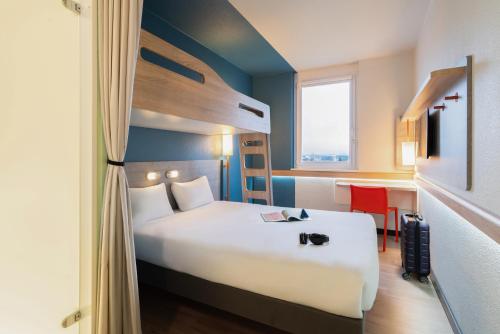
- Pâquis: between the train station and the lake, cheapest central area, great food, a little rough around the edges at night (it's also the red-light district). Best for budget travellers. Doubles from about CHF 130-200 (€140-210); hostel dorms around CHF 45-55.
- Cornavin (station area): practical for airport trains and day trips, full of mid-range chain hotels. Doubles about CHF 160-260 (€170-275).
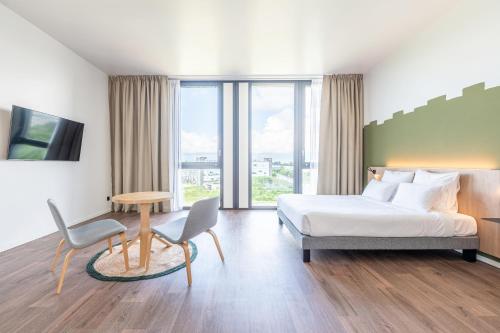
- Eaux-Vives: residential, lakeside, near the Jet d'Eau and Parc La Grange, with good local restaurants. Best for couples and second-timers. Doubles about CHF 180-300 (€190-320).
- Carouge: charming, village-like, with the best evening atmosphere. Best for food lovers. Fewer hotels, doubles about CHF 160-260 (€170-275).
- Annemasse (France): just over the border, connected by the Léman Express train in about 20 minutes. Often much cheaper, around €80-120 per night, but you won't get the free Geneva Transport Card.
What to eat in Geneva
Order filets de perche (pan-fried lake perch fillets with fries and a lemon butter sauce) at least once. They're the classic lake dish, though most perch now comes from elsewhere; ask if it's from the lake if that matters to you. For fondue, the local mix is moitié-moitié (half Gruyère, half Vacherin Fribourgeois), and in Geneva it's a year-round dish despite what the weather says.
- Longeole: a Geneva pork sausage flavoured with fennel, usually served with lentils or potatoes in winter.
- Raclette: melted cheese scraped onto potatoes, pickles and onions.
- Cardons: a gratin of cardoon, a local winter vegetable, often served with longeole.
- Malakoffs: deep-fried cheese fritters, technically from Vaud but easy to find around the lake.
- Pavés de Genève: square chocolate truffles that look like the Old Town's cobblestones.
- Local wine: Geneva is one of Switzerland's largest wine-producing cantons. Try a Chasselas or a Gamay from Satigny.
Prices: a plat du jour at lunch (the main way locals eat cheaply) costs CHF 18-25 (€19-27). A sit-down dinner with a main, a glass of wine and no dessert runs CHF 45-70 (€48-75). Fondue is usually CHF 28-35 (€30-37) per person. For cheap eats, Migros and Coop supermarkets have good takeaway counters, and Pâquis kebab and Lebanese spots will feed you for CHF 12-18.
Airport to city centre and getting around
Geneva Airport is only 4 km from the centre, which makes it one of Europe's easiest airports to get out of.
- Train: about 7 minutes to Cornavin station, running every few minutes. Free with the ticket from the machine in the baggage hall (valid 80 minutes).
- Bus 5 or 10: 20-25 minutes into town, also covered by the free ticket.
- Taxi: 15-20 minutes, about CHF 35-45 (€37-48). Not worth it unless you have a lot of luggage.
Getting around is easy on foot, as the centre is compact. For longer hops, TPG trams, buses and Mouettes run frequently. A single ticket is about CHF 3 (€3.20), and a day pass is about CHF 10 (€11). If you're in a hotel or hostel, the Geneva Transport Card makes all of this free, so you'll rarely pay.
How much a trip to Geneva costs
Geneva is one of the most expensive cities in Europe, but the free transport and free museums soften the blow. Rough daily costs per person, excluding flights:
- Shoestring: CHF 90-120 (€95-130). Hostel dorm, supermarket breakfasts, plat du jour lunch, one cheap Pâquis dinner, free museums and free transport.
- Mid-range: CHF 220-320 (€235-340). Half a double room in a 3-star hotel, two restaurant meals, a fondue, the UN tour or Red Cross Museum, a drink or two.
- Money-saving moves: eat your main meal at lunch, buy wine and picnic food at Coop or Migros, and sleep in Annemasse if hotel prices are crazy.
Day trips from Geneva
- Annecy (France): a canal-lined old town on a turquoise lake. About 1 hour by bus from the Geneva bus station. Easily the best day trip.
- Lausanne and the Lavaux vineyards: 40 minutes by train to Lausanne, then 15 minutes more to the UNESCO-listed terraced vineyards. Walk between villages and stop for a glass of Chasselas.
- Montreux and Château de Chillon: about 1 hour 10 minutes by train. The lakeside castle is one of Switzerland's most photographed, and the waterfront walk is lovely.
- Chamonix (France): about 1 hour 15 minutes by bus. Take the Aiguille du Midi cable car for close-up views of Mont Blanc. It's pricey, so only go on a clear day.
- Mont Salève (France): Geneva's "balcony". Take bus 8 to Veyrier, walk across the border and ride the cable car up for the best view of the whole city and lake. A half-day trip, so bring your passport.
Common mistakes and scams
Geneva is very safe, so the main risks are to your budget rather than your wallet.
- Accepting card payments in your home currency. Always choose CHF when a card machine or ATM asks. The "conversion" option adds a bad exchange rate.
- Buying an airport transport ticket. Look for the free ticket machine before you leave the baggage hall.
- Not asking for the Geneva Transport Card. Some hotels only give it if you ask, and it's worth roughly CHF 10 a day.
- Pickpockets around Cornavin and Pâquis. Not common, but keep phones out of back pockets, especially at night.
- Visiting the UN without booking. Walk-ins are often turned away. Book online and bring your passport.
- Forgetting Sundays. Most shops close, including many supermarkets. The station and airport shops stay open.
- Paying euros in cash. Many places accept them, but at a poor rate and with change in francs.
Geneva FAQ
How many days do you need in Geneva?
Two days is enough to see the main sights and get a feel for the city. Add a third if you want a day trip to Annecy, Lausanne or Chamonix.
Is Geneva worth visiting?
Yes, especially in summer when you can swim in the lake. It's not as postcard-pretty as Lucerne, but the UN, Red Cross Museum, Carouge and lake life make it unique.
Is public transport free in Geneva?
For tourists staying in registered accommodation, yes. The Geneva Transport Card covers trams, buses, trains within the city and the Mouettes, and there's a free airport ticket too.
Can you visit the UN in Geneva?
Yes, with a guided tour of the Palais des Nations booked online in advance. It costs about CHF 22, and you need your passport.
Is Geneva expensive for tourists?
Very, especially for food and hotels. Budget at least CHF 90-120 a day on a shoestring, and use free museums, free transport and supermarket lunches to save.
Can you swim in Lake Geneva?
Yes, the water is clean and locals swim from June to September at Bains des Pâquis, Genève-Plage and along the quays. Some hardy locals swim all year.
Should I use euros or Swiss francs in Geneva?
Use Swiss francs or a card. Euros are often accepted, but the exchange rate is poor and you'll get change in francs.
Photo: Gzzz · CC BY-SA 3.0 · Wikimedia Commons · Guide updated 21 Nov 2026