Nice is the most liveable city on the French Riviera: big enough to have real neighbourhoods, markets and locals going about their day, small enough to cross on foot in an hour. You get a pebble beach, a baroque old town that looks more Italian than French (it was part of the Kingdom of Sardinia until 1860), serious art museums and some of the best cheap street food in France. It is not glamorous in the Cannes or Monaco sense, and that is exactly why it works as a base.
It suits couples, solo travellers, families and anyone flying in cheaply and wanting to see the coast without paying Saint-Tropez prices. Three days is the right amount: two for the city itself and one for a day trip by train or bus. If you have five, add Antibes and Menton, and you still won't be bored.
What to see in Nice: the places worth your time
Promenade des Anglais
The 7 km seafront promenade is the spine of the city, and walking or cycling part of it is the first thing to do in Nice. The famous blue chairs, the Belle Époque Hotel Negresco and the curve of the Baie des Anges are all here. Free, and you can do the best stretch (Negresco to the Old Town) in 30 minutes. Our tip: go early morning, when it belongs to joggers and locals swimming, not the midday crowd.
Vieux Nice (Old Town)
A knot of narrow, ochre-coloured lanes between the sea and Castle Hill, full of baroque churches, laundry lines and tiny shops. Give it at least half a day. Rue Droite and Rue de la Préfecture are quieter and more interesting than the main drag, Rue Masséna, which is wall-to-wall tourist restaurants. Pop into the Cathédrale Sainte-Réparate on Place Rossetti and the Chapelle de la Miséricorde on Cours Saleya, both free.
Cours Saleya market
The long open square at the edge of the Old Town hosts a flower and produce market most mornings (except Mondays, when it becomes an antiques and flea market). Free to browse, 45 minutes is plenty. Go before 10am for the best produce and fewer elbows, and grab socca from the stalls rather than sitting down at the overpriced terraces lining the square.
Colline du Château (Castle Hill)
There's no castle left, but this hill gives the best view in Nice: the whole Promenade on one side, Port Lympia on the other. Free. Walk up the steps from the end of Quai des États-Unis (15 minutes) or take the free lift near the Tour Bellanda. Allow an hour or so with the artificial waterfall and the park at the top. Sunset is lovely, but so is first thing in the morning when the light hits the bay.
Musée Matisse and Cimiez
Up on the Cimiez hill, a red Genoese villa holds a collection covering Matisse's whole career, including paper cut-outs and personal objects. Next door are Roman ruins and the Archaeology Museum, plus the Monastère de Cimiez with its free rose gardens and Matisse's grave in the cemetery. Plan 2-3 hours for the area. Entry to the city museums is around €10-15, and a multi-day municipal museum pass is worth it if you visit two or more. Get there on bus 5 or 33 from the centre.
Musée National Marc Chagall
Purpose-built for Chagall's huge biblical paintings, this is a calm, well-lit museum that even non-art people tend to enjoy. About €10-12, 1-1.5 hours. It's a 15-minute walk uphill from Nice-Ville station, so combine it with Cimiez on the same morning.
Port Lympia
The old port, ringed by Italianate buildings in yellow and red, is where Nice feels most like a working city. Free, and good for an hour's stroll and a drink. The streets behind it (Rue Bonaparte, Rue Catherine Ségurane) have some of the best neighbourhood bars and an antiques quarter.
Coco Beach and the coastal walk
Keep walking east past the port along Boulevard Franck Pilatte and you reach rocky swimming spots and Coco Beach, where locals jump into clear water off the rocks. Free. It's about 25 minutes from the port. Bring water shoes, as there's no sand and the rocks are sharp.
Mont Boron and Fort du Mont Alban
The wooded hill east of the port has trails, villas and a 16th-century fort with views over both Nice and Villefranche bay. Free (the fort interior is only open occasionally). Allow 2-3 hours as a hike, or take bus 14 most of the way. It's the best short nature escape without leaving the city.
Russian Orthodox Cathedral of Saint Nicholas
Onion domes in the middle of a residential area, built for the Russian aristocracy who wintered here in the 19th century. The interior is rich in icons and woodwork. Entry is a few euros, 30-45 minutes. It's a 15-minute walk west of the station; dress modestly.
Place Masséna and the Promenade du Paillon
The red-ochre square with its black-and-white chequered paving links the Old Town and the modern centre. Behind it, the Promenade du Paillon is a long park with a mirror fountain where kids (and adults) run through the water jets on hot days. Free, and a natural 20-minute stop between other sights.
Hotel Negresco (from the outside, or a drink inside)
The pink-domed palace hotel on the Promenade is the city's most photographed building. You don't need to stay there: a coffee or cocktail at the bar costs more than it should (think €20+ for a cocktail) but gets you a look at the Belle Époque interior. Otherwise, the photo from across the street is free.
Things to do in Nice
The best things to do in Nice aren't all sights. A few ideas for when you've had enough of museums:
- Swim off the pebbles. The public beaches are free and the water is clean and deep fast. Bring a mat or cheap beach shoes; your back and feet will thank you.
- Eat your way through the Old Town. Socca, pissaladière, pan bagnat and an ice cream at Fenocchio on Place Rossetti can make a full afternoon.
- Shop at the Libération market. On Avenue Malausséna, north of the station, this is where locals buy their food, with lower prices and no tourist markup.
- Rent a bike or e-scooter along the seafront. The cycle path runs most of the Promenade; the city bike scheme is cheap for short hops.
- Kayak or paddleboard from Coco Beach or the Réserve area to see the coast from the water, around €20-30 an hour.
- Catch an apéro on Place Garibaldi. The big arcaded square at the top of the Old Town has a more local crowd than Cours Saleya and good rosé by the glass.
- Visit during Carnival (February). One of the world's biggest, with flower battles along the Promenade. Grandstand seats are paid, standing areas cheaper.
Nice for free (or almost)
Nice is easy on the wallet if you know where to look. Castle Hill, the Promenade, the Old Town churches, Cours Saleya, the Cimiez monastery gardens and the public beaches all cost nothing. The coastal walk to Coco Beach and the Mont Boron trails are free too.
For almost free, a socca portion costs about €4-5, a pan bagnat €6-8, and a regional train ticket to Villefranche-sur-Mer is just a few euros. On the first Sunday of the month, several city museums have historically offered free entry, so check before you go.
Nice itinerary: 3 days
Day 1: Old Town, Castle Hill and the Promenade
Morning: start at Cours Saleya market, then wander the Old Town lanes, Sainte-Réparate and Place Rossetti. Afternoon: socca for lunch, then climb Castle Hill and walk down the other side to Port Lympia. Evening: walk the Promenade des Anglais at sunset toward the Negresco, then dinner back near Place Garibaldi.
Day 2: Cimiez, art and the coast
Morning: bus up to Cimiez for the Matisse Museum, Roman ruins and monastery gardens, then walk down to the Chagall Museum. Afternoon: lunch near Libération market, then head east past the port to swim at Coco Beach. Evening: drinks and dinner around the port and Rue Bonaparte.
Day 3: Day trip east
Morning: bus 82 to Èze village for the views and the Jardin Exotique. Afternoon: walk down the Nietzsche path to Èze-sur-Mer (about 1.5 hours, steep), then train to Monaco. Evening: catch the train back to Nice in about 20 minutes and finish with ice cream in the Old Town.
What is overrated (and what to do instead)
- Eating on Cours Saleya or Rue Masséna. Laminated menus with pictures, average food, high prices. Walk two streets in and eat where the locals queue.
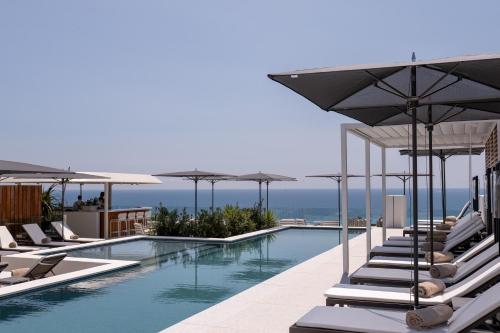
- Private beach clubs on the Promenade. €25-40 for a lounger plus expensive drinks, on the same pebbles. Unless you need shade and a cushion, the public beach is fine.
- The little tourist train. It mostly covers what you can walk in 20 minutes. Climb Castle Hill on foot or take the free lift.
- Monaco for a full day. It's interesting for a few hours, then mostly expensive. Combine it with Èze or Villefranche instead.
When to visit Nice
The best time to visit Nice is May-June or September to early October: warm enough to swim, sea temperatures pleasant, prices lower than peak. July and August are hot (around 28-30°C), crowded and expensive, with hotel prices often doubling.
Winter is mild (12-15°C during the day, sunny more often than not) and the cheapest time for flights and hotels, though too cold for most people to swim. February brings Carnival and the Menton Lemon Festival, so book early then. Late May is pricey too, because of the Cannes Film Festival and the Monaco Grand Prix.
Where to stay in Nice: best areas
- Vieux Nice (Old Town): atmosphere, food on your doorstep, beach two minutes away. Noisy at night and some rooms are small and dark. About €100-200 a night for a double.
- Port Lympia: more local, good bars and restaurants, easy access to the coastal walk and the airport tram. €90-170.
- Carré d'Or / Jean-Médecin: central, good for shopping and close to both the beach and the station. Mid-range hotels and apartments, €110-220.
- Libération: residential, great market, cheaper and still on the tram line. Best value for longer stays, €70-130.
- Around Nice-Ville station: handy for day trips and the cheapest option, but a bit gritty at night. €60-110, hostels from about €30-45 a bed.
What to eat in Nice
Niçois food is its own cuisine, closer to Liguria than to Paris. Order these:
- Socca: a thin chickpea pancake, crispy at the edges, eaten hot with black pepper. Chez Pipo near the port and Chez Thérésa at Cours Saleya are the classics.
- Pissaladière: onion tart with anchovies and olives.
- Pan bagnat: salade niçoise in a round bun soaked in olive oil. Perfect beach lunch.
- Salade niçoise: the real one has no potatoes or green beans, and locals will happily tell you so.
- Petits farcis: vegetables stuffed with meat and herbs.
- Daube niçoise: slow-cooked beef in wine, often served with ravioli.
- Beignets de fleurs de courgette and tourte de blettes, a sweet chard pie that sounds odd and works.
Lunch from street food costs €8-12. A sit-down plat du jour lunch runs €15-20. Dinner at a decent local restaurant is €30-45 a head with wine. Look for the "Cuisine Nissarda" label, which marks restaurants serving real local cooking.
Airport to city centre and getting around
Nice Côte d'Azur Airport is only about 7 km from the centre. The easiest option is tram line 2, which runs from both terminals to the centre and the port in about 25-30 minutes for a standard ticket of around €2. Taxis charge a fixed fare to the city centre of roughly €32-35; agree before setting off if your driver seems unsure about the flat rate.
Once there, you'll walk most places. The tram (lines 1, 2 and 3) and Lignes d'Azur buses cover the rest, with single tickets around €2 and day passes around €5-7. Regional TER trains along the coast are cheap and frequent: Villefranche in 10 minutes, Monaco in about 20, Antibes in about 25. Pay in the app or at machines and validate paper tickets.
How much a trip to Nice costs
- Shoestring (€70-100 per day): hostel bed €30-45, street food and supermarket picnics €20-25, public beaches, one museum, local transport €5.
- Mid-range (€160-250 per day): double room €110-180 split between two, sit-down lunch and dinner €50-70, museums and a day trip €25-35, drinks €15-20.
- Extras: beach club lounger €25-40, boat trip €30-60, city tourist tax per night added to your hotel bill.
Day trips from Nice
- Villefranche-sur-Mer: a pastel fishing village on a deep bay with a sandy-ish beach. Train 10 minutes. Half a day.
- Èze: medieval village perched 400 metres above the sea, with an exotic garden. Bus 82 from Vauban, about 30 minutes. Half a day, or a full one with the Nietzsche path down.
- Monaco: casino square, the Prince's Palace and the Oceanographic Museum. Train about 20 minutes. Half to a full day.
- Antibes: walled old town, Picasso Museum and a lovely Provençal market. Train about 25 minutes. Full day with a swim.
- Saint-Paul-de-Vence: hilltop art village and the Fondation Maeght nearby. Bus around an hour. Half to full day, best on a weekday.
Common mistakes and scams
Pickpockets work the tram, Place Masséna, the Old Town and the Promenade, especially in summer. Keep your phone out of back pockets and your bag zipped. People with clipboard "petitions" (often posing as charity workers for the deaf) are a distraction tactic: just keep walking.
Other mistakes: walking in the cycle lane on the Promenade (you will get yelled at), forgetting to validate train and tram tickets (inspectors fine on the spot), and ordering a "salade niçoise" at a tourist restaurant for €20 when a pan bagnat round the corner is better and €7. Check restaurant bills for added bread or water you didn't order, and note that a carafe of tap water (une carafe d'eau) is free.
Nice FAQ
How many days do you need in Nice?
Three days is ideal: two for the city and one for a day trip to Èze, Monaco or Villefranche. With five days you can add Antibes and Menton comfortably.
Is Nice expensive?
It's cheaper than Cannes or Monaco but pricier than most French cities. Street food, free beaches and cheap trains keep costs down; summer hotels are the main budget killer.
Does Nice have sandy beaches?
No, Nice's beaches are pebbles. For sand, take the train to Villefranche-sur-Mer or Juan-les-Pins near Antibes.
How do I get from Nice airport to the city centre?
Take tram line 2 from either terminal, around €2 and 25-30 minutes. A taxi costs a fixed rate of roughly €32-35.
Is Nice safe for tourists?
Yes, Nice is generally safe, but pickpocketing is common in crowded areas. The streets around the train station can feel rough late at night.
What is the best time to visit Nice?
May-June and September are the best months: warm sea, fewer crowds and lower prices than July and August.
Can you visit Monaco from Nice in a day?
Easily. The train takes about 20 minutes and costs just a few euros, and a half day is enough for the main sights.
What food is Nice famous for?
Socca, pissaladière, pan bagnat, salade niçoise and petits farcis. Socca hot from the oven is the one not to miss.
Photo: Cayambe · CC BY-SA 3.0 · Wikimedia Commons · Guide updated 21 Nov 2026