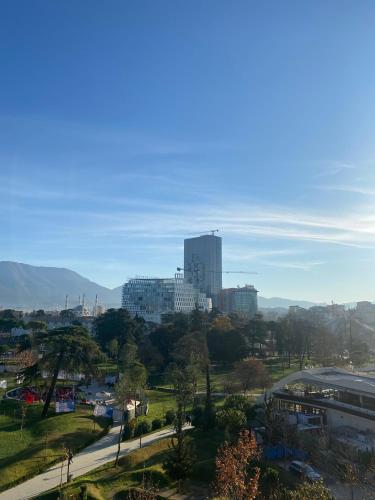
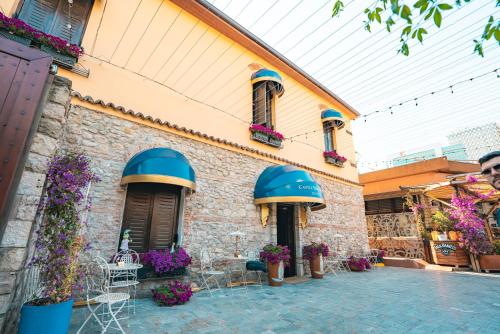
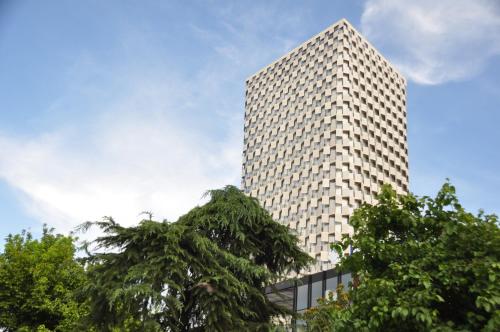
Tirana is not a pretty capital in the postcard sense, and it doesn't try to be. It's loud, half-finished in places and full of cranes, but it is also one of the most interesting cities in Europe right now. You get communist bunkers turned into museums, painted apartment blocks, a former dictator's neighbourhood that is now the best place for a drink, and prices that still feel like a mistake if you live in Western Europe.
It suits curious travellers, people who like cities with rough edges, and anyone hunting cheap flights who wants more than a beach. Three days is the right amount: two for the city itself and one for a day trip to Krujë or Berat. If you only have a weekend, the city alone fills two days comfortably.
What to see in Tirana: the places worth your time
Skanderbeg Square
This is the city's huge central square, and every walk in Tirana passes through it. The 2017 redesign turned it into a vast pedestrian space paved with stone from all over Albania, with the equestrian statue of Skanderbeg, the Opera and the National History Museum (look for the giant socialist mosaic on its façade) on its edges. Give it 20 minutes; it's free. Our tip: come at dusk when families are out and the fountains along the edge are running.
Et'hem Bey Mosque
This small late-18th-century mosque sits on the corner of the square and is the most beautiful interior in the city. The frescoes show trees, waterfalls and bridges, which is unusual for a mosque. It is free and takes 15 minutes. Dress modestly, take your shoes off and avoid prayer times, especially Friday midday.
Bunk'Art 2
This bunker was built for the Interior Ministry under Enver Hoxha and is a two-minute walk from the square. Inside, the corridors explain the Sigurimi secret police, the prisons and the surveillance state. It's claustrophobic in the right way. Allow an hour; tickets are about €8 (800 lek). Pair it with the Postbllok memorial nearby.
Bunk'Art 1
This is the bigger one: a five-storey nuclear bunker in the hillside on the road to Dajti, with Hoxha's own apartment, an assembly hall and exhibits on 20th-century Albanian history. It is better than Bunk'Art 2 if you only pick one, but it takes longer to reach. Take the Porcelan bus from near the Clock Tower (40 lek, about 25 minutes). Budget two hours; entry is about €10 (1,000 lek).
House of Leaves (Museum of Secret Surveillance)
This was once a maternity clinic, then the Sigurimi's listening centre. It is now a small, very well-designed museum of bugs, cameras and files kept on ordinary citizens. Allow an hour; tickets are about €7 (700 lek). Go before Bunk'Art if you can, because it gives you context.
The Pyramid of Tirana
The Pyramid was built as a museum to Hoxha, then left to decay for decades, and it has now been reopened as a tech and youth centre with colourful boxes around it. The point is to walk up the steps on its sloping sides to the top for a view over the boulevard. It's free and takes 20 minutes. Wear shoes with grip, because the slope is steeper than it looks.
Blloku
Blloku was the closed residential zone of the communist elite, and ordinary Albanians couldn't enter until 1991. It's now the city's café, bar and restaurant district. You can still see Hoxha's villa on the corner of Rruga Ismail Qemali, and the Checkpoint (Postbllok) memorial with a bunker and a piece of the Berlin Wall. Come for an afternoon coffee and come back at night.
New Bazaar (Pazari i Ri)
The old market hall has been restored, and the streets around it are packed with fruit stalls, cheese, olives, honey and little restaurants. This is the best place in the centre for a casual lunch. Allow an hour or longer if you eat. Go in the morning for the market and in the evening for the terraces.
Grand Park and the Artificial Lake
This big green park lies south of the centre, with a loop around the lake that takes about an hour on foot. Locals jog, walk dogs and sit at the lakeside cafés. It's free. Our tip: enter from the Blloku side and finish at the dam end for sunset.
Dajti Ekspres cable car
This cable car runs from the eastern edge of the city up Mount Dajti in about 15 minutes, with a view over the whole Tirana plain. A return ticket costs about €14 (1,400 lek). At the top there are walking paths, restaurants and a lot of people on weekends. Only go on a clear day, and check before setting out, because it closes in strong wind.
National Gallery of Arts
This is the place for socialist realist painting, and the most interesting part is the garden behind it with toppled statues of Lenin and Stalin. Allow 45 minutes; tickets are around €2-4. Check whether it is open, as it has had long renovation periods.
Tanners' Bridge and Toptani Castle area
The Tanners' Bridge is a small Ottoman stone bridge, 10 minutes from the square. Nearby, the old walls of Tirana Castle (Kalaja e Tiranës) now enclose a short pedestrian street of restaurants and bars. Neither will take more than 20 minutes, and both are free. They're good stops on the walk between the square and Pazari i Ri.
Things to do in Tirana
Tirana is a city to experience as much as to tick off, and most of the best bits cost little or nothing.
- Do a walking tour. Free (tip-based) tours leave from Skanderbeg Square daily. They are the fastest way to understand the communist period and the 1997 collapse.
- Drink a raki with locals. Order a shot of rakia (grape is the default, mulberry is the good one) at any traditional restaurant.
- Coffee culture. Albanians spend hours over one espresso. Sit at a café in Blloku and do the same for about €1.
- Look at the painted buildings. Former mayor (now prime minister) Edi Rama had grey blocks painted in bright patterns. Look for them along the Lana river and around the centre.
- Night out in Blloku. Cocktails cost €5-8 and the bars run late, especially Thursday to Saturday.
- Hike on Dajti. Take the cable car up and walk the forest trails at the top for an hour or two.
- Market shopping. Buy mountain tea (çaj mali), honey and olive oil at Pazari i Ri rather than souvenir shops.
Tirana for free (or almost)
Most of the city's highlights cost nothing at all: Skanderbeg Square, the Et'hem Bey Mosque, the Pyramid steps, Postbllok, the Grand Park, Tanners' Bridge and the castle street.
- The Orthodox Resurrection Cathedral and the Catholic St Paul's Cathedral are both free to enter.
- The new Namazgah Mosque, one of the largest in the Balkans, can be viewed from outside near the Parliament.
- A city bus ride costs 40 lek (under €0.50).
- Byrek from a bakery costs about 100-150 lek. Lunch problem solved.
Tirana itinerary: 3 days
Day 1: the centre and the communist past
Morning: Start at Skanderbeg Square, step into the Et'hem Bey Mosque, then join a free walking tour or go straight into Bunk'Art 2. Afternoon: Walk to House of Leaves, then down the boulevard to the Pyramid and climb it. Evening: Cross the Lana into Blloku, see Postbllok and Hoxha's villa, then have dinner and drinks in the neighbourhood.
Day 2: markets, bunkers and the mountain
Morning: Breakfast and browsing at Pazari i Ri, then walk past Tanners' Bridge and the castle walls. Afternoon: Take the bus to Bunk'Art 1. From there, continue to the Dajti Ekspres station if the sky is clear, and ride up for the view. Evening: Head back down and finish at the Grand Park lake for sunset, then eat at a traditional restaurant near the bazaar.
Day 3: day trip
Morning: Take a bus to Krujë (about an hour) for the castle, the Skanderbeg Museum and the old bazaar. You could also take one of the earlier buses to Berat if you prefer Ottoman towns. Afternoon: Return to Tirana by late afternoon. Evening: Have a last dinner in Blloku or around the castle street, or try Mullixhiu, the best-known modern Albanian restaurant, if you want one splurge meal.
What is overrated (and what to do instead)
- Lingering in Skanderbeg Square. It's impressive for ten minutes but there is very little shade or reason to stay. See it, then go into the mosque and Bunk'Art 2 next to it.
- Dajti on a hazy day. Summer haze and low cloud can wipe out the view, and €14 is a lot for fog. If it looks grey, swap it for a longer walk in the Grand Park.
- The Clock Tower climb. It's cheap, but the view is limited by the buildings around it. The Pyramid steps and the rooftop bars in the centre do the job better.
- Eating on Blloku's main strips every night. It's fine but pricier and more generic. For better value, eat around Pazari i Ri or in residential side streets.
When to visit Tirana
The best months are April-June and September-October, when it's 18-28°C and good for walking. July and August regularly pass 35°C, and many locals head to the coast, so the city is hot and a bit quieter. Winter is mild (around 10-14°C by day) but often rainy. It is also the cheapest time for flights and hotels, apart from Christmas and New Year. Hotel prices rise in summer because many travellers pass through on the way to the Riviera.
Where to stay in Tirana: best areas
- Blloku: This area suits nightlife lovers and first-timers who want cafés on the doorstep. Doubles run €50-100. It can be noisy on weekends, so ask for a back room.
- Around Skanderbeg Square: This is the most central option and puts everything within a 15-minute walk. Expect €45-90, and more for the big business hotels.
- Pazari i Ri (New Bazaar): The area has character, good food and guesthouses. Doubles cost €35-70, and hostels start at €12-18 for a dorm bed.
- Komuna e Parisit / near the Grand Park: Quieter, residential and good value for apartments. Prices are €35-60, about 15-20 minutes' walk from the centre.
What to eat in Tirana
Albanian food is hearty and rural: lots of lamb, yoghurt, cheese, peppers and bread. Our tip is to order a few dishes to share rather than one main each.
- Tavë kosi: Baked lamb with a rice and yoghurt-egg custard, and the national dish. It's lighter than it sounds.
- Fërgesë: Peppers, tomatoes and cottage cheese baked together, best scooped up with bread.
- Byrek: Filo pie with spinach, cheese or meat, eaten for breakfast with a glass of dhallë (salty yoghurt drink).
- Qofte: Grilled minced-meat fingers, served with salad and fries at any grill.
- Trileçe: Three-milk cake and the dessert you will see everywhere.
- Drinks: Raki, Korça or Tirana beer (about €2-3), and Albanian wine from Shesh i Zi or Kallmet grapes.
A simple lunch of byrek and a drink costs €2-4, while a sit-down lunch with qofte and salad costs €7-10. Dinner for two at a traditional restaurant with wine is about €25-40. A tasting menu at Mullixhiu costs considerably more. Skip the places with photo menus in four languages right on the square.
Airport to city centre and getting around
Tirana International Airport (Rinas, also called Nënë Tereza) is about 17 km northwest of the centre.
- Rinas Express bus: The bus runs roughly every hour, takes 30-40 minutes and drops you near the National Museum. Tickets cost about 400 lek (€4), paid on board in cash.
- Taxi: A taxi takes 25-30 minutes and costs a flat fare of about €20-25 (2,000-2,500 lek). Use the official rank outside arrivals and confirm the price before getting in.
- Transfers: Most hotels arrange pick-ups for a similar price to a taxi.
Tirana has no metro or tram. The centre is walkable, and city buses cost 40 lek per ride, paid to the conductor on board. There's no useful tourist travel pass, so just keep coins and small notes. Taxis are cheap for short hops (€3-6), but insist on the meter or agree on the price first. Traffic is chaotic, so be careful crossing roads even at zebra crossings.
How much a trip to Tirana costs
- Shoestring: €35-50 a day. That covers a hostel bed (€12-18), bakery breakfast, a cheap lunch, a grill dinner, one museum and buses.
- Mid-range: €80-130 a day. That covers a double room in Blloku or the centre (€50-80 per room), restaurant meals, two museums, the cable car, a couple of cocktails and the occasional taxi.
- Day trip extra: Add €10-20 for buses, entry and lunch.
Day trips from Tirana
- Krujë: Skanderbeg's mountain fortress, a museum and an old covered bazaar that is good for crafts. Buses take about an hour and cost about 300 lek. Allow half a day.
- Berat: The UNESCO "town of a thousand windows", with a lived-in castle on the hill. Buses take about 2-2.5 hours each way, so make it a full, long day or stay overnight.
- Durrës: A port city with a Roman amphitheatre and a beach. Buses or minibuses take about an hour. Fine for a swim in summer, though the seafront is heavily built up.
- Shkodër and the lake: Rozafa Castle and lake views, about 2 hours by bus. It's also the gateway to the Albanian Alps if you have more time.
- Bovilla Lake: A turquoise reservoir with a hike to a viewpoint, about an hour away. You need a car or a tour, because there's no practical public transport.
Common mistakes and scams
- Old lek confusion. Many Albanians still quote prices in "old lek", which is ten times the real figure. If a coffee is "1,000", they mean 100 lek. Clarify before you panic or overpay.
- Taxis without meters. Some drivers will name an inflated price, especially at night and near the bus terminals. Agree on the fare first.
- Street money changers. Use exchange offices or ATMs instead. Watch for ATM fees, which vary by bank, and always decline the "conversion" option.
- Assuming cards work everywhere. Small restaurants, buses and bakeries are often cash only.
- Bus stations in the wrong place. Intercity buses leave from different terminals depending on direction, such as the North and South (Nord-Jug) terminal. Check the night before.
- Underestimating summer heat. Plan museums for midday in July and August and walk in the morning and evening.
Tirana FAQ
How many days do you need in Tirana?
Three days is ideal: two for the city and one for a day trip to Krujë or Berat. Two days covers the main sights if you're short on time.
Is Tirana safe for tourists?
Yes, Tirana is generally safe, with low levels of violent crime against visitors. The bigger risks are traffic and the odd overcharging taxi driver.
Do they use euros in Tirana?
The currency is the Albanian lek (roughly 100 lek to €1). Some hotels and tourist places accept euros, but you'll get a better deal paying in lek.
Is Tirana worth visiting?
Yes, especially if you're interested in recent history, food and cheap city breaks. It's not a classic beauty, but it's one of the most distinctive capitals in Europe.
Which Bunk'Art is better?
Bunk'Art 1 is bigger and more atmospheric, while Bunk'Art 2 is central and quicker. If you only have time for one and don't mind the bus ride, choose Bunk'Art 1.
How do I get from Tirana airport to the city?
The Rinas Express bus costs about 400 lek and takes 30-40 minutes to the centre. A taxi costs around €20-25.
Can you drink tap water in Tirana?
Most locals and visitors drink bottled water, which is cheap. Use tap water for brushing teeth and stick to bottles for drinking.
Is Tirana expensive?
No. Coffee costs about €1, a good dinner costs €12-20 per person and museums are under €10. Hotels in Blloku in high summer are the main thing that has got pricier.
Photo: Wikipedia · · Wikimedia Commons · Guide updated 21 Nov 2026