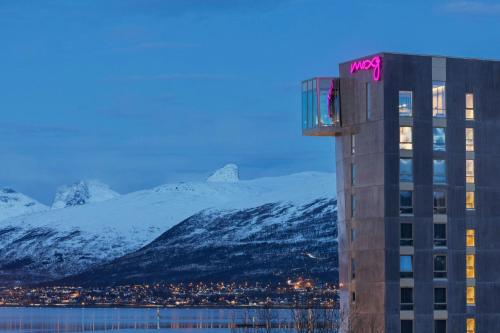
Tromso is a small university city of about 80,000 people on an island 350 km north of the Arctic Circle. It has more bars per head than it should, a cable car to a mountain ledge, and a wooden cathedral. Most people come for one thing: the northern lights in winter or the midnight sun in summer. The town itself is pleasant and compact, but the scenery around it is the real reason to fly this far north.
It suits couples, photographers, hikers and anyone happy to pay Norwegian prices for a week's worth of scenery packed into a few days. Three days is the right amount: one for the town, one for a big excursion (dogs, whales or fjords), and one spare night for aurora hunting, because clouds cancel plans here all the time. If the northern lights are your main reason for coming, add a fourth night as insurance.
What to see in Tromso: the places worth your time
Fjellheisen cable car and Storsteinen
The cable car lifts you 421 metres to a ledge with the best view of Tromso, and it is the one paid sight we would never skip. In four minutes you have the island, the bridge, the fjord and snowy peaks laid out below you. A return ticket costs about NOK 450-500 (€40-45). Plan 1-2 hours. Our tip: go up about an hour before sunset and stay until the city lights come on. On clear winter nights you can see aurora from the top. Bus 26 from the centre stops close to the lower station.
The Sherpa Stairs
The free alternative to the cable car is a stone staircase of roughly 1,200 steps built by Nepalese Sherpas, running from the lower station up to Storsteinen. Expect 45-75 minutes of steady climbing. It is only usable from roughly June to September, because in winter it is buried under snow and ice. Walk up and take the cable car down if your knees complain.
Arctic Cathedral (Ishavskatedralen)
The white triangular church in Tromsdalen, built in 1965, is the city's best-known building. The glass mosaic on the east wall is huge and worth seeing from inside. Entry is about NOK 100 (€9) and you need 30 minutes. Our tip: the outside is the main attraction, so see it lit up at night from the city side of the bridge. In summer, look for the midnight sun concerts held there.
Tromso Bridge
The bridge is a free sight and the best way to reach the Arctic Cathedral: about 1 km long, 20-25 minutes on foot, with fjord views in both directions. It gets windy and icy in winter, so wear proper shoes with grips (more on that below).
Polaria
Polaria is the Arctic aquarium shaped like toppled ice blocks, right by the waterfront. The highlight is the bearded seals, especially at feeding time. Tickets cost about NOK 350-400 (€30-35) and you need 1-1.5 hours. It is good with kids or on a stormy day. Adults on a tight budget can skip it without guilt.
Polar Museum (Polarmuseet)
This small museum in an old customs warehouse on the harbour covers trappers, sealing and polar expeditions, with Amundsen and Nansen as the headline names. Entry is about NOK 100 (€9), and an hour is enough. Some exhibits on seal hunting and trapping are blunt, which is honest about how the north was actually lived in.
The Arctic University Museum of Norway
Still called the Tromso Museum by locals, it sits at the southern tip of the island in Folkeparken. Go for the Sámi exhibition and the northern lights section, which explains the science better than any tour guide will. Allow 1.5-2 hours. Entry is about NOK 100 (€9). Combine it with a walk along Telegrafbukta beach next door.
Northern Norway Art Museum (Nordnorsk Kunstmuseum)
The museum is free and central, and it shows landscape painting and Sámi art from the north. It is a quick, warm stop of 45 minutes when the wind is biting outside.
Tromso Cathedral and Storgata
Tromso Cathedral (Domkirke) is one of Norway's largest wooden churches. It sits on Storgata, the main pedestrian street lined with shops and painted wooden houses. Take 15 minutes inside if it is open, then walk the length of Storgata. It is free, and the street is prettiest in falling snow under the Christmas lights.
Mack Ølhallen
Ølhallen is the pub attached to the Mack brewery, which has been going since 1877 and was for years marketed as the world's northernmost brewery. It has dozens of taps, a polar bear by the bar and a proper local crowd. A pint costs about NOK 120-140 (€10-12). Our tip: go late afternoon before it fills up.
Prestvannet
Prestvannet is a lake on the island's highest point, about 25 minutes uphill from the centre. In winter it is frozen and surrounded by ski tracks, and it is the closest dark-ish spot to watch for aurora without a tour. In summer you get birds and a quiet loop walk. It is free.
Telegrafbukta
This rocky beach on the south of the island faces the mountains of Kvaløya. In summer locals barbecue here at midnight in full daylight. In winter it is a decent aurora spot with less light pollution than the harbour. It is free and about 30 minutes on foot from the centre.
Things to do in Tromso
The city sights take a day and a half. The rest of your money goes on getting out into the Arctic, so choose carefully.
- Northern lights chase: minibus tours drive wherever the forecast is clear, sometimes all the way to the Finnish border. Expect €130-200 per person for 6-8 hours, usually with photos and a hot drink. Small groups are worth the extra.
- Dog sledding: half-day trips run on Kvaløya and in the valleys around the city. A shared sled for 2-3 hours costs €200-250. Driving your own sled is far more fun than sitting in one.
- Reindeer and Sámi culture: feeding reindeer, a short sled ride and a meal in a lavvu (tent) with joik and stories. Expect €150-200. Pick a Sámi-owned operator.
- Whale watching: from roughly November to January, orcas and humpbacks follow the herring into the fjords north of Tromso. Boat trips are long full days and cost €150-250. Seasickness tablets are not optional.
- Floating sauna: Pust is a sauna floating in the harbour, with a ladder straight into the sea. A session costs about NOK 300-400 (€25-35). It is the best value thrill in town.
- Fjord cruise: from late spring to summer, a few hours on a quiet electric boat or a sailing boat around the islands. Expect €100-150.
- Midnight sun hiking: from about late May to late July, hike Fløya (beyond Storsteinen) at 11pm in daylight. It is free and something you will not get anywhere else.
Tromso for free (or almost)
Tromso is expensive, but a surprising amount costs nothing:
- Walk Tromso Bridge and see the Arctic Cathedral from outside at night.
- Climb the Sherpa Stairs in summer instead of paying for the cable car.
- Look for aurora yourself at Prestvannet or Telegrafbukta, checking the cloud forecast on yr.no and an aurora app.
- Northern Norway Art Museum, which is free.
- The Arctic-Alpine Botanic Garden near the university, free and best in summer.
- Storgata and the harbour wooden warehouses, plus the library building with its curved roof.
- Coffee and a kanelbolle (cinnamon bun) from a bakery instead of a sit-down lunch: about NOK 80 (€7).
Tromso itinerary: 3 days
Day 1: the city on foot
Morning: start at the Polar Museum on the harbour, then walk Storgata past the cathedral. Pop into the Northern Norway Art Museum to warm up.
Afternoon: Polaria if you like seals, then fish soup at Mathallen or a hot dog from Raketten, the tiny kiosk on Storgata. Walk over the bridge to the Arctic Cathedral.
Evening: take bus 26 or walk on to Fjellheisen and ride up for sunset and city lights. Back down for a beer at Mack Ølhallen.
Day 2: the big excursion
Morning: dog sledding or a reindeer visit (most leave early with hotel pickup), or a whale safari in early winter, which takes the whole day.
Afternoon: back in town around 2-3pm. Rest, because the night is long.
Evening: northern lights chase, leaving around 6-7pm and returning after midnight. In summer, swap this for a midnight sun hike up Fløya.
Day 3: the south of the island and the spare night
Morning: bus to the Arctic University Museum for the Sámi and aurora exhibitions.
Afternoon: walk back along Telegrafbukta and up to Prestvannet, or take the floating sauna session in the harbour.
Evening: dinner of Arctic char or bacalao. If last night was cloudy, this is your backup aurora night.
What is overrated (and what to do instead)
- Big-bus aurora tours: 50 people around one tripod is not the experience in the brochure. Pay €30-50 more for a group of 8-15 that will drive further for clear sky.
- The Arctic Cathedral interior: it is pleasant, but the outside lit up at night is the photo. Cross the bridge, look and decide whether NOK 100 is worth it.
- Standing at the harbour waiting for aurora: it happens, but city lights wash it out. Walk 25 minutes to Prestvannet or take a bus out to Kvaløya.
- King crab dinners in the centre: you will pay €80-120 for a plate. A crab safari on the coast, where you help pull the pots, gives you the same crab plus the boat ride.
When to visit Tromso
For aurora, come between late September and late March. Late November to mid January is the polar night, when the sun never rises and you get a few hours of blue light around midday. December to March is the peak season, the most expensive and often fully booked, with temperatures usually between -2 and -10°C. Thanks to the Gulf Stream, it is milder than you would expect, but the wind is merciless.
The midnight sun runs roughly from 20 May to 22 July: 24-hour daylight, 10-18°C, hiking and terraces full at 1am. The cheapest and quietest windows are April-May and October. September is underrated, with autumn colours, the first aurora and dark enough nights. Avoid late November if you want daylight; the sun is gone.
Where to stay in Tromso: best areas
- Sentrum (centre around Storgata and the harbour): best for a first trip. Tour pickups, restaurants and the airport bus are all on your doorstep. Expect €120-250 a night for a double, and budget chains like Smarthotel at the lower end.
- Tromsdalen: across the bridge, near the Arctic Cathedral and cable car. It is quieter, with apartments that are a bit cheaper (€100-180) and a 20-minute walk or a short bus ride to the centre.
- Breivika and the university area: north of the centre, mainly apartments and rooms, good for longer budget stays at €80-150. You will use the bus every day.
- Kvaløya: cabins and lodges by the fjords, 20-60 minutes from town. They are ideal for aurora from your own doorstep, but you need a car. Expect €150-350.
What to eat in Tromso
Fish is the reason to eat here. Order Arctic char (røye), skrei (winter cod, January to April), bacalao (salted cod stewed with tomato and potato, a northern Norway classic) and fish soup, which is creamy and filling. Bidos, the Sámi reindeer stew, is worth trying at a reindeer camp. Reindeer also turns up as a sausage at Raketten. Whale meat is on some menus; many visitors prefer to skip it.
Mathallen and Fiskekompaniet are reliable for fish dinners, Emma's Drømmekjøkken does northern home cooking, and Bardus Bistro is relaxed and good value by local standards. Expect about €20-30 (NOK 220-350) for lunch and €50-80 per person for dinner with a main and a drink. Alcohol is pricey: wine and beer in restaurants start around NOK 120-150. Strong drinks are sold only at Vinmonopolet shops; supermarkets sell beer only until the early evening and not on Sundays.
Airport to city centre and getting around
Tromso Airport is only about 5 km from the centre. Your options:
- Flybussen: the airport bus to the centre, about 15 minutes, roughly NOK 120-150 (€11-13).
- Local buses: regular city buses connect the airport and the centre for less, about NOK 50 (€4.50) if bought in the Svipper app. They are slower and do not take much luggage.
- Taxi: 10 minutes, about NOK 250-400 (€22-35). It is fine for 3-4 people.
The centre is walkable. For the cable car, museum and Prestvannet, use city buses with the Svipper app: a single is about NOK 50 and a 24-hour ticket about NOK 130 (€11). Most tours include hotel or central pickup. Hire a car only for day trips, and only if you are comfortable on snow and ice.
How much a trip to Tromso costs
- Shoestring: €110-150 a day. A hostel bed or a shared apartment room, supermarket breakfasts, one cheap lunch, a hot dog for dinner, free sights and the bus. One paid tour on top will add €150-200.
- Mid-range: €250-400 a day. A central hotel, a proper dinner with a beer, the cable car, a museum, and one major excursion spread over the trip.
- Typical extras: aurora tour €130-200, dog sledding €200-250, whale safari €150-250, floating sauna €25-35.
Our tip: on a 3-day trip, book one big excursion and do aurora on your own on clear nights. That alone can save €200 per person.
Day trips from Tromso
- Sommarøy and Kvaløya: white beaches, turquoise water and fjord roads, about 1 hour by car. It is the easiest self-drive day trip, and Ersfjordbotn (30 minutes) is a perfect stop on the way.
- Lyngen Alps: jagged peaks across the fjord, popular for ski touring and aurora. It takes about 1.5-2 hours with the Breivikeidet-Svensby ferry. Tours are easier than driving in winter.
- Senja: Norway's second-largest island, with dramatic peaks and fishing villages. It is a long day (3+ hours each way by car), better as an overnight. Summer is easiest.
- Skjervøy: the base for winter whale watching, about 3.5 hours by road. Most people go on an organised trip.
Common mistakes and scams
- Booking only one aurora night: clouds rule everything. Book a tour for your first night so you can reschedule if it is cancelled.
- No grips on your shoes: the pavements are sheet ice. Buy brodder (shoe spikes) for about NOK 200-300 at any sports or supermarket. It is the best money you will spend.
- Cheap tours with unclear "guarantees": no one controls the sky. Read what happens if it is cloudy: a free retry is good, vague promises are not.
- Driving without winter experience: rental cars come with winter tyres, but roads to Kvaløya get dangerous fast. Many accidents involve tourists stopping on the road to watch aurora.
- Wearing jeans and fashion boots on tours: most operators lend thermal suits, so check and take one.
- Bringing too much cash: Norway is close to cashless. Cards and phones work everywhere, even at Raketten.
Tromso FAQ
How many days do you need in Tromso?
Three days is ideal: one for the city, one for a big excursion, and one spare night for aurora. With only two you are gambling heavily on the weather.
When is the best time to see the northern lights in Tromso?
From late September to late March, with good chances in clear weather. September-October and February-March often have more stable skies and some daylight.
Can you see the northern lights in Tromso without a tour?
Yes, on strong nights you can see them from Prestvannet, Telegrafbukta or the top of the cable car. A tour helps mostly because it drives away from clouds.
Is Tromso expensive?
Very. Allow about €110-150 a day on a strict budget and €250-400 for a comfortable trip, before tours.
Is the Fjellheisen cable car worth it?
Yes, it is the best view in Tromso. Go around sunset and stay into the evening.
How do I get from Tromso Airport to the city centre?
Flybussen takes about 15 minutes and costs around NOK 120-150. Local buses are cheaper with the Svipper app, and a taxi costs about NOK 250-400.
How cold is Tromso in winter?
Usually between -2 and -10°C, milder than most places at this latitude, but the wind and wet snow make it feel colder. Wool layers and spikes on your shoes matter more than a huge coat.
What are the best things to do in Tromso in summer?
Hike up the Sherpa Stairs and Fløya under the midnight sun, take a fjord cruise and drive out to Sommarøy. Late-night barbecues at Telegrafbukta are what the locals do.
Photo: Godot13 · CC BY-SA 4.0 · Wikimedia Commons · Guide updated 21 Nov 2026