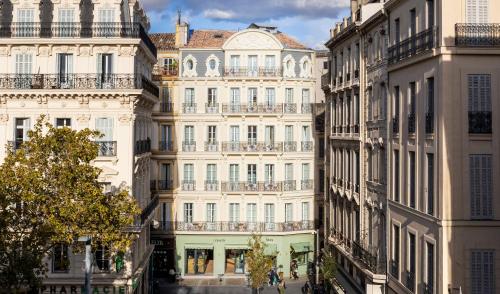
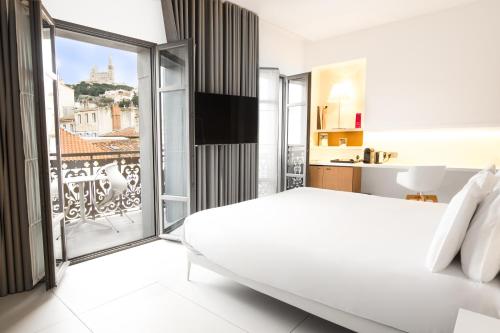
Marseille is France's oldest city and its least polished big one. It is loud, a bit scruffy and very sunny. You get a working port, North African markets, Le Corbusier and, half an hour away, limestone cliffs dropping into water so clear it looks fake. People who want Paris-style perfection tend to leave annoyed. People who like cities with some grit and a lot of sea usually want to move here.
It suits hikers, swimmers, food people and anyone happy to trade grand boulevards for character. Three days is the right amount: one for the old centre and the port, one for the Calanques, and one for the coast road, a museum and a long lunch. With five days you can add Cassis, Aix-en-Provence or the Frioul islands without rushing.
What to see in Marseille: the places worth your time
Vieux-Port
The Old Port is where everything starts, and it is worth an hour even though half of it is car-free promenade and restaurant terraces. Go early to see the fish market on the Quai des Belges, where fishermen sell the morning catch straight off the boats. Look up at Norman Foster's mirrored canopy, the Ombrière, which reflects you and the whole square. It's free. Our tip: take the little electric ferry across the harbour for under a euro, the shortest boat ride in France.
Notre-Dame de la Garde
The basilica on the hill, locally called "la Bonne Mère", is the single best viewpoint in the city and the one visit nobody should skip. Inside, the ceiling is covered in model boats and ex-votos left by sailors and families, far more interesting than the gold mosaics. Entry is free. Allow 1.5 hours including the trip up. The walk from the port is steep and takes about 30 minutes, so take bus 60 up and walk down through the Roucas-Blanc streets. Go at sunset or first thing, before the tour groups arrive.
Le Panier
The oldest neighbourhood sits on the hill behind the Hôtel de Ville: narrow lanes, laundry, street art and small workshops selling soap and ceramics. It has become touristy, with plenty of overpriced "savon de Marseille" shops, but the side streets like Rue du Panier and Place de Lenche are still lovely. Give it 1-2 hours, free. Go in the morning when it is quiet and the light hits the pastel walls.
La Vieille Charité
This 17th-century former almshouse in the middle of Le Panier has a pink-stone courtyard and a chapel with an oval dome. It is the most beautiful building in the old town. The courtyard is free. The archaeology and non-European art museums inside cost a few euros, around €6, and are decent if you have time. Allow 30-60 minutes.
MuCEM and Fort Saint-Jean
The Museum of Civilisations of Europe and the Mediterranean is a black concrete lattice cube linked to the old Fort Saint-Jean by a long footbridge. Even if you skip the exhibitions, walking the footbridge and the fort's ramparts and gardens is free and gives fantastic harbour views. Exhibition tickets are about €11-13. Allow 2-3 hours if you go in. Our tip: the rooftop terrace is the place for a drink at golden hour.
The Calanques
The Calanques National Park is the reason to come, a string of white limestone inlets with turquoise water between Marseille and Cassis. From the city the easiest are Sormiou and Morgiou (by bus and on foot) and Sugiton, reached by an hour's hike from the Luminy university campus (bus 21 from Castellane). Free, but plan half a day minimum. In summer, Sugiton needs a free online reservation and paths can close on high fire-risk days, so check the park's website the evening before. Bring at least 1.5 litres of water each and proper shoes.
Vallon des Auffes
This tiny fishermen's harbour is tucked under a road bridge on the Corniche, and its colourful boats and cabanons look like a film set. You need 30 minutes unless you eat there. It's free to look, and dinner at the restaurants is expensive. Come at sunset, then walk along the Corniche.
Corniche Kennedy
The coast road runs about 5 km from the Catalans beach to the Prado, with a famous long bench, sea views to the Frioul islands and locals jumping off the rocks. Walk part of it or ride bus 83 along it. It's free. Our tip: walk from the Catalans to the Vallon des Auffes, the most scenic stretch.
Château d'If
The island fortress made famous by The Count of Monte Cristo is a 20-minute boat ride from the Vieux-Port. The fortress itself is small and fairly bare. The boat ride and harbour views are the real attraction. Boats cost around €12-13 return, plus about €8 to enter. Allow half a day. Combine it with the Frioul islands on the same ticket if the weather is good, as they have quiet coves for swimming.
Cours Julien
This is the bohemian quarter, its stairways and walls covered in graffiti, with vintage shops, cheap bars, record stores and a good Sunday-morning atmosphere. It's free. Spend an afternoon and evening here. It is the place to drink rather than the Vieux-Port, where prices are higher and the beer is worse.
Noailles market
A few streets from the Canebière, Noailles feels like a souk: spice shops, North African bakeries, fishmongers, mint sellers. The Marché des Capucins is the centre of it. Go in the morning when it is busiest. Spend an hour and a few euros on msemen, olives and dates. Watch your phone in the crowds.
Palais Longchamp
A huge 19th-century fountain and colonnade built to celebrate the arrival of water in Marseille. It is over the top in the best way. The gardens are free, and the Fine Arts museum inside costs about €6. Metro M1 to Cinq-Avenues. 45 minutes is plenty.
Cité Radieuse
Le Corbusier's 1952 housing block on Boulevard Michelet is a UNESCO site, and you can visit the internal street with shops, a hotel and the rooftop terrace. The rooftop is free, while guided tours of an apartment cost about €10-15 and need booking. Allow 1-1.5 hours. Take bus 21 or 22 from Rond-Point du Prado.
Cathédrale de la Major
The enormous striped neo-Byzantine cathedral between Le Panier and the MuCEM is free and rarely crowded. Ten minutes inside is enough, but the outside is the best photo from the MuCEM footbridge.
Things to do in Marseille
Marseille is a city you do as much as see. These are the activities we would prioritise:
- Swim at the Plage des Catalans or Malmousque: Catalans is the sandy city beach, close to the centre and lively. Malmousque's rocks and coves are calmer and very local.
- Kayak in the Calanques: rent from Les Goudes or Pointe-Rouge for €40-60 for half a day. Kayaking gets you into coves that walkers struggle to reach.
- Take a boat tour to the Calanques: boats leave the Vieux-Port for 2-3 hours, about €30-45. It is good if you can't hike, but the boats don't stop for swimming.
- Drink pastis at a local bar: order "un jaune", add water and sit outside. Try Le Bar de la Marine on the Quai de Rive-Neuve, still full of locals despite its fame.
- Watch Olympique de Marseille at the Stade Vélodrome: the atmosphere is intense, and tickets start around €20-40 if you can get them.
- Hike Les Goudes and Callelongue: take bus 19 then 20 to the end of the line, where the road ends and the cliff paths start.
- Eat chichi frégi at L'Estaque: sugared fried dough from kiosks in the old fishing village that Cézanne painted.
Marseille for free (or almost)
A lot of the best of Marseille costs nothing. The coast, the hills and the markets are all free.
- Notre-Dame de la Garde and its view
- The MuCEM footbridge and Fort Saint-Jean gardens
- All the Calanques hikes and swims
- Le Panier, Cours Julien and Vallon des Auffes
- The Vieille Charité courtyard and Cathédrale de la Major
- Palais Longchamp gardens and the Cité Radieuse rooftop
- The Vieux-Port ferry for under a euro
- City-run museums are free on the first Sunday of the month (check the list beforehand)
Marseille itinerary: 3 days
Day 1: old port and old town
Morning: fish market on the Quai des Belges, then climb into Le Panier and the Vieille Charité before the crowds. Afternoon: walk down to the Cathédrale de la Major, cross the footbridge to Fort Saint-Jean and do the MuCEM. Evening: take bus 60 up to Notre-Dame de la Garde for sunset, walk down, then have dinner and drinks around Cours Julien.
Day 2: the Calanques
Morning: leave early on bus 21 to Luminy and hike to Sugiton (book in summer), or take the bus to Sormiou. Afternoon: swim, picnic and walk back before the heat peaks. Evening: recover at the Vieux-Port with pastis at Le Bar de la Marine, and pizza from a wood-fired oven in Noailles or Le Panier.
Day 3: markets and the coast
Morning: Noailles market, the Canebière, then metro to Palais Longchamp or bus to the Cité Radieuse. Afternoon: bus 83 to the Catalans, swim, then walk the Corniche to Malmousque and the Vallon des Auffes. Evening: book a bouillabaisse at a proper restaurant, or eat at a casual seafood place in the Vallon.
What is overrated (and what to do instead)
- Cheap bouillabaisse on the Vieux-Port: a €25 bouillabaisse is not the real thing. Pay €60-80 at a serious address once, or order grilled fish instead.
- The Château d'If interior: it is a small, mostly empty fort. Do it only if you add the Frioul islands, and skip it if time is short.
- The Canebière: the city's famous avenue is shabby and full of chain shops. Cross it on the way to Noailles, and don't plan a stroll there.
- Calanques boat tours in peak season: crowded, and you see the coves without touching them. A kayak or a hike is far better.
When to visit Marseille
The best months are May, June and September, when it is warm enough to swim, the Calanques are open and you avoid the July-August rush. Summer is hot (often 30°C plus), crowded and the most expensive for hotels, and fire risk can close Calanques paths. October is still mild and cheaper. Winter is quiet, sunny and the cheapest time for flights and rooms, but the mistral wind can be cold and violent, and the sea is too cold for most swimmers.
Where to stay in Marseille: best areas
- Vieux-Port and Le Panier: best for first-timers, walkable to everything. €90-180 a night for a mid-range double, with noise on weekend nights.
- Notre-Dame-du-Mont and Cours Julien: bars, cheap food and a local crowd. €70-130, ideal for younger travellers and night owls.
- Endoume and the Corniche: quieter, close to the sea and Malmousque. €90-200, good for couples and swimmers, though it takes longer to reach the centre.
- Castellane and Prado: residential, safe, well connected by metro and to the Calanques buses. €70-140.
- Saint-Charles station area: cheapest (€50-90) and handy for trains, but grim at night. Only worth it for a late arrival.
What to eat in Marseille
Bouillabaisse is the famous one: a rockfish soup served with rouille and croutons, then the fish served separately. Order it at a place that follows the bouillabaisse charter, such as Chez Fonfon in the Vallon des Auffes or Le Miramar on the Vieux-Port, and expect €60-80 a person. Many places want you to order a day ahead.
The cheaper local food is just as good. Try panisse (chickpea fries), navettes (boat-shaped orange-blossom biscuits) from the Four des Navettes near the Abbaye Saint-Victor, pieds paquets if you are brave, and Marseille's thin wood-fired pizza. Noailles has excellent North African food, such as couscous, msemen and brik. Drink pastis or a local rosé.
A lunch formule costs about €15-20, a street-food meal €6-10, and dinner with wine at a mid-range bistro €30-45 per person.
Airport to city centre and getting around
Marseille Provence Airport is in Marignane, about 25 km from the centre. The airport shuttle bus runs to Gare Saint-Charles in around 25-30 minutes and costs about €10-11. It is the simplest choice. Alternatively, a free shuttle takes you to Vitrolles Aéroport station, where TER trains reach Saint-Charles in about 20 minutes for around €5-6. A taxi costs about €60-70 and takes longer in traffic.
In the city, the RTM network has two metro lines (M1 and M2), three tram lines and buses, including the useful 60 to Notre-Dame, the 83 along the Corniche and the 21 to Luminy. A single ticket is about €2. A 24-hour pass costs about €5 and a 72-hour pass about €11, which pays off fast. The centre is walkable, but it's hilly.
How much a trip to Marseille costs
- Shoestring: €60-80 a day, with a hostel bed (€25-40), market and street food, a transport pass, and free hikes and beaches.
- Mid-range: €150-220 a day, with a double room (€90-150 split or solo), bistro meals, a museum, a boat trip and drinks.
- Extras: a bouillabaisse dinner at €60-80, a kayak half-day at €40-60, or a boat tour at €30-45.
Day trips from Marseille
- Cassis: a pretty port town with the En-Vau and Port-Pin calanques nearby. It is about 25 minutes by train plus a short bus or walk from the station, or around 45 minutes by bus.
- Aix-en-Provence: fountains, the Cours Mirabeau and Cézanne's studio. Buses take 30-40 minutes from Saint-Charles and run often.
- Frioul islands: car-free islands with coves and trails, 30 minutes by boat from the Vieux-Port.
- Arles: a Roman arena and Van Gogh sites. About an hour by train.
- L'Estaque: an old fishing village, chichi frégi and Cézanne views. About 20-30 minutes by bus 35 or train.
Common mistakes and scams
- Pickpockets work the metro, the Vieux-Port, the Canebière and Noailles, so keep phones out of back pockets.
- Driving to the Calanques: parking is scarce and break-ins are common. Use the bus.
- Not checking fire closures: paths can close on hot, windy days from June to September, so check the evening before.
- Hiking at noon in summer without water. People get rescued every year.
- Fake bouillabaisse: if it is cheap and comes in one bowl, it isn't the real thing.
- Wandering around Saint-Charles and Belsunce late at night: they're not dangerous by day, but they are dodgy after dark.
Marseille FAQ
How many days do you need in Marseille?
Three days covers the old town, one Calanques hike and the Corniche. Five days lets you add Cassis or Aix.
Is Marseille safe for tourists?
Yes, with normal big-city care. Petty theft is the main risk. Tourist areas are fine, but avoid the station area late at night.
Can you visit the Calanques without a car?
Easily. Bus 21 goes to Luminy for Sugiton, and buses also serve Sormiou, Les Goudes and Callelongue. Boats and kayaks are other options.
Do you need to book the Calanques?
Sugiton requires a free online reservation in peak summer. Always check fire-risk closures the day before.
What is Marseille famous for?
Bouillabaisse, the Calanques, Notre-Dame de la Garde, pastis, Olympique de Marseille and its port, which dates back to the Greeks.
Is Marseille worth visiting?
Yes, if you like real cities and the sea. It is rougher than Nice but cheaper, more interesting and has better nature on its doorstep.
Where can you swim in Marseille?
The Plage des Catalans is closest to the centre, Malmousque has rocks and clear water, and the Calanques are the most beautiful.
Photo: Wikimedia Commons · · Wikimedia Commons · Guide updated 21 Nov 2026