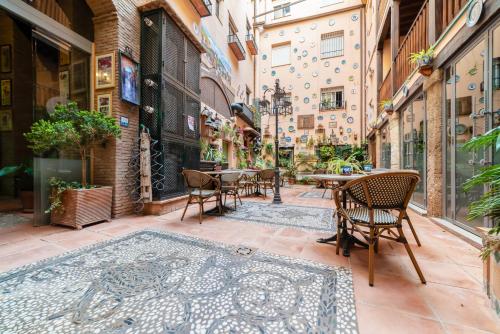
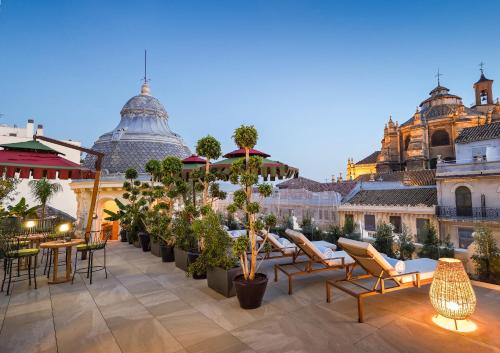
Granada is a compact, hilly city of about 230,000 people where the main sights sit on two facing hills: the Alhambra on one side and the old Moorish quarter of the Albaicín on the other, with the Sierra Nevada's snowy peaks behind both. It is also a university city, so it feels lived-in rather than polished. Bars still give you a free tapa with every drink, the streets smell of incense around the Alcaicería, and students outnumber tour groups once the sun goes down.
It suits couples, history fans, walkers and anyone who likes eating well for little money. It does not suit people who hate slopes: the Albaicín and Sacromonte are all cobbles and steps. Three days is the right amount: one for the Alhambra, one for the Albaicín and Sacromonte, and one for the centre, a day trip or simply eating your way around. Two days is doable but rushed, and you need to plan around your Alhambra time slot.
What to see in Granada: the places worth your time
The Alhambra and the Nasrid Palaces
The Alhambra is the reason most people come, and it lives up to the hype. It is a fortified palace complex built by the Nasrid dynasty, the last Muslim rulers of Spain, and the Nasrid Palaces, with their carved stucco, tiled walls and the Court of the Lions, are the highlight. Allow 3-4 hours for the full visit. The general ticket costs about €20 and covers the palaces, the Alcazaba fortress, the Generalife and the Palace of Charles V area.
Our tip: book on the official Alhambra website weeks ahead (months ahead for spring and summer weekends). Your Nasrid Palaces entry is a fixed half-hour slot and they will not let you in late, so arrive at the complex at least an hour early because the walk from the entrance to the palaces takes a while.
The Generalife gardens
The Generalife was the sultans' summer estate, a series of terraced gardens, water channels and courtyards just above the main palaces. It is included in the general ticket and needs about an hour. Go in the late afternoon if your slot allows: the light is softer and the fountains feel cooler. The Patio de la Acequia, with its long pool and jets, is the photo everyone takes for good reason.
The Alcazaba
The oldest part of the Alhambra is a stripped-back military fortress, less ornate but with the best views. Climb the Torre de la Vela for a 360-degree look over the Albaicín, the city and the Vega plain. Give it 45 minutes. Visit it before or after your palace slot, not in the 30 minutes before, because you will end up rushing.
Mirador de San Nicolás
This square in the Albaicín has the classic view of the Alhambra with the Sierra Nevada behind. It is free and needs 20 minutes, though sunset crowds turn it into a standing-room-only event. Buskers and flamenco guitarists set up most evenings. Go at sunset once for the atmosphere, then come back early in the morning for the same view with nobody in it.
The Albaicín
The old Moorish quarter is a maze of whitewashed houses, steep lanes and walled gardens called cármenes. It is a UNESCO World Heritage Site and free to walk. Give it at least half a day. Start at Plaza Nueva, walk up Carrera del Darro, then climb towards Plaza Larga and the Arco de las Pesas, where the neighbourhood still has its own market and bakeries. Wear proper shoes: the cobbles are slippery even when dry.
Carrera del Darro and Paseo de los Tristes
This riverside street runs along the little Darro river under the Alhambra walls, past old stone bridges and Renaissance houses. It is free, and the walk takes 20-30 minutes if you stop for photos. The Paseo de los Tristes at the end has terraces looking straight up at the Alhambra; drinks there cost more than elsewhere, but one at night with the walls lit up is worth paying for.
El Bañuelo
These 11th-century Arab baths on Carrera del Darro are one of the best-preserved in Spain, with star-shaped skylights in vaulted brick ceilings. A visit takes 15-20 minutes and costs a few euros, or it is included in the Dobla de Oro combined ticket. Go in the morning when the light through the skylights is sharpest.
Sacromonte and the Cave Museum
Sacromonte is the hillside east of the Albaicín where Granada's Roma community has lived in cave houses for centuries, and it is the cradle of the local flamenco style, the zambra. The Museo Cuevas del Sacromonte costs about €5 and explains how cave life worked. Allow 1-2 hours. Walk up via Camino del Sacromonte and keep going past the museum for views back over the Alhambra that most visitors never see.
Granada Cathedral
Spain's first Renaissance cathedral is huge, white and bright inside, a contrast to the gloomier Gothic cathedrals elsewhere. Entry costs about €7 with an audio guide, and you need about an hour. The main chapel's gilded dome is the best part. Skip it if you are short on time and have already seen Seville's or Toledo's.
The Royal Chapel (Capilla Real)
Next to the cathedral, this is where Ferdinand and Isabella, the Catholic Monarchs who took Granada in 1492, are buried. You can see their lead coffins in the crypt and Isabella's own art collection in the sacristy. It costs about €7 and takes 45 minutes. If you only have budget for one of the two, choose this over the cathedral: it is smaller and has more story.
Carmen de los Mártires
A 19th-century villa with romantic gardens, ponds, peacocks and views over the city, on the Alhambra hill near the Realejo. Entry is free and an hour is plenty. Very few tourists find it, so it is a good place to sit after the Alhambra. Check the hours before going, as it closes for lunch some days.
The Realejo
The old Jewish quarter south of the centre is flatter, more local and covered in murals by El Niño de las Pinturas, Granada's best-known street artist. It is free and takes an hour or two to wander. Start at Campo del Príncipe, a square ringed by tapas bars, and drift down towards Calle Molinos.
Monasterio de la Cartuja
A Carthusian monastery north of the centre with one of the most over-the-top Baroque sacristies in Spain: marble, mirrors and plasterwork in every surface. It costs about €5-6 and takes an hour. Take the bus (lines N7 or 8 from the centre). Only worth it if you like Baroque, but if you do, it is spectacular.
Things to do in Granada
Granada rewards slowing down, and some of the best things to do in Granada involve sitting rather than sightseeing.
- Go on a tapas crawl. Order a drink (about €3-4 for a caña or a glass of wine) and a tapa arrives free. Do three or four bars and you have had dinner. Calle Navas, Calle Elvira and Campo del Príncipe are the classic zones.
- See flamenco in a Sacromonte cave. Zambra shows in cave venues cost about €25-35 with a drink. Small venues are intense and hot; book ahead and expect to sit very close to the dancers.
- Soak in the Hammam Al Ándalus. These Arab-style baths near Plaza Nueva cost about €40-50 for a session, more with massage. Book in advance, especially for evenings.
- Drink tea in a teteria. Calle Calderería Nueva, just off Calle Elvira, is lined with Moroccan-style tea rooms. A pot of mint tea and a pastry costs about €5-8.
- Visit Lorca's summer house. The Huerta de San Vicente, in the García Lorca park, is where the poet spent summers and wrote some of his best work. Guided visits are cheap and short; check times.
- Walk the Vereda de Enmedio. A dirt path above Sacromonte with views over the Darro valley and the Alhambra. Free, about an hour round trip from the Sacromonte caves.
- Have churros at Café Fútbol. In Plaza Mariana Pineda, a local institution since the early 20th century. Churros with chocolate cost about €4-6.
Granada for free (or almost)
A surprising amount of Granada costs nothing. All the viewpoints are free: San Nicolás, the quieter Mirador de San Cristóbal on the Albaicín's upper edge, and the Mirador de la Churra. Walking the Albaicín, Sacromonte, the Realejo murals and Carrera del Darro costs nothing either.
- Free tapas with every drink, which means dinner for €10-12.
- Carmen de los Mártires gardens, free entry.
- The Alhambra's free areas: the Palace of Charles V courtyard and the woods of the Alhambra hill can be visited without a ticket.
- Free museum entry: the Museo de Bellas Artes and Museo Arqueológico are free for EU citizens, and other monuments have free slots on certain days. Check before going.
- Free walking tours leave from Plaza Nueva daily (tip what you think fair, usually €10).
Granada itinerary: 3 days
This Granada itinerary assumes you have a morning Alhambra ticket on day 1. Swap days around to fit your slot.
Day 1: the Alhambra
Morning: take the C30 or C32 minibus from Plaza Isabel la Católica to the Alhambra, or walk up the Cuesta de Gomérez from Plaza Nueva (20-25 minutes, steep). Do the Nasrid Palaces at your slot, then the Alcazaba and the Generalife.
Afternoon: walk down through the woods to Carmen de los Mártires, then on to the Realejo for a late lunch in Campo del Príncipe.
Evening: tapas on Calle Navas, then a drink on Paseo de los Tristes looking up at the lit-up walls you walked that morning.
Day 2: the Albaicín and Sacromonte
Morning: start at Plaza Nueva, walk Carrera del Darro, visit El Bañuelo, then climb into the Albaicín. Coffee and a pastry around Plaza Larga.
Afternoon: walk east to Sacromonte, visit the Cave Museum, and do the Vereda de Enmedio if your legs allow. Lunch in a cave restaurant on Camino del Sacromonte.
Evening: back to Mirador de San Nicolás for sunset, then a zambra flamenco show in a Sacromonte cave. Take the C34 bus or a taxi back down if you are tired.
Day 3: the centre or a day trip
Morning: the Royal Chapel and the cathedral, then the Alcaicería, the old silk market that is now a souvenir lane. Churros in Plaza Mariana Pineda.
Afternoon: Monasterio de la Cartuja or the Huerta de San Vicente, followed by a hammam session. If you would rather leave the city, swap this day for the Alpujarras or Sierra Nevada.
Evening: tea on Calderería Nueva, then a last tapas round on Calle Elvira or at Bodegas Castañeda.
What is overrated (and what to do instead)
- Sunset at San Nicolás. It is packed, people block the view with phones, and pickpockets work the crowd. Go to the Mirador de San Cristóbal instead, or see San Nicolás at 9am.
- The Alcaicería. It looks like a souk, but most shops sell the same mass-produced lamps and fridge magnets. Ten minutes is enough. For real crafts, look for workshops in the Albaicín.
- Restaurants on Plaza Nueva and Paseo de los Tristes. Fine for a drink with a view, but food is pricier and mediocre. Eat in the Realejo or on Calle Navas.
- Tourist-trap flamenco with dinner. Big shows with set menus are expensive and dull. A small cave zambra without the food is better and cheaper.
When to visit Granada
The best time to visit Granada is spring (March to May) or autumn (late September to November), when days sit around 18-25°C and the Sierra Nevada may still have snow. Holy Week (Semana Santa) brings processions and very high prices.
Summer is brutal: July and August regularly pass 38°C, and climbing the Albaicín at 4pm is a bad idea. Hotels are cheaper then, though, and the city empties of students. Winter is cold, close to zero at night, but sunny, quieter and the cheapest time for hotels and Alhambra slots. December to February plus the summer dip are when you will find the best deals.
Where to stay in Granada: best areas
Stay central: you will be walking everywhere, and the hills punish bad choices.
- Centro (around the cathedral and Plaza Nueva): best for first-timers and short stays, close to everything and to the Alhambra buses. About €80-150 per night for a double.
- Albaicín: romantic, with views, especially in a carmen-style guesthouse. Downsides are the steep walks and taxis that cannot reach every door. About €90-200.
- Realejo: local feel, good tapas, flatter streets and walkable to the Alhambra. About €70-130.
- Around the Alhambra hill: the hotels near the Alhambra are quiet and handy for early slots, but far from nightlife. About €120-250.
- Around Plaza de Gracia and Recogidas: budget-friendly, near the bus to the airport, 10-15 minutes' walk to the centre. Hostel beds from about €20-30, doubles from €60.
What to eat in Granada
Granada's food is hearty mountain cooking with Moorish touches, and you will mostly eat it as free tapas. Ask what the house tapa is; in many bars you get no choice, in better ones you pick from a list.
- Tortilla del Sacromonte: an omelette traditionally made with brains and offal. Try it once in Sacromonte.
- Habas con jamón: broad beans sautéed with cured ham, best in spring.
- Remojón granadino: a salad of salt cod, orange, olives and onion, a dish with Moorish roots.
- Plato alpujarreño: fried potatoes, eggs, chorizo, morcilla and ham. Not light.
- Piononos: small syrup-soaked sponge cakes from nearby Santa Fe, sold in city bakeries.
- Jamón de Trevélez: mountain-cured ham from the Alpujarras.
For bars, Bodegas Castañeda and Los Diamantes (famous for fried fish) are busy, classic and worth the elbowing. A tapas dinner costs €10-15 for three or four drinks. A set lunch menu (menú del día) runs €12-16, and a sit-down dinner with wine in a mid-range restaurant is about €25-40 per person.
Airport to city centre and getting around
The Federico García Lorca Granada airport is about 15km west of the city. The Alsa airport bus runs to the centre in about 40-45 minutes for about €3-4, stopping near the cathedral and on Gran Vía; it is timed around flights. A taxi costs about €30-35 and takes 20-25 minutes. Many travellers fly into Málaga instead, which has more budget routes; direct Alsa buses from Málaga airport to Granada take about 2 hours and cost about €15-20.
In town, you will mostly walk. The red minibuses are the useful ones: C30 and C32 go up to the Alhambra, C31 and C32 loop round the Albaicín, and C34 serves Sacromonte. A single costs about €1.50, and you can pay by contactless card on board. If you will use the bus a lot, buy a rechargeable Credibús card, which brings each ride under €1. Granada also has a single Metro line, handy for the train station but rarely needed for sightseeing.
How much a trip to Granada costs
Granada is one of the cheaper cities in Spain, mostly thanks to free tapas.
- Shoestring: €50-70 per day. Hostel bed (€20-30), tapas dinner (€12), cheap lunch or bakery picnic (€8), walking everywhere, the Alhambra ticket spread over your stay.
- Mid-range: €120-180 per day. Central double room split between two (€50-75 each), set lunch and a good tapas evening (€40), Alhambra, a flamenco show or hammam (€30-50).
- One-off costs: Alhambra about €20, Royal Chapel and cathedral about €7 each, flamenco €25-35, hammam €40-50.
Day trips from Granada
- The Alpujarras: white villages on the southern slopes of the Sierra Nevada. Pampaneira, Bubión and Capileira are the classic trio. Alsa buses take about 2 hours; a car is easier. Plan a full day.
- Sierra Nevada: skiing in winter, hiking in summer, about an hour by bus to the Pradollano resort. A full day.
- Córdoba: the Mezquita is reason enough. Direct trains take about 1.5 hours. A long but doable day trip.
- Guadix: a town where thousands of people still live in cave houses, with a fine cathedral. About an hour by bus or train. Half a day.
- The Costa Tropical: Salobreña and Almuñécar have beaches and a castle each, about an hour by bus. Good for a summer escape from the heat.
Common mistakes and scams
- Not booking the Alhambra. The single biggest mistake. Tickets sell out, especially in spring, and resellers charge double. Use the official site and book early.
- Wrong name on the ticket. Alhambra tickets are named and checked against your ID. Bring your passport.
- The rosemary women. Women near the cathedral and San Nicolás press a sprig of rosemary into your hand, start reading your palm and then demand money. Say no firmly and keep walking.
- Pickpockets at San Nicolás at sunset, on the Alhambra buses and around Plaza Nueva. Keep your phone out of back pockets.
- Driving into the old town. Much of the centre and Albaicín has restricted access with cameras, and fines arrive weeks later. Park outside and walk.
- Ordering food with every drink. Wait for the free tapa first; you may not need to order anything.
Granada FAQ
How many days do you need in Granada?
Three days is ideal: one for the Alhambra, one for the Albaicín and Sacromonte, and one for the centre or a day trip. Two days works if you are organised.
How far in advance should I book the Alhambra?
Book at least 3-4 weeks ahead, and 2-3 months ahead for spring, Easter and summer weekends. Only use the official Alhambra website or authorised sellers.
Are tapas really free in Granada?
Yes, most bars bring a free tapa with each drink, and the portion often grows with each round. Expect to pay about €3-4 per drink.
Is Granada walkable?
The centre is very walkable, but the Albaicín, Sacromonte and Alhambra are on steep hills. Use the C30-C34 minibuses when your legs give up.
Can you visit the Alhambra without a ticket?
You can walk the woods and see the Palace of Charles V for free, but the Nasrid Palaces, Alcazaba and Generalife need a ticket.
Is it better to fly into Granada or Málaga?
Málaga has far more flights and cheaper fares, and it is only about 2 hours away by bus. Granada's airport is closer but has fewer routes.
Is Granada safe for tourists?
Yes, Granada is safe. Watch for pickpockets in crowded spots and ignore the rosemary sellers.
Photo: Wikipedia · · Wikimedia Commons · Guide updated 21 Nov 2026