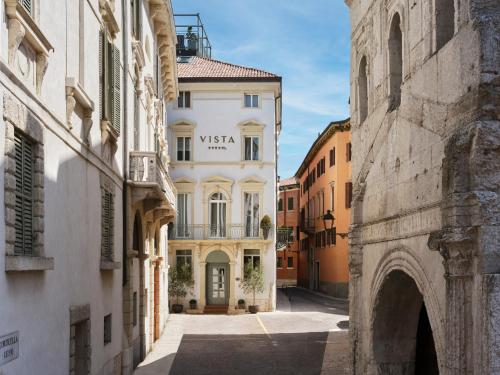
Verona is a compact, handsome Roman and medieval city on a bend of the Adige river. It is far calmer than Venice and much more lived-in. People come for Romeo and Juliet and leave talking about the Arena, the wine and how good dinner was. The historic centre is small enough to cross on foot in 20 minutes. Most of what you want to see sits inside the loop of the river or just over a bridge.
It suits couples, food and wine people, opera fans and anyone flying into northern Italy who wants a base with easy trains to Lake Garda, Venice and Vicenza. Two days is the right amount: enough for the main sights, a sunset from the hill and a couple of long dinners. Add a third day only if you plan a day trip.
What to see in Verona: the places worth your time
Arena di Verona
The Arena is a first-century Roman amphitheatre on Piazza Bra, and it is still used for opera every summer. It is the reason to come. Walk the stone tiers and climb to the top rows for a view over the piazza and the roofs. Allow 45 minutes to an hour. A ticket costs about €12. Our tip: go first thing, because on summer afternoons the stone soaks up heat and part of the interior is taken up by festival staging.
Piazza delle Erbe
This was the Roman forum, and it is now the city's prettiest square, lined with frescoed houses, the Madonna Verona fountain and the market stalls. The stalls mostly sell souvenirs and overpriced fruit cups these days, so treat it as a place to look rather than shop. It is free, and 20-30 minutes is enough. Come back after dark, when the facades are lit and the day-trippers have gone.
Torre dei Lamberti
The 84-metre tower beside Piazza delle Erbe gives the best view over the old town at street level. There is a lift for most of the way and stairs for the final stretch. Expect to pay about €8 and to spend 30-40 minutes. Go on a clear morning, and if the bells start while you are up top you will feel them in your chest.
Piazza dei Signori and the Scaliger Tombs
Walk through the arch from Piazza delle Erbe and you reach Piazza dei Signori. It is quieter and more elegant, with Dante's statue in the middle. Around the corner are the Arche Scaligere, the Gothic tombs of the Della Scala family who ruled Verona in the Middle Ages. You can see them well through the iron railings for free. Ten to fifteen minutes covers both.
Casa di Giulietta (Juliet's House)
This is a medieval house on Via Cappello with a balcony added in the 20th century to please the Shakespeare crowd. Juliet was fictional, and the courtyard is packed shoulder to shoulder most of the day. Entering the courtyard is free. The museum inside costs about €12 and is skippable. Our tip: see it in five minutes, early in the morning or late evening, and do not bother queuing to stand on the balcony.
Basilica di San Zeno Maggiore
San Zeno is one of the finest Romanesque churches in Italy. It has bronze doors from the 11th-12th centuries, a Mantegna altarpiece and a lovely cloister. It sits about 20 minutes' walk west of the centre, which is why many visitors miss it. Allow an hour. Entry is about €4, or use the combined churches ticket.
Castelvecchio and Ponte Scaligero
Castelvecchio is the 14th-century Scaliger fortress. Inside is a museum that is worth it for Carlo Scarpa's architecture as much as for the medieval sculpture and Venetian paintings. Allow 1.5 hours and about €9. Crossing the red-brick Ponte Scaligero behind it is free and is one of the best short walks in town.
Ponte Pietra
This is Verona's oldest bridge, a Roman crossing that was blown up in 1945 and rebuilt from the original stones fished out of the river. It is free and takes five minutes, unless you stop for photos, which you will. Golden hour light on the river is when it looks best.
Castel San Pietro
This is the viewpoint. Cross Ponte Pietra and either climb the stairs (about 10 minutes) or take the funicular, which costs a few euros return. The terrace looks back over the river, the bridge and every bell tower in town. Come for sunset with something to drink, and allow 45 minutes.
Teatro Romano and Archaeological Museum
The Roman theatre sits on the hillside just below Castel San Pietro. A small archaeological museum is housed in the former monastery above it. It is less famous than the Arena, has fewer people and better views. Expect about €5-9 and 45 minutes. It combines easily with the Castel San Pietro climb.
Basilica di Sant'Anastasia and the Duomo
Sant'Anastasia is the city's largest church, worth it for Pisanello's fresco of Saint George and the hunchback figures holding up the holy water basins. The Duomo, a short walk north, has a Titian Assumption. Each takes 20-30 minutes. A combined ticket for the four main churches (these two, San Zeno and San Fermo) costs about €8 and pays off quickly.
Giardino Giusti
This Renaissance garden in Veronetta has cypress avenues, a hedge maze, and a grotesque mask and belvedere at the top with a view over the city. Entry is about €12. You need an hour. It is not essential on a two-day trip, but it is a welcome break when the centre gets hot and crowded.
Things to do in Verona
The sightseeing is only half of it. Verona is best enjoyed slowly, glass in hand.
- See an opera at the Arena. The summer festival runs roughly June to early September. Unreserved stone seats start around €30-40; padded seats run well into the hundreds. Bring a cushion and water, and know that performances finish late.
- Do an aperitivo crawl. A spritz in the side streets costs €5-7. On Piazza Bra or Piazza delle Erbe it is often €10 or more. The bars along Via Sottoriva and around Piazzetta Pescheria are the local move.
- Book a Valpolicella winery visit. Amarone is made 20-30 minutes north of town. Tastings usually cost €20-40 per person.
- Walk the river promenade from Castelvecchio to Ponte Pietra along the Lungadige, ideally in the evening.
- Browse Via Mazzini and Corso Porta Borsari for shopping. Via Mazzini is chain-heavy; Corso Porta Borsari ends at a Roman gate.
- Go to Vinitaly if you are in the trade. This huge wine fair takes over the city every April. Everyone else should avoid those dates.
- Cross into Veronetta, the university side, for cheaper bars, students and a less polished feel.
Verona for free (or almost)
A lot of the best of Verona costs nothing, and the city is easy to enjoy on a tight budget.
- Piazza delle Erbe, Piazza dei Signori, the Scaliger Tombs from the railings and Piazza Bra.
- Ponte Pietra, Ponte Scaligero and the river walk.
- Castel San Pietro on foot via the stairs.
- Juliet's courtyard, if you must.
- Porta Borsari and Porta Leoni, the Roman gates.
- The VeronaCard (about €27 for 24 hours, €32 for 48 hours) covers the Arena, the Lamberti tower, Castelvecchio, the churches, the Roman theatre and city buses. It makes sense if you will visit three or four paid sights in a day.
- Most museums have reduced or free entry on the first Sunday of some months. Check the hours and conditions before you go.
Verona itinerary: 2 days
Day 1: Roman and medieval centre
Morning: Be at the Arena when it opens, then walk up Via Mazzini to Piazza delle Erbe. Climb the Torre dei Lamberti while the light is good, then cut through to Piazza dei Signori and the Scaliger Tombs.
Afternoon: Have lunch at an osteria off the main squares. Afterwards, take a quick look at Juliet's House, then visit Sant'Anastasia and the Duomo.
Evening: Cross Ponte Pietra and walk up to Castel San Pietro for sunset. Come down for an aperitivo on Via Sottoriva and dinner in the centre or in Veronetta.
Day 2: Castles, San Zeno and the river
Morning: Start at Castelvecchio and its museum, then cross Ponte Scaligero and walk the river path to San Zeno. Allow time for the cloister.
Afternoon: Have lunch around San Zeno, which is calmer and better value. Walk back via Corso Cavour and Porta Borsari, then cross to Giardino Giusti or the Teatro Romano.
Evening: In summer, go to the opera at the Arena. The rest of the year, settle in at a wine bar for Amarone by the glass and a slow dinner.
What is overrated (and what to do instead)
- Juliet's balcony. It is crowded, fictional and covered in chewing gum and padlocks. Spend that time at San Zeno instead, where tradition says Romeo and Juliet were married, and where the art is real.
- Eating on Piazza Bra. You pay for the Arena view with mediocre food and high prices. Walk two streets back.
- The Piazza delle Erbe market. It is mostly magnets and €6 fruit cups now. Admire the square and buy your snacks elsewhere.
- Juliet's Tomb. This is an empty sarcophagus in a crypt south of the centre. Skip it unless you are a superfan, and spend the time at the Roman Theatre instead.
When to visit Verona
The best months are May, June and September: warm, long evenings and, in June and September, the opera season. July and August are hot (often 30°C and up), sticky and busy, and hotel prices jump on opera nights.
April and October are pleasant and quieter, apart from Vinitaly week in April, when rooms are scarce and expensive. Winter is cold and foggy but cheap. December brings a Christmas market and a big illuminated star arching out of the Arena. February is the cheapest month to visit.
Where to stay in Verona: best areas
- Città Antica (the historic centre): Everything is on foot and the evenings are lovely. It is best for first-timers and short trips. Expect €120-250 a night for a double, and more on opera nights.
- Veronetta: Just across the river, with students, cheaper bars and access to the Castel San Pietro views. Good for couples on a budget. Rooms run about €80-150.
- San Zeno: Residential and quiet, with good osterie and a 15-20 minute walk to the Arena. Rooms run about €80-140.
- Cittadella and Porta Nuova: Near the station and the airport bus, practical for day trips, and a 10-15 minute walk to Piazza Bra. The area right by the station is drab. Hotels cost €70-130.
- Borgo Trento: A calm, smart area north of the river near the hospital, with cheaper rooms and an easy walk over Ponte Garibaldi. Expect €70-120.
What to eat in Verona
Veronese food is hearty, built on rice, polenta, slow-cooked meat and serious red wine. These are the dishes to order:
- Risotto all'Amarone: rich, purple and the signature dish.
- Bigoli: thick fresh pasta, often with duck ragù (con l'anatra) or with sardines.
- Pastissada de caval: horse meat stewed in red wine, usually with polenta. It is traditional and you will find it everywhere.
- Bollito misto con pearà: boiled meats with a peppery bread-and-marrow sauce, especially good in winter.
- Gnocchi: Verona has an old carnival tradition around them, and they are on most menus.
- Pandoro: the star-shaped Christmas cake was born here.
- Wines: Valpolicella, Ripasso and Amarone for reds, Soave for white and Recioto with dessert.
A two-course lunch with a glass of wine in a simple osteria costs €20-30. Dinner with wine costs €35-55 per person in a good trattoria, and more if you order Amarone by the bottle. The streets around Via Sottoriva, San Zeno and Veronetta have better value than the main squares. Order the house wine without fear. It is usually decent here.
Airport to city centre and getting around
Verona Villafranca airport (Valerio Catullo) is about 12 km from the city. The Aerobus runs to Porta Nuova station in about 15-20 minutes and costs about €7-8. From the station, walk 15 minutes to Piazza Bra or take a city bus. A taxi to the centre costs roughly €30-35.
Many budget flights land at Bergamo or Venice instead. From Venice, take the bus to Mestre or Santa Lucia, then the train to Verona (1-1.5 hours, €10-25). From Bergamo, expect a bus or train to Milan or Brescia and then a connection, roughly 2-2.5 hours in total.
In town you will mostly walk. ATV city buses cost about €1.50-2 per ride, and a day ticket is around €5. The VeronaCard includes buses. Cars are a liability, because the centre is a limited traffic zone (ZTL) with camera fines.
How much a trip to Verona costs
- Shoestring: €60-90 a day. That covers a hostel bed or cheap room outside the centre (€35-50), pizza or a market lunch, one paid sight, walking and a spritz.
- Mid-range: €150-250 a day per person. That means a central double room shared (€60-120 each), a VeronaCard, a good lunch and dinner with wine, and an aperitivo.
- Extras: Opera tickets run from €30 to €200+. A winery tasting costs €20-40, and a Lake Garda trip €10-20 in transport.
Day trips from Verona
- Lake Garda (Sirmione): Take the train to Desenzano or Peschiera (15-25 minutes, about €3-4), then a bus or boat to Sirmione. Plan a half or full day, and go on a weekday.
- Valpolicella: The wine villages are 20-30 minutes north. Book a tour, or drive with a designated driver. Buses exist but are slow.
- Venice: By train it is 1h10-1h30 and €10-25. It works as a long day trip, and sleeping in Verona saves serious money.
- Vicenza: It is 30-45 minutes by train for Palladio's villas and the Teatro Olimpico. Half a day is enough.
- Mantua: About 45 minutes by regional train. Go for the Gonzaga palaces and pumpkin tortelli.
Common mistakes and scams
- Driving into the ZTL. Rental car fines arrive months later. Park outside the centre or at your hotel.
- Not validating tickets on regional trains and buses. Inspectors fine on the spot.
- The friendship-bracelet or rose trick around Piazza Bra and Juliet's House. Someone ties something on you or hands you a flower, then demands money. Keep walking.
- Gladiator photo touts outside the Arena. Agree a price first or decline.
- Booking during Vinitaly or a big opera weekend without checking dates. Prices can double.
- Coperto and service charges. A cover charge of €2-4 is normal. Check the menu before you sit down in the main squares.
- Pickpockets in the Juliet courtyard crush and on crowded buses.
Verona FAQ
How many days do you need in Verona?
Two days covers the main sights comfortably. Add a third if you want Lake Garda or a Valpolicella winery.
Is Verona worth visiting?
Yes. It has a Roman arena still in use, a beautiful medieval centre and excellent food and wine, all without the crowds and prices of Venice.
Is the VeronaCard worth it?
It is worth it if you will enter three or more paid sights, such as the Arena, the Lamberti tower and Castelvecchio. For a lighter day, buy single tickets.
Can you go inside the Arena di Verona?
Yes, daily visits cost about €12. In summer, opera staging can limit access on show days, so go in the morning.
Is Juliet's House worth it?
The courtyard is free and takes five minutes. The paid museum inside is skippable.
Can you do Verona as a day trip from Venice?
Yes, the train takes about 1h10-1h30. A full day covers the centre, but you will miss the evenings, which are Verona's best part.
What is the best area to stay in Verona?
The historic centre is best for a short visit. Veronetta and San Zeno give better value and are only a short walk from the sights.
When is the Verona opera festival?
Roughly June to early September at the Arena. Book ahead for popular nights, and bring a cushion if you buy the stone seats.
Photo: Livioandronico2013 · CC BY-SA 4.0 · Wikimedia Commons · Guide updated 21 Nov 2026